TIRANA, May.25 – Forbes magazine, one of the world leading business magazines, published in last week’s edition an article on Albania’s economic potential and challenges. Written by Dr. Vladimir Kvint, President of the International Academy of Emerging Markets, a former Fulbright Scholar in Albania in 2001, the article is entitled “Albania: Investment, Tourists and Bureaucracy” and was published to coincide with U.S. President George Bush’s upcoming visit to Albania.
The author comments on this visit as an occasion to allow the American and European business communities to reassess the international image of Albania and also reassess the opportunities and risks that are today’s business reality.
Overview
“It is difficult to find a country with an image as inaccurate as Albania’s,” writes the author. “Today it is unequivocally a democracy, with an 80% privatized economy and a strong orientation toward the U.S., Europe and NATO. I remember walking the streets of Tirana late one night with Steve Forbes. He pointed out the tables of an outdoor caf鬠set with silverware. The restaurateur clearly was not worried about theft. This is the level of safety in Albania. Of course, this was not always the case.
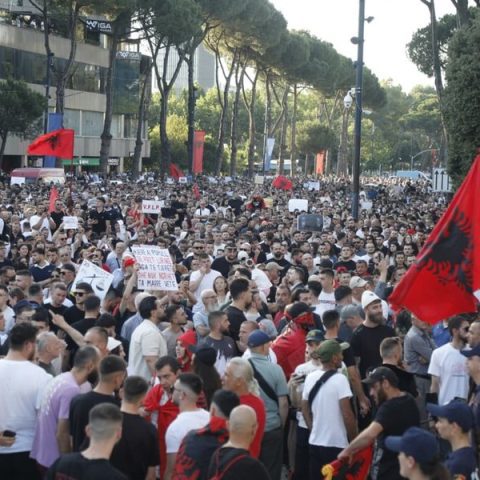
When the pyramid scheme that dominated the Albanian economy collapsed a decade ago, hundreds of thousands of inexperienced investors who’d place their life savings into these unregulated quasi-banks relying on promises of startling returns found themselves penniless. During the few days of rioting that resulted, some 2,000 people were killed on the streets. But this period has passed. Albania has demonstrated its dedication to European integration and the Western values of human rights. Thanks to the successful strategies of several national economists like Ministers Arben Malaj and Genc Ruli, financial stability has been established.”
Foreign investment
As an example of Albania having great potential, especially in the tourism, construction, chromium and hydroelectric industries, the author discusses foreign investment. “Several world-class companies have already been operating successfully in Albania, like Bechtel (which is building a 57 kilometer highway between Albania and Kosovo), Siemens (nyse: SI), Raiffeisen Bank and France’s Societe Generale, (which acquired 75% of Albania’s Banka Popullore).
The European Bank for Reconstruction and Development, and several well-known investment banks, are funding the most efficient projects. The World Bank provides insurance against political risk in Albania and has invested $915 million in 63 projects. Dozens of daily flights from major airlines like Austrian Air, British Airways (nyse: BAB – news – people ), Allitalia and Lufthansa now make it easy to reach Albania’s Mediterranean coast. At any given time, 9% of all people in Albania are international tourists.
Among the leading countries investing in Albania are Italy, Greece, Germany and Turkey. The article urges readers not to be mislead by the small population (3.2 million). The 2.5 million people in the territory of Kosovo, which shares an open border with Albania, should also be taken into account. There are roughly 8 million Albanians living abroad, whose remittances tremendously increase Albanian purchasing power. Furthermore, Albania will soon be part of the Common Economic Area of Southeast Europe. Investors in Albania will have access to the 53 million people in this market.”
Problems
The author is at the same time soberly realistic about the challenges and risks of business in Albania. “As in all emerging market countries, the business climate remains flawed. Club Med, a world-renowned resort corporation, has been unsuccessfully knocking at Albania’s door. But bureaucratic inertia and a lack of leadership in the country have delayed progress. Partisan quarrels embarrassingly led to the suspension of the General Electric (nyse: GE – news – people ) railway infrastructure project between the Durress Seaport and Tirana. For similar reasons, Hyatt decided to give up on the construction of a casino resort. A lack of electricity has also hindered progress and development of other projects. There is a great need to demolish corruption and bureaucracy and to reduce unemployment. Fiscal and economic reforms are also necessary, and a flat tax would be extremely beneficial.
Construction is booming in Albania. Throughout the country, it is nearly impossible to find a view without a crane. To be fair, it is equally difficult to find a view without indications of widespread poverty. However, due to a lack of investment in the construction materials industry, Italian and Greek companies have been thriving as suppliers of cement and marble, as Albanian companies have failed to meet domestic demand. Even textile products as simple as T-shirts and baseball caps are delivered from abroad. Still, Albania has achieved sustainable GDP growth, an inflation rate equal to that of the U.S., a stable currency, a well-enforced legal system and a steady reduction in the cost of starting a business.”
Albania – the unknown
Kvint concludes on a very positive note calling for more exposure of Albania’s potential. “Albania was once a world-class center of education, where the future Emperor Augustus was studying when he heard that his Uncle Caesar was murdered. Some 2,050 years later, the rich history and traditions of this strategically located country are still widely unknown in the world, as are its many potentially lucrative business opportunities.”