By Rudina Hoxha
“Finnish-Albanian relations are excellent with ample room for further development. Hopefully we can bring more concrete content into to these good relations in the years to come.”
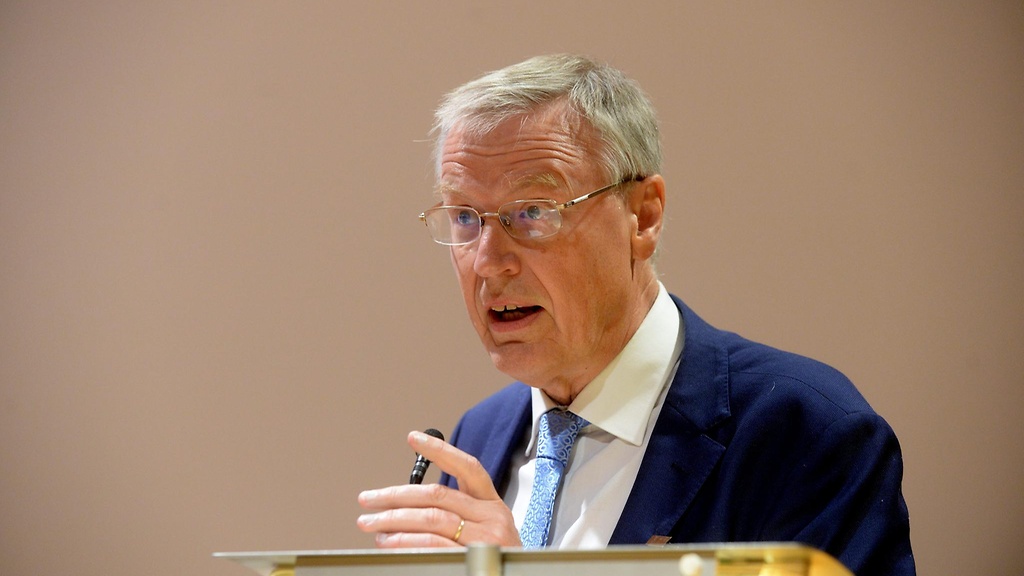
That’s what the Secretary of State of the Finnish Ministry of Foreign Affairs, Mr Peter Stenlund states in an exclusive interview with Tirana Times ahead of his official visit to Tirana.
Finland, which had the presidential elections at the end of January 2018, agrees that diplomats on both sides are working hard to facilitate the exploration of opportunities and open doors for Finnish and Albanian companies in view of more mutual business. “We know that Albania could offer diverse opportunities for Finnish companies in the field of tourism, energy and agriculture, to name a few. The Nordic Association for Trade and Business Development recently opened in Tirana is an important platform for us in this regard,” Stenlund said. In this regard, he hopes his visit can contribute to increasing interaction between the two countries.
What do you think about the results of the 2018 presidential elections in Finland?
The elections at the end of January 2018 saw the incumbent President Sauli Niinistචwinning a second term in office, running this time as an independent candidate without a party affiliation. The results indicated that global issues and security questions are currently on the minds of the Finns. A core duty of the President is to lead Finland’s foreign policy in co-operation with the Government. The result of the elections indicated a wish for continuity as many Finns indeed are satisfied with the way President Niinistචhas maintained a dialogue with the other western leaders, and with the East.
In his inaugural speech to the Parliament, the President offered a platform and facilitation for an inter-party dialogue on the most debated societal issues at the moment, which was very much appreciated by the consensus-oriented nation.
How do you see the international relations of Helsinki mostly from the European perspective?
Europe – both our fellow EU Member States as well as non-EU Member States – remains a very important partner for Finland in our international relations. Finland has continuously been one of the strong advocates of an active EU foreign and security as well as security and defence policy. We think that it is important for the EU to be a strong actor globally. United we stand stronger. Furthermore, Europe at large continues to be a significant trading partner for us.
The appointment of the new Ambassador of Finland in Athens and Albania, Mr. Juha Pyykko has given an impetus to the bilateral relations between Finland and Albania. From your perspective, how are these relations going? What can the Balkan region benefit more from the Finnish diplomacy?
Finnish-Albanian relations are excellent with ample room for further development. Hopefully we can bring more concrete content into to these good relations in the years to come.
Both being small nations has laid the foundation for our friendly bilateral relations – the existence of an Association of Friends of Finland in Albania and the Friends of Albania in Finland prove the point!
The Finnish Nobel Peace Prize Laureate, Mr. Martti Ahtisaari, has been the best known face for Finnish diplomacy in Albania thanks to his work in Kosovo. Today, besides supporting Albania’s cause on its path towards the EU, the Finnish diplomacy can benefit Albania in numerous ways.
For instance, business and trade between Finland and Albania is not exactly blooming yet but diplomats on both sides are working hard to facilitate the exploration of opportunities and open doors for Finnish and Albanian companies in view of more mutual business. We know that Albania could offer diverse opportunities for Finnish companies in the field of tourism, energy and agriculture, to name a few. The Nordic Association for Trade and Business Development recently opened in Tirana is an important platform for us in this regard.
A fruitful area of collaboration between our countries has been the capacity building that Finnish experts have provided to Albanian authorities in the form of concrete projects and knowledge transfer, relating, for instance, to the Albanian justice sector reform. We are happy to make our know-how available also in the future, for example in anti-corruption measures, good governance, statistics and education (we top quite many international rankings in these themes!). When it comes to the education system, it would be useful to look into the potential of organising more student and research exchanges between Finland and Albania.
Celebration of the centenary of the independence of the Republic of Finland last year was an important milestone, and I am happy to note that our Ambassador to Albania, Mr. Juha Pyykkà¶, celebrated this in Tirana, as well, on 12 December 2017 with President Meta in attendance. I hope that with this increased visibility of Finland in Albania and through my visit we can facilitate increasing interaction between our two countries.
Finland has expressed its readiness to support Albania’s integration to EU. In what way, is this country showing it?
We are proponents of Albania’s EU integration and believe that the place for all Western Balkan countries is within our European family. We show our support both through political and more practical means. The core purpose of this very visit to Tirana, for instance, is to discuss Albania’s EU integration and to encourage Albania to continue its good work with societal reforms. We are also here to identify where and how we could best assist Albania in its European aspirations.
On a more practical level, the Finnish authorities have –as a preparation for Albania’s European integration– helped their Albanian counterparts in renewing the state institutions and provided training for the public administration on spot.
What can you highlight as three aspects that made the Finns feel so proud of Finland 100?
Our past 100 years highlight the importance of inclusive democratic system, functional political leadership and ability to implement policies based upon principles of consensus. We are very proud of these aspects. Finland’s national success did not emerge overnight from a single political or economic idea, but from a continuum of political decisions made over many decades.
What is important to understand is that our path to present has not been painless: we were the last country in Western Europe to suffer peacetime famine in 1866-1868, went through atrocious civil war in 1918 and suffered heavily during the Second World War. The hardships have taught us to seek for answers: there is always a better way of doing things.
For instance the experience of famine led to reforms in agriculture and infrastructure and the civil war forced us to address the socio-economic and political causes behind the conflict. Advocacy of free universal education, gender equality and equal opportunities despite socio-economic background is in the core of our national values. As a result we have managed to make the best out of our small population of 5.5 million inhabitants.
The change from a poor agrarian country into a one of the most stable, innovative, least corrupt and best-governed countries in the world would not been possible without the values of cooperation, solidarity and mutual respect.