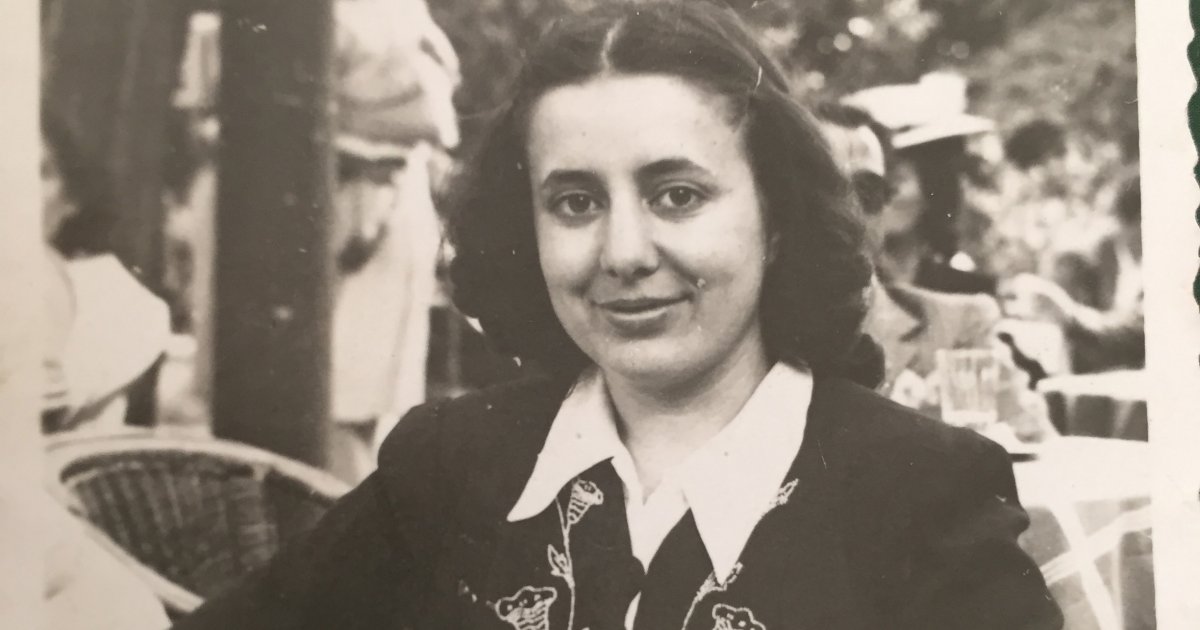
TIRANA, Feb. 10- The first Albanian writer, and probably the first Albanian feminist, Musine Kokalari, had her 102nd anniversary of birth this Feb. 10. She gave a major contribution to literature and paid an extensive attention especially to the Albanian woman. Her writings have a moral character, a civic tension is noticed, and mainly prevailing is the democratic thought which she preserved it until the end of her life, regardless of the communist persecution.
“I don’t need to be a communist to love my country. I love my country even though I am not a communist. I want its progress. Even though you have won the war, even though you have won the elections, you cannot persecute those who have different political beliefs than yourselves.”
These are some words she spoke during her trial before her imprisonment from the communist regime of Enver Hoxha. She was imprisoned for 16 years, and then she was sent into internment in Rreshen until she departed in Aug. 13, 1983. At the camp she was physically and psychologically tortured, and was left in isolation during a time while she was ill.
Kokalari was raised in a family of intellectuals in Gjirokaster. She was surrounded by folk books, fairytales, history books, and a phonograph on which she heard traditional music. She studied at the “Motrat Qiriazi” (sisters Qiriazi) institute, graduated at “Nena Mbretneshe” (Mother Queen) high school, and continued her studies at the Literature Faculty of Italy’s La Sapienza.
The social emancipation and awareness of the Albanian woman was her main concern, which is also noticed in her writings. She wrote in verse, short stories, tales inspired by Tosk folklore. Her poetical verses are compressed in the 1937 collection “Kolla e Vdekjes” (Death Cough). “Sec me thote nena plake” (As my old mother tells me), is a collection of ten youthful prose tales published in 1941 inspired by Tosk folklore which talks of the everyday day struggles of Gjirokaster women, and is considered the first book written by an Albanian female writer. Other short story collections of Kokalari are “Sa u tund jeta” (How life swayed) and “Rreth vatres” (around the hearth), both published in 1944.
But beside literary creations, Kokalari was supervisor of the “Zeri i Lirise” (Voice of freedom) newspaper. She also wrote for the newspaper along with other contributors about democracy and liberal political beliefs. Youth distributed the newspaper around Albania, and through it a different kind of thinking.
Around the time she was looking after the newspaper, she also started her political activities by establishing in 1943 together with Mit’hat Araniti and other friends the Social Democratic Party. Studies conducted by scholars Fiona Todhri and Eris Dhamo, point out that Kokalari had a lot of contacts with other Albanian groups that shared similar political interests and ambitions for the country’s prosperity, such as the National Front, The Monarchists, and The Resistance Front (which was named by Kokalari herself).
The SDP had a few key points in its program, such as (1) ensuring an independent Albania with its ethnic borders, (2) new social reforms with preserving the good traditions and customs of the people, (3) economic reforms, (4) establishing a constabulary for sustaining public order, (5) declaring Albania’s neutrality guaranteed by the Great Powers, (6) a western democratic administration, (7) freedom of beliefs, speech, thought, press, etc., (8) ensuring the equality of citizen rights.
The scholars note that Kokalari’s main focus were women and the youth, and she tried to engage them in party meetings for its enlargement and public representation growth. She aimed the incitement of the opposition spirit in the country and its parliamentary chair. But the key words to her whole political activities surrounded patriotism, ethnic issues, freedom of speech and press, social justice, democracy.
“Watching the development of the process, I see it reasonable to say that the whole activity of that small Social Democrat group wasn’t anything more than a note directed to western allies for holding the votes when the government recognized the right of opposition. A step like this doesn’t mean the current power’s subversion by force, and that us, 37 defendants at the bank of accused are not members of an organization but members of different currents […] with different political and social concepts,” said Kokalari during her trial regarding her political activities, pointing out her honesty, transparency, and lack of fear.
The views and the whole of Kokalari’s individual and party activities, were in collision with the new emerging communist party. Her brothers were executed without trial in 1944, and that hunted her fate. She was of the first 30 writers arrested by Hoxha’s regime and all her collaborators were arrested as well. Some were executed, but Kokalari was imprisoned and put into internment. She was forbidden to write.
“I think differently from you, but I love my country! You are punishing me for my ideas. I won’t apologize, because I am not guilty!” (words said by Kokalari during her trial by the regime).
For her literary, academic and political contribution, Kokalari isn’t just the first Albanian female writer, but also a great patriot, feminist and inspirer of freedom for the people of this country.