Tropojë Mayor Indicted for Illegal Roadworks
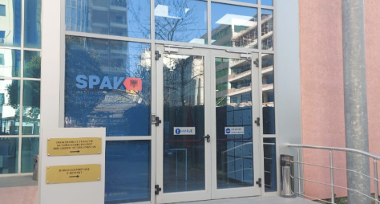
Tirana Times, 02 February 2026 – In a case related to alleged abuse of office, Albania’s Special Court has sent Tropojë’s mayor Rexhë Byberi and his deputy Abedin Kërrnaja to trial on charges of “abuse of office” related to local infrastructure projects. The officials are accused of approving and executing the construction of two rural road segments in Tropojë, including a new 3.2 km road from Stacioni i Anijes Palç to Guri i Lules, without following required legal procedures. Investigators allege that by bypassing permits and oversight, their actions caused both environmental damage (due to illegal forest cutting) and about 277 million ALL (approx. €2.7 million) in economic harm to the state. The case, initiated by the Special Anti-Corruption Prosecution (SPAK), raises questions about Albania’s enforcement of national standards at the municipal level, particularly for public works and procurement in remote areas.
E-Permits System and Bypassed Procedures
Central to the Tropojë indictment is the violation of Albania’s electronic construction permitting system, known as e-leje (e-permits). According to territorial development regulations, any new infrastructure project, even a local road, must go through this online e-permit platform for approval. The e-permits platform, introduced in 2016 after territorial reforms, is the mandatory nationwide system for all construction permit applications and approvals. It was presented as a tool to improve transparency and administrative efficiency, intended to standardize how municipalities grant permits and prevent informal works. In practice, however, smaller municipalities have faced challenges in fully implementing these procedures. An EBRD assessment noted “different practices by different municipalities” and coordination gaps with the central platform. In Tropojë’s case, SPAK found that the mayor’s administration never filed an application in the e-permit system for the road projects, nor did they ensure the required technical documentation and approvals were in place. By sidestepping the e-permit process, the local officials effectively removed the project from the normal review channels that would involve close examination, budgeting and legal compliance. This shortcutting of procedure hints at potential procurement irregularities as well. Typically, infrastructure works should undergo competitive tendering and approval once permitted. However, doing them off-record raises suspicions that standard procurement safeguards (like open bidding or proper contract oversight) were ignored. The Tropojë roads were carried out entirely outside the formal system, illustrating how local authorities were able to proceed outside national rules without immediate intervention.
Environmental and Regulatory Oversight Failures
The Tropojë road case also points to weaknesses in environmental oversight. The indicted officials are not only charged with abuse of office, but also with “illegal cutting of forests” and “destruction of property,” reflecting the environmental harm caused by opening a road through untouched terrain without authorization. Under Albanian law, any new road construction, especially one passing through mountainous or forested terrain, requires an Environmental Impact Assessment (EIA) and clearance from environmental authorities. SPAK highlighted that Tropojë’s municipality “had to cooperate with other competent institutions for the construction of the road, such as the National Environment Agency for drafting an Environmental Impact Assessment report, and the relevant line ministry for evaluating the new road’s impacts”, but “this did not happen”. In this instance, no EIA was conducted and no consultation took place with the National Environment Agency before bulldozers began cutting a path. The result was damage resulting from the lack of prior environmental assessment.
Beyond environmental permits, the case reveals weak oversight of municipal decisions by higher authorities. Notably, the Tropojë Municipal Council had approved the road projects in principle in 2021, and the Prefect of the Kukës region even formally confirmed the legality of the council’s decisions at the time. This indicates that while the projects formally existed on paper, their implementation failed to meet the required legal and procedural standards. Although the Prefect is tasked with ensuring the legality of local decisions, key elements of enforcement, including the issuance of permits and the completion of an environmental impact assessment, were not effectively carried out. In practice, the municipality appears to have treated the council’s approval as sufficient authorization to proceed, highlighting a clear disconnect between political approval at the local level and compliance with national regulatory requirements.
Justice Reform and Accountability at the Local Level
The decision to send Tropojë Mayor Rexhë Byberi and his deputy to trial is an early test of Albania’s justice reform and of SPAK’s ability to enforce accountability beyond the capital. For years, local officials (particularly in remote municipalities) faced limited scrutiny over how public works were approved and implemented. The establishment of SPAK and the Special Court in 2016 was introduced as part of efforts to strengthen accountability mechanisms. The court’s decision in February 2026 to advance the case after a preliminary hearing suggests prosecutors presented sufficient grounds for a full trial.
The case also reflects a broader trend. In recent years, SPAK has increasingly investigated mayors and senior municipal officials nationwide. What sets Tropojë apart is its focus on procedural violations, like procurement, permitting and regulatory compliance, rather than allegations of bribery. It treats the bypassing of national investment standards as a criminal matter, rather than an administrative violation.
The credibility of the reform, however, will depend on outcomes. Byberi and his deputy deny wrongdoing and will contest the charges. The outcome of the trial may offer insight into whether Albania’s oversight mechanisms from e-permitting to environmental safeguards can be enforced consistently at the local level.