What was at stake in the 2009 election
TIRANA, June 27 – Albania’s Prime Minister Sali Berisha of the governing Democratic Party is seeking to survive the June 28 polls, considered as a test of maturity for the tiny Balkan country’s democracy.
Albania, still one of Europe’s poorest countries, held Sunday the seventh parliamentary election in its post-communist period, none of which previously have ever fully complied with international standards.
Some 3.1 million voters were eligible to cast their ballot in a new regional proportional system to elect 140 lawmakers among 4,300 candidates from the four main coalitions – two center-right coalitions of the governing Democratic Party-led Alliance for Change and the Freedom Pole along with two leftist coalitions of the main Socialist Party-led Union for Change and the Socialist Alliance for Integration.
The last four years of governing was challenged by the oppositions Tirana-model management.
Since coming back to power in 2005 the premier, Sali Berisha, with a previous mandate as the country’s first post-communist president, claimed successes in making Albania a NATO member and also applying for candidate status with the European Union.
Authorities have been striving hard to complete the Durres-Kukes-Morini highway, a link to neighboring Kosovo, considered the country’s biggest infrastructure project.
The premier pledged to turn the country into a small energy superpower in the region, after recently signing at least three big deals worth billions of euros in energy production.
The government has improved the business environment, having been mentioned in World Bank reports as one of the world’s leaders in reforms following a 10-percent flat tax and reducing the registration time. Salaries of health and education personnel and pensioners have doubled and thousands of road segments have been rehabilitated.
“Let’s continue together the reconstruction of European Albania,” said Berisha, pledging Albanians will have a visa-free regime for Europe within a year of the second mandate.
Berisha’s main challenge was Edi Rama, the new opposition Socialist Party leader and also Tirana’s mayor, offering as a model the capital’s new face since he came to power nine years ago.
“I don’t want to be a prime minister that exploits the country to serve a corrupt group of people that has kidnapped the government wanting to have a second mandate to continue the government’s business with his (Berisha’s) family,” Rama said.
The opposition blamed Berisha’s government and the premier himself of a series of scandals and of failing to fight corruption which took them to power four years ago.
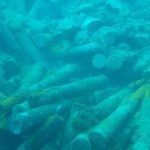
The opposition also blamed Berisha and his government for last year’s blast at an ammunition disposal factory near the capital, Tirana, which killed 26, injured 300 and damaged thousands of homes. Former Defense Minister, Fatmir Mediu, leader of the governing coalition Republican Party, is on trial accused of abuse of post.
They accused Foreign Minister Lulzim Basha of abusing public money in the Durres-Kukes highway project, and continue with accusations against Berisha’s close family members for exploiting his post to personally enrich themselves.
“The June 28 vote will close one epoch and open a new one,” Rama said, introducing a more social platform with greater assistance to poor families to buy school books, increase salaries and support agriculture as a main source of income in the country.
The opposition also offered to lift the need for visas in the first year of its mandate.
Platforms of both main parties do not differ much, both offering to fight poverty and secure from 160,000 to 200,000 new jobs, raising salaries and offering health insurance affordable to all.
Berisha insisted that Albania would have GDP growth this year, despite the world recession. The opposition, for its part, said they would renegotiate to have the IMF counseling returned.
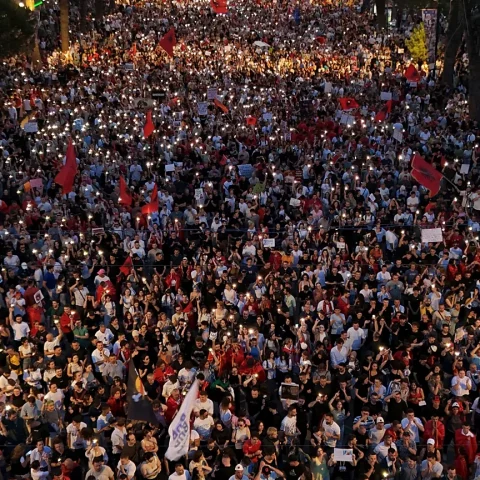
Albania’s democracy was under international scrutiny Sunday after weeks of rowdy election rallies with slogans, fancy songs and wild promises of future prosperity. But along with the fan fair came three deaths well-exploited in the daily campaigns though hard to say if they were directly linked to the election.
About 500 international observers and more than 3,000 local ones monitored the polls.
The European Union and United States have clearly said that Albania must hold free and fair elections if it hopes to form closer ties with the West.
Previous elections in Albania have been plagued by fraud and irregularities with losers never conceding defeat.
“The elections on 28 June will be an important test of Albania’s democratic maturity and readiness to move forward toward closer integration with the EU,” said an EU statement. “We, the EU, are watching the elections process closely. It is our hope, and in Albania’s interests, that these elections are peaceful and that they are judged to meet international standards.”