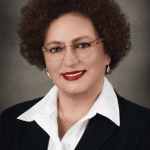
Nicholas C. Pano
(Continues from previous issue)
Finally, as previously stated, the political vacuum and chaos that existed in Albania with the outbreak of World War I provided the Albanian-American community with a unique opportunity to participate in the shaping of Albania’s destiny at a critical point in the fledgling nation’s history. The response of the Albanian-American community to this challenge earned for it the gratitude of their compatriots within and outside the homeland, and a place of honor in Albania’s history.
It is probable that without the propaganda and lobbying efforts of the Albanian-American community, Albania would have been treated more harshly than was the case at the peace conference. The campaign mounted from within the Albanian-American community countered the agitation by Greek and Serb interests to partition the homeland and to question the capacity of Albanians for self-government. In any event, the reluctance in February 1920 by President Wilson to support all the provisions of an Anglo-French proposal that would have ceded Albanian territory to Greece and Serbia, and granted Italy sovereignty over Vlore and its hinterland as well as a mandate for the truncated Albanian state had the effect of eventually removing the Albanian question from the conference agenda and delegating it to a conference of ambassadors for ultimate resolution. As Wilson reflected on the Albanian issue, during the course of the year, he hardened his stance against the partition of the country. Writing to British Prime Minister Lloyd George on 3 November 1920, Wilson observed: “As to Albania, I am inclined to believe this problem has been approached from the wrong direction, namely, that of settling the boundaries of Albania in accordance with the aspirations of Jugo-Slavia and Greece, without sufficient regard to the aspirations of the Albanian people themselves. I now feel that if the prime objective is to accede to the just aspirations of the Albanian people, a permanent solution to this perplexing problem might be had.”
In addition to the stance of the Albanian-American community and the resolve of President Wilson, the independence of Albania was secured during 1920 by the convocation of the Lushnje government in January, the withdrawal of the Italian army from Vlore and Rome’s recognition of Albania’s independence in August, and the admission of Albania to the League of Nations as a sovereign and independent state in October. The restoration of the Albanian state was completed in November 1921 with the confirmation of the country’s independence and 1913 boundaries by the Conference of Ambassadors. The major disappointment for the Albanians on this occasion was that, despite the best efforts of Vatra and the friends of Albania in the international community, they were unable to secure a revision of the 1913 boundary settlement, which had resulted in the incorporation of nearly half the Albanian population into the neighboring states of Serbia and Montenegro.
As the Albanian state reemerged, the Albanian-American community also experienced change. During the 1920s, an estimated 10-15,000 Albanians returned to their homeland. Many went home to establish small businesses or to acquire farmland. As noted previously, many prominent members of Vatra also returned and became active participants in the political life of the nation. For the most part, those who had lived in the United States espoused political democracy, economic development, and social reform. Vatra sought to further these objectives in Albania by establishing in 1922 the newspaper Shqiptar i Amerikes. This newspaper continued to publish until 1925, when it was outlawed by the Albanian government.
Between 1919-22, the Albanian-American community worked to secure the recognition of Albania by the United States. This goal was realized in July 1922. To help balance the budget of the Lushnje government, Albanian-Americans contributed $222,900 to the National Loan drive conducted during the autumn of 1920. Albanian immigrants also helped alleviate the economic distress in the homeland through the remittances they sent to family members.
As a reward for their many valued contributions to Albania, the Albanian-American community was allotted one seat in the Albanian parliament. Fan Noli in 1921 was elected to fill this seat and in June 1924 became prime minister following a brief uprising. Although initially sympathetic to the self-proclaimed reform Noli government, many in the Albanian-American community turned against him when he failed to carry our his promised reforms, did not hold timely elections to legitimatize his regime, and recognized the Soviet Union.
The overthrow of the Noli government in December 1924 marked the end of the period (1912-24) of intensive participation and interest of the Albanian-American community in Albanian affairs. Among the factors contributing to this development were:
First, with the restoration of formal political institutions in Albania, there was no longer an independent role for Vatra or other community organizations to play. This situation became even more pronounced during the Zog era (1925-39), when the monarch viewed the Albanian-American community as a potential center of opposition to his rule and sought to neutralize it by appointing Faik Konitza as the Albanian ambassador to the United States to achieve this end.
Second, the Albanians who remained in the United States and those who settled there during the 1920s and 1930s began to marry and raise families as the number of women in the community increased. These individuals now had to devote more time to domestic concerns rather than to political questions relating to a distant homeland that were increasingly beyond their ability to influence.
Third, the Great Depression of the 1930s adversely affected many individuals within the community and further diverted their attention from matters external to family and personal concerns. Additionally, organizations such as Vatra fell into dire financial straits as members ceased paying dues and subscribing to Dielli, which was now published irregularly.
Fourth, the community was weakened by the rifts that had emerged within it. Some of these divisions, such as the defection of the anti-Noli faction of Vatra in 1918 to form the Albanian National Party, dated back to the World War I era. A split had developed in 1919 within the Albanian Orthodox Church in America when a small faction in this body refused to accept the validity of Noli’s “irregular” consecration as bishop. This group formed the Holy Trinity Albanian Orthodox Church in South Boston, Massachusetts. Noli further alienated some of his followers after 1924, when he became affiliated with anti-Zog oppositional organizations supported by the Comintern and the Communist Balkan Federation movement. But when in 1932 Noli abandoned both his opposition to Zog and his involvement in politics as a condition of his permanent admission to the United States, he lost the backing of other of his followers, some of whom formed in 1934 the St. John the Baptist Albanian Orthodox Church in Boston. The divisions in the community were exacerbated by the decision of Faik Konitza to made his peace with Zog and accept in 1926 the post of Albanian Ambassador to the United States. This move reflected Zog’s desire to counteract the influence of Noli in the Albanian- American community and to enhance the support for his regime in the United States. Konitza’s less than adroit tactics to ensure the support of Dielli and Vatra for the Zog regime produced during the mid-1930s a split in this organization that was not healed until June 1939.
Thus, the vitality of the Albanian-American community had been sapped by the ravages of the Great Depression and the divisions that had emerged within its ranks. Additionally, some Albanian-Americans were deterred from expressing their views regarding the policies of the Zog regime by the fear that the Albanian authorities might retaliate against family members still residing in the homeland.
Viewed from an organizational perspective, the Albanian-American community was in disarray when Italy invaded and annexed Albania in April 1939. There was considerable disappointment and resentment among Albanian-Americans when Washington in June terminated Konitza’s diplomatic status and decided against the recognition of an Albanian government-in-exile. Washington’s stance on these issues paralleled that of the major European powers, but this was of no consolation to Albanian-Americans, many of whom still harbored the illusion that there existed a special relationship between the United States and Albania.
The Albanian-American community responded to the fall of Albania by organizing mass protest meetings in various cities and writing letters to newspapers denouncing “this act of aggression.” This development served as the stimulus for the reunification of Vatra in June 1939. Although the Albanian diaspora was united in its efforts to obtain recognition of a government-in-exile, there was a difference of opinion as to whether this government should be headed by Zog or if it should be comprised of patriotic “anti-monarchist democratic” leaders. Noli and Konitza and, most likely, the majority of Vatra members supported Zog. But by 1941, there was growing disenchantment with the lack of success in establishing a government-in-exile and in generating greater U.S. and British interest in the Albanian question. It was against this background that Kost Chekrezi, who had returned to the United States following the Italian occupation of Albania, in 1941 founded a rival group, the Free Albania Organization (Organizata Shqiperia e Lire). The new organization brought together nationalists, monarchists, anti-Fascists, and disillusioned Vatra members. Following the example of Vatra, the Free Albania Organization established branches in a number of cities and published the weekly newspaper Liria.
Both organizations favored the restoration of Albanian independence and the preservation of its territorial integrity, and they encouraged the intensification of Albanian resistance to the Axis occupation. Aside from personality clashes, the two groups had differing views on the nature of the postwar Albanian regime. The Chekrezi followers advocated the establishment of a parliamentary democracy dedicated to the implementation of a program for far-reaching economic and social reforms. Vatra, with Noli and Konitza as principal spokesmen, favored the creation of a wartime government-in-exile comprising all Albanian political factions under the leadership of King Zog that would serve as the basis for a postwar regime. They further believed that the Albanian people should determine the ultimate form of the country’s government following post-war free elections. With the death of Konitza in December 1942, Noli again became the principal champion of Vatra’s cause.
Repeated initiatives between 1942-45 heal the rift between the two contending factions failed, and the rivalry between the two continued for some four decades. The Albanian-American community, however, was able to transcend its political differences during the World War II era to cooperate in establishing in 1941 the Albanian Relief Fund for the purpose of providing “food, clothing, and medical supplies to needy persons in Albania suffering as a result of [the] war.” Under the able and energetic direction of Dr. Nicholas J. Prift of Boston, this effort between 1944-49 raised over $117,000 for the purchase of food and medical supplies for Albania and facilitated the shipment of large quantities of shoes and clothing donated by Albanian -Americans there. This undertaking demonstrated the strong bonds that continued to exist between the Albanians in the United States and family members and compatriots in the homeland, especially in times of crisis.
Vatra maintained a representative in Washington during the war years to monitor developments relating to Albania as well as to present the views of the organization on Albanian issues to the State Department and other government agencies. Kost Chekrezi also made periodic trips to the nation’s capital for the same purposes. The Albanians had been alerted to the possibility that Greece would again seek to detach Albania’s southern provinces by British Foreign Minister Anthony Eden’s December 1942 pronouncement that the frontiers of the
Albanian state would have to be reviewed as part of the postwar peace settlement unless Albania reached a prior agreement with its neighbors on this issue. Albanian representatives both in Washington and in London were also aware of the agitation of the Greek government-in-exile to reopen the boundary question. Thus, at war’s end the Albanian-American community again prepared to defend the sovereignty and integrity of the homeland.
The cessation of World War II in 1945 marked a major watershed in the history of the Albanian-American community, whose population now was estimated between 40,000-60,000. The first stage of the migration that began at the turn of the twentieth century had now concluded. A second wave of Albanian immigration began in the late l940s and continued into the 1960s. This cohort of immigrants was comprised primarily of what might be best termed political refugees, that is, those Albanians associated with the non-communist World War II resistance organizations, or those who had managed to flee Albania following the advent to power of the oppressive Communist regime of Enver Hoxha. This cohort was more diverse in its composition than that of its predecessor, encompassing Albanians from all regions of the country who practiced each of the nation’s three religions؉slam, Eastern Orthodoxy, and Roman Catholicism. This group was better educated than its predecessor with high school and university graduates well represented. Not surprisingly it was politically active and critical of the established Albanian-American organizations for their allegedly uncritical attitudes toward the Hoxha regime. It was not until the late 1950s as Vatra adopted a tougher stance toward Communist Albania that the newcomers were welcomed into the organization. The infusion of this “new blood” revitalized Vatra and enriched the cultural life of the Albanian-American community, much to the chagrin of Tirana. This development intensified the hostility of the Albanian government toward Vatra and widened the breech between Vatra and the Free Albania Organization, which was more sympathetic to the Hoxha regime.
The immediate post-World War II period was also characterized by additional changes within the Albanian-American community. Most Albanian-Americans had prospered during the war. As a consequence, many began to move from the urban neighborhoods where they had been concentrated into the suburbs. An increasing number of young Albanian-Americans (mostly males, but including some females) were enrolling in colleges and universities, and embarking on careers in business and the professions. These educated younger generation, as well as those who had served in the U. S. armed forces, tended to marry non-Albanians and were moving to diverse regions of the country. Many were alienated by the conflicts and controversies that were prevalent in the Albanian community at the time. And the fact that the United States and Albania did not resume diplomatic relations after World War II ensured that the Albanian-Americans who came of age between 1945 and 1990 would have little opportunity to visit the country or to maintain close ties with family there. Also, many in this cohort of Albanian-Americans essentially turned their backs on their Albanian heritage because of their revulsion toward the Hoxha regime. The alienation of this “lost generation” deprived both the Albanian-American community and Albania of the talents, skills, and resources of this group.
Between 1945-46, both Vaatra and the Free Albania organization had sought to promote the restoration of U.S.-Albanian diplomatic ties. Much to the consternation of the Albanian-American community this goal was not realized owing to the refusal of the newly installed
Albanian Communist government to recognize the existing bilateral treaties between the two countries. Fan Noli’s valiant efforts to obtain Albania’s admission to the United Nations during the late 1940s were thwarted by what can be best described as “cold war politics.” It should be noted that Noli in this endeavor worked independently of the Soviet Union and its allies, which had officially sponsored Albania’s application for U.N. membership. The Albanian-American community, however, enjoyed more success in countering Greek efforts to annex what Athens termed Northern Epirus. In 1946 the Albanian Orthodox Church, the Free Albania Organization, Vatra, and various other community organizations mounted mass protests during the U. S. visit of the pro-expansionist Greek Bishop Pandelimon Kotoko. The major Albanian-American organizations and prominent community members on various occasions wrote letters to legislators and the press and signed petitions supporting the homeland’s independence and territorial integrity. Albanian-Americans also at this time began to display renewed interest in the questions of Kosovo and Chamuria. This latter development reflected the growing influence of the postwar political emigres whose platforms had favored the redrawing of Albania’s frontiers to encompass all ethnic Albanians.
Beginning in the late 1940s, the Albanian-American community became one of the minor battlegrounds in the anti-communist hysteria that emerged in the United States at this time. In 1949, at the request of several dissident Albanian Orthodox clergymen and some long-time opponents of Fan Noli., the Patriarch of Constantinople dispatched the newly consecrated bishop Mark Lipa to the United States to combat alleged “Communist” influence in the Albanian Orthodox Archdiocese headed by Bishop Noli. In turn, Noli’s supporters accused Lipa and the Patriarch of undertaking this venture to promote Greek nationalist goals. Although the overt conflict between the two Albanian dioceses continued into the 1980s, Lipa during this time was able to gain the loyalty of only two Albanian Orthodox parishes.
The rift between Vatra and the Free Albania Organization widened during the 1950s and 1960s as Vatra became increasingly critical of the Hoxha regine in response to its attacks on Vatra for its refusal to toe Tirana’s line. The Free Albania Organization, on the other hand, sought to publicize the positive economic and cultural accomplishments of the regime and to laud its successes in preserving Albania’s independence and territorial integrity. Working closely with then Senator John F. Kennedy and senators and congressmen from New England, the Free Albania Organization was instrumental in having the United States lift its ban on travel to Albania in 1957. Albanian-American visitors who now traveled to Albania often wrote glowing reports of their experiences in Albania which appeared in Liria. These articles were designed to counteract the negative accounts of conditions there that were published in Dielli or in the anti-communist ꮩgr顰ress.
Following the admission of Albania to the United Nations in 1955, the Albanian Mission to the United Nations began to intrude itself into the affairs of the Albanian-American community. In addition to representing Albanian interests at the UN, the Mission was also responsible for enhancing the image of the Albanian regime within the Albanian-American community and discrediting the ꮩgr顡nti-communist organizations and their leaders. These activities at times fostered tensions within the community and hindered cooperation among its various organizations on such occasions as the celebration of the Albanian national holidays.
By the beginning of the 1960s, as the post-World War II political ꮩgr고were being assimilated into the Albanian-American community, a new and larger wave of Albanians were making their way to the United States. This group was comprised of ethnic Albanians from Montenegro, Kosova, Macedonia, and other regions of the former Yugoslav Federal Republic. Although the inflow of this wave continues today, it reached its height during the 1970s and 1980s. The new arrivals were mainly Roman Catholics or Muslims, and they were the first significant cohort of Albanian immigrants to the United States who had not lived within the boundaries of Albania. The initial arrivals were primarily economic emigrants, but those who came during the late 1970s and throughout the 1980s, when Albanians were being repressed in Kosova and Macedonia, were also motivated to flee to the United States to escape the oppression and discrimination to which they had been subjected in Yugoslavia,
This new wave of immigrants included individuals of diverse backgrounds in respect to education, occupations and training, and economic status. Although this immigrant group maintained its tradition of strong family loyalties and ties, it also was active in the promotion of organizations such as the Union of Kosovars, branches of the Democratic League of Kosova, and other similar groups that publicized the injustices suffered by the Albanians in Yugoslavia and advocated the independence of Kosova and the creation of “an ethnic democratic Albania” which would include all the Albanian-inhabited territories of the former Yugoslav Federal Republic.
(Continues next issue)