Albania’s Concrete Economy: How Construction Became the Country’s Dominant Growth Model
Tirana Times, July 10, 2026 – A booming construction sector has made Albania an outlier in Europe, but behind the cranes and luxury towers lies a deeper story of weak productivity, distorted investment and suspected flows of illicit money.
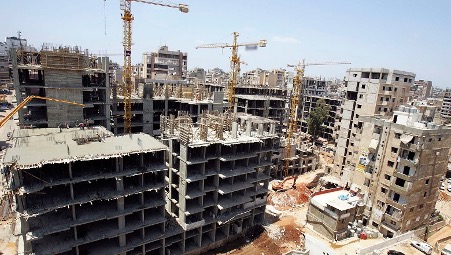
Albania has built one of Europe’s most construction dependent economies, a model that has produced visible growth, a changing urban skyline and record figures in foreign investment, but also growing concerns that the country’s economic expansion is increasingly tied to concrete, corruption and the laundering of money from organized crime.
According to Eurostat data for 2024, construction accounted for 13.8 percent of Albania’s gross value added, the highest share in Europe and more than double the European Union average of 5.5 percent. No other country in the region comes close. Kosovo follows with around 10 percent, while North Macedonia, Serbia, Bosnia and Herzegovina, and Montenegro all remain far below Albania’s level.
The figures point to a structural imbalance. After more than three decades of transition, Albania’s economy remains heavily dependent on sectors that generate limited long term value: construction, low productivity agriculture, tourism based largely on natural resources, and real estate. Manufacturing and industry remain weak, while agriculture continues to employ and absorb a large part of the economy without producing a strong food processing chain.
This has created what economists describe as a deceptive macroeconomic picture. Growth looks solid on paper, foreign investment appears high, and urban transformation is visible. But beneath the surface, the country has failed to build a diversified productive economy capable of generating higher wages, stronger exports and sustainable employment.
The construction boom is at the center of that model.
In recent years, Tirana and coastal areas have seen a rapid expansion of high rise towers, luxury residences, resorts and real estate projects. Prices have risen sharply, often disconnected from average household incomes. The question increasingly asked by economists, investigators and the public is simple: where is the money coming from?
A growing body of concern points to corruption and illicit capital, including funds linked to organized crime and international drug trafficking, particularly cocaine. Albania has repeatedly appeared in international law enforcement investigations as a country connected to networks involved in drug trafficking and money laundering. While not every construction project is illicit, the scale and speed of the boom have raised serious doubts about the origin of capital flowing into real estate.
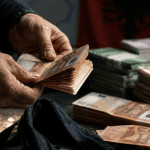
Construction offers an attractive vehicle for laundering money. It allows large amounts of cash to be absorbed into land purchases, permits, subcontracting, apartment sales and inflated real estate values. In economies with weak oversight, politicized institutions and opaque ownership structures, the sector can become a bridge between criminal capital, corrupt public officials and formal economic activity.
This is why Albania’s construction boom is not merely an economic story. It is also a governance story.
The country’s dependence on construction reflects a development model in which political power, public permits, strategic investment status, public land, real estate speculation and private capital often intersect. The result is an economy where access to government decisions can matter more than innovation, productivity or competition.
Ornela Liperi, editor in chief of Monitor magazine, warned at a recent conference organized by the American Chamber of Commerce in Albania and Monitor that the country cannot continue to rely so heavily on construction. She argued that the sector does not create lasting value for the economy and has, in many cases, served as an instrument for money laundering, as recent actions by SPAK, Albania’s Special Anti Corruption Structure, have increasingly suggested.
The contrast with the rest of the economy is striking. Industry accounts for only about 12 percent of Albania’s gross value added, compared with 19 percent in the European Union. In much of the Western Balkans, industry contributes more than 20 percent. Albania also remains the most agricultural economy in Europe, with agriculture accounting for 18 percent of gross value added, compared with only 2 percent in the EU.
Yet even this large agricultural base has failed to produce strong domestic food processing industries. Albania’s agriculture remains fragmented and low productivity, while food imports have grown strongly since 2020. Tourism, despite its rapid expansion, has also failed to create a powerful domestic value chain. Instead of stimulating local production, it has helped increase imports, including food products.
The paradox is visible in everyday life. Albanians pay some of the highest food prices in the region, and recent Eurostat data indicate that food prices have even surpassed the EU average. In a country with a large agricultural sector, this is a sign not of strength, but of structural failure.
The same pattern appears in foreign investment. The government often presents record foreign direct investment as evidence of economic success. But a large and growing share of that investment is linked to real estate purchases. In 2025, around 34 percent of foreign investment came from real estate. In the first quarter of 2026, the share rose to 42 percent. Without real estate, foreign investment would not show the same growth dynamic.
This means Albania is attracting capital, but not necessarily the kind of capital that transforms the economy. Investment in apartments, resorts and towers does not automatically produce technological upgrading, export capacity or better paid jobs. It can inflate asset prices, deepen inequality and make the economy more dependent on speculative cycles.
The social consequences are already visible. Albania continues to suffer from high emigration, especially among young and skilled workers. Low productivity keeps wages among the lowest in the region. The population is ageing, while the country continues to export labor rather than build industries capable of retaining it.
In this sense, the construction boom has become both a symptom and a mechanism of Albania’s deeper economic problem. It creates the image of prosperity while masking the absence of a productive development model. It produces buildings, but not necessarily broad based wealth. It generates growth, but not enough value. It attracts capital, but too often without transparency.
The deeper question is no longer whether Albania is growing. It is what kind of economy is being built, and for whom.
If the country’s development continues to depend on concrete, real estate speculation, public permits and opaque capital, Albania risks locking itself into a fragile model: one that benefits politically connected investors and criminal networks far more than citizens, workers or future generations.
The cranes over Tirana and the coast may look like symbols of progress. But they may also be the most visible sign of an economy trapped in concrete.