TIRANA, Oct. 12 – With five months to go before Albania concludes a three-year deal supported by a €331 million loan with the International Monetary Fund , the Albania government says it will continue its cooperation with the Fund even after February 2017 but has not specified whether its role will be reduced to advisory or remain decision-making.
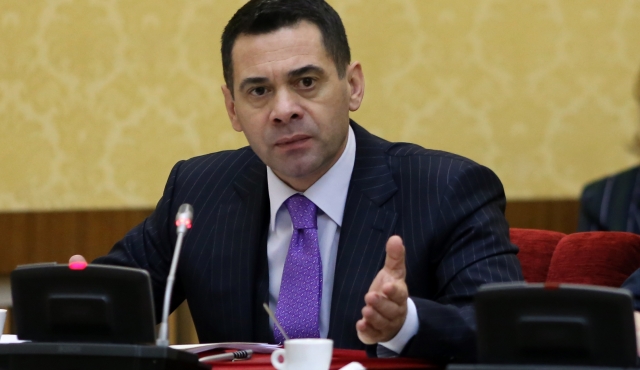
“It is early to decide what kind of deal we will have with the International Monetary Fund next year, but one thing is for sure: We will continue our job and relation with the IMF maybe under Article IV or maybe let’s say a policy agreement,” Finance Minister Arben Ahmetaj told VoA in the local Albanian service from Washington where he attended the IMF and World Bank annual meetings.
The current relation with the IMF has been conditioned by a three-year soft loan, with IMF missions making almost quarterly visits to Albania to discuss tax policies with Albanian authorities before deciding on the next loan installment.
While the Fund has had a decision-making role on the government’s fiscal policies in the past three years, conditioning its financial support with a tougher discipline on public finances, experts and business representatives have often criticized its continuous tax hike policy as not helping improve the business climate in crisis times.
Under Article IV, the IMF holds bilateral discussions with members, usually every year. A staff team visits the country, collects economic and financial information, and discusses with officials the country’s economic developments and policies in an advisory role.
Finance Minister Ahmetaj described the current deal with the IMF as a “star performer” in the region which has enabled the Albanian economy to leave behind the crisis and embark on sustainable growth.
“The programme has been dubbed ‘star performer,’ i.e. one of the best performing in the region, even for direct statistical and structural reasons. The Albanian economy is growing by 3.4 percent at a time when three years ago it was statistically below 1 percent,” said Ahmetaj.
“All data indicates that the Albanian economy has left behind the crisis and embarked on a path and cycle of consolidated long-term growth. In the meantime, budget-related data also indicates only fiscal consolidation, economic growth and debt reduction,” he added.
The finance minister also said the government was discussing a pay rise for the public administration. The negotiations come after public administration salaries have frozen in the past three years and are set to rise again ahead of next year’s general elections.
Central bank governor Gent Sejko has hailed the pay rise as positive about stimulating current sluggish domestic consumption, but urged caution to continue fiscal consolidation in order to keep the budget deficit and public debt in check.
The public debt, currently at a record high and a huge burden for the size of the Albanian economy, is set to slightly drop to slightly drop to 71 percent of the GDP this year before dropping to 60 percent of the GDP by 2019 which is slightly overoptimistic considering the sluggish performance of public finances even after an aggressive late 2015 nationwide campaign against widespread informality.
While the IMF presence in Albania and its loan at only 3 percent of the Albania GDP have somehow helped consolidate Albania’s public finances by clearing government arrears, its policy on increasing taxes and keeping salaries unchanged has been criticized by the business community as a government excuse to increase taxes.
Since 2014, the corporate income tax and the withholding tax on dividends, rents and capital gains have increased by 5 percent to 15 percent, making the tax burden in Albania one of the region’s highest and a key concern for foreign and local investors.
The opposition Democratic Party, which has unveiled an electoral platform for a shift to a 9 percent flat tax ahead of next year’s general elections, says the Albanian economy is suffering from corruption in concession contracts, massive migration and cannabis cultivation.
“This coalition has only thought about enriching themselves. This government assumed power with the promise of creating 300,000 jobs but has taken 100,000 Albanians to asylum. The Prime Minister [Edi Rama] promised free healthcare but plunged it into medieval condition. He promised rule of law but crime, drugs and murders flourished,” says opposition Democratic Party leader Lulzim Basha.