TIRANA, Sept. 20, 2023 – Albania’s exports saw a sharp decline of almost 22 percent year-on-year, according to the latest official data, with exporters blaming the local currency’s strength making Albanian products more expensive in the EU market.
In August 2023, the value of exported goods reached 27 billion leks (253.8 million euros), marking a substantial 21.9 percent decline compared to the same period last year. This represents the most severe drop since the pandemic in 2020.
The year had initially started positively, with a 20.2 percent year-on-year increase in foreign sales in January, followed by a modest 2.8 percent uptick in February.
However, the situation began to deteriorate rapidly, with declines of 11.7 percent in March, 19.3 percent in April, and 11.7 percent in May. June witnessed a further contraction of 17.3 percent, followed by a slight slowdown in July at 4 percent before another significant drop of 21.9 percent in August.
According to the August data, the Construction Materials and Metals sector suffered the most, with a staggering 50.9 percent decrease, while Textiles and Footwear saw an 18.6 percent fall. Food, Beverages, and Tobacco and Machinery and Replacement Parts also experienced declines, although they have displayed relative resilience in recent export trends.
Experts note that the significant decline in August is closely linked to the depreciation of the euro against the local currency, which has resulted in reduced income when converted to leks.
Other contributing factors include an increase in the minimum wage, rising labor costs, reduced demand from abroad, particularly for footwear, the European economic crisis, and the relocation of manufacturers to Asia to lower production costs.
Textiles and Footwear remain the country’s largest export group, accounting for 28 percent of the total.
Groups representing the export industry have increasingly voiced their concerns to the Bank of Albania and the Ministry of Finance about the significant depreciation of the euro, which currently trades at around 107 leks, down from the 2022 average of 118 leks. The depreciation of the euro has severely impacted the export sector, making Albanian products more expensive for foreign buyers.
The countries of the Eurozone hold the lion’s share in trade with Albania, so the lek vs. euro exchange is a very important figure in the economy. In August 2023, the countries with the most significant export declines compared to August 2022 were Italy, Spain, and Germany. Conversely, Kosovo and Greece witnessed the most substantial export growth during this period.
The euro-lek exchange rate in Albania has been notably influenced by several factors, primarily driven by a surge in foreign currency supply during the peak tourist season. Record-high numbers of foreign tourists this year have resulted in increased tourism revenues, particularly during July and August, exerting a strong impact on the exchange rate. Additionally, factors such as rising remittances, exports of various services, and significant foreign investments in real estate have contributed to these fluctuations.
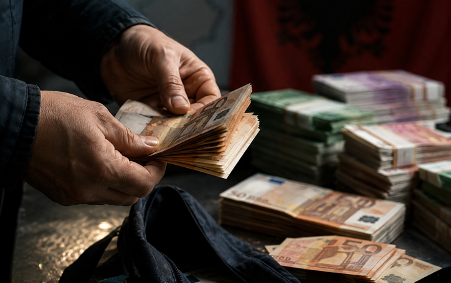
However, there are concerns about the influx of gray or illicit funds in cash from abroad, with instances of individuals attempting to enter the country with undisclosed large sums of money. This has raised apprehensions about potential money laundering activities and their broader effects on the strength of the local currency.