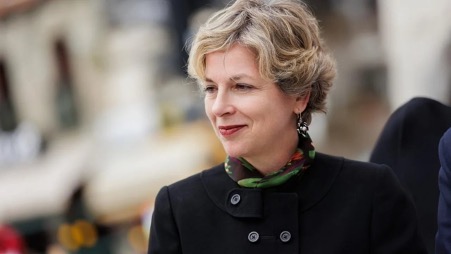
Debates about EU enlargement tend to focus on the risks of admitting countries before they are ready. In her recent paper, Marta Szpala broadens the debate by examining what prolonged delay means for both candidate countries and the European Union itself. Tirana Times spoke with Szpala about how prolonged uncertainty affects reform, credibility and political influence in the Western Balkans and why renewed momentum must still be matched by strict, merit-based conditions.
________________
Let’s start with the reframing: from the risks of enlargement to the costs of non-enlargement. What made that change of perspective matter to you?
When enlargement is discussed, the focus is usually on what it could mean for the EU economically, institutionally, politically and economically. There is also a lot of debate about the risks of admitting countries before they are ready. Far less attention is paid to the opposite scenario: what happens if enlargement does not take place? Non-enlargement is often treated as a neutral situation, as if the EU were simply waiting for candidates to become better prepared. But this inaction of the EU has consequences too. It weakens the EU’s credibility, reduces its ability to encourage reform and creates political, economic and security costs that the Union will eventually have to manage. For me, the point is not to ignore the risks of enlargement. It is to recognise that inaction is also a policy choice, and one that comes at a price.
You describe non-enlargement as “not a neutral state of waiting,” but as a regressive process. Where is the tipping point, when does a slow process quietly become non-enlargement?
There is rarely one formal decision announcing that enlargement will not happen. More often, non-enlargement emerges through indefinite postponement. The process becomes unpredictable, technical steps take unnecessarily long and progress is no longer clearly connected to reforms on the ground. At that point, membership ceases to be a credible, political objective achievable within a specified timeframe. In consequence, reform coalitions lose motivation, administrative capacity can weaken, people leave and political elites have fewer incentives to undertake difficult institutional reforms. Delay can therefore contribute to regression rather than preparation. Public support for the EU may remain high, while confidence that membership will actually happen steadily disappears. Therefore, extending the process has not resulted in the states being better prepared; on the contrary, their situation has deteriorated. Moreover, the time passes differently inside and outside the EU. In candidate states, subsequent generations continue to wait for membership to no avail.
The paper calls the accession process an “endless labyrinth of procedural hurdles.” What actually builds that labyrinth today: the technical demands, the bilateral disputes, or a failure of political will inside the EU?
All technical requirements themselves are necessary, but underneath them lies a more fundamental problem: the lack of a shared political vision for the next enlargement. In earlier rounds, many technical steps followed once the conditions had been met. Today, even simple formal steps, which were automatic in the previous enlargement, can become separate political battles. This makes the process difficult to predict and weakens the principle of conditionality. Candidates must be able to see a clear relationship between meeting a condition and moving forward. Without that link, accession begins to look less like a structured transformation and more like an open-ended negotiation. The problem is therefore not that the standards are too demanding, but that the route between compliance and political decisions has become increasingly uncertain.
Another central image in your paper is the “grey zone” created by non-enlargement. What does that grey zone look like in practice?
The EU remains the strongest actor in the Western Balkans, with far greater economic, political and regulatory influence than any competitor. The grey zone emerges not because other actors are necessarily stronger, but because prolonged uncertainty in the accession process can weaken the EU’s role as a consistent anchor for the region. This creates more space for external actors to build influence through informal networks, institutional weaknesses or existing political tensions. Their engagement can also provide leverage in their broader relationship with the EU. At the same time, local political elites may use alternative partnerships to strengthen their bargaining position with Brussels. This uncertainty encourages short-term tactical behaviour rather than long-term institutional alignment. As a result, rhetorical commitment to European integration can coexist with slower progress in institutions and political practice.
You argue that the EU is moving from transformative power toward “transactional diplomacy,” while regional leaders increasingly operate as “strategic brokers.” How has that reshaped the relationship between the EU and the region?
By transformative power, I mean the EU’s ability to encourage long-term political and institutional change through the prospect of membership. Candidate countries aligned with European rules because accession was credible and the European model was attractive. Transactional diplomacy describes a different dynamic, in which cooperation is negotiated more frequently issue by issue. Prolonged uncertainty around enlargement can make this transactional element more prominent, even if the EU’s transformative role has not disappeared. In this setting, regional leaders may operate as strategic brokers by using their role in areas such as migration, security or regional stability to strengthen their bargaining position. This reshapes the relationship by placing greater emphasis on short-term negotiation and tactical cooperation alongside the longer-term accession process. The risk is that immediate stability concerns can sometimes overshadow democratic standards and institutional reform.
The opportunity for enlargement may be geopolitical, but entry must remain merit-based. How can the EU reconcile those two principles?
The answer is a strict but fair enlargement policy. Geopolitical urgency should help remove unnecessary delays without lowering the conditions for membership. Independent institutions, a functioning judiciary, a professional public administration, democratic standards and the effective implementation of EU law must remain non-negotiable. Adopting legislation is not enough unless institutions can apply it in practice. Progress in the negotiations should therefore remain closely linked to substantive and sustainable reforms on the ground.The EU focuses primarily on the ruling elites, attempting to convince them to reform, whereas these very elites are the biggest obstacle, being reluctant to implement changes—while the overlooked society is actually the greatest ally in demanding reforms Clear communication of expectations, combined with support for citizens and civil society, can strengthen the reform process. Engagement of European institutions and domestic demand for reform can reinforce one another.
You recommend gradual integration and tangible benefits before full membership. How can this become a bridge rather than a permanent waiting room?
Gradual integration can rebuild credibility if every benefit is linked to clear benchmarks and a transparent path toward full membership. Access to parts of the single market, programmes or funding can show citizens that reform produces concrete results. But these steps cannot become a substitute for accession. The final objective and the conditions for reaching it must remain explicit, accompanied by realistic timelines and regular assessments that the public can understand. For Albania, progress in negotiations creates a valuable opportunity to turn formal commitments into lasting institutional change. The real test is not how quickly chapters move, but whether reforms are implemented and experienced in practice.
If the current situation continues, what would it mean for the EU to “lose its neighbourhood”?
It would not necessarily mean that the region simply chooses another geopolitical camp. Rather, the EU would gradually lose some of its ability to shape political and institutional developments in its immediate neighbourhood. Weak rule of law, organised crime, environmental problems, migration pressures and security risks do not stop at the Union’s borders. The EU could therefore end up spending more on managing instability than it would on preventing it through closer integration. Losing the neighbourhood would also mean losing the trust of societies that still associate Europe with democracy, personal freedom and functioning public institutions. The cost is therefore not only strategic or financial. It also risks weakening one of the EU’s central sources of influence: the credibility and attractiveness of the European model.
________________
The paper authored by Szpala on this topic is part of a project implemented by the Albanian Institute for international Studies (AIIS) and supported by a grant from Open Society Institute – Sofia Foundation (OSIS) with the support of Open Society Foundations (OSFs).