By Sidonja Manushi
Reporting from China
BEIJING, March 8 – Landing at Beijing’s international airport for China’s National People’s Congress (NPC) first plenary session this week, it wasn’t difficult to imagine why the country’s GDP is consistently growing — by 7.1 percent per year in the last five years. There were impressive new buildings and innovative technology noticeable the moment one lands.
Many of the people arriving at the same time were part of the more than 3,000 MPs that met for NPC’s plenary session — the first of the newly elected legislative body’s five upcoming meetings scheduled to take place annually in March, until 2023.
An Albanian delegation of journalists, including from Tirana Times, joined in to attend the NPC’s first session in context of China’s progressively expanding foreign policy, which includes South-East Europe and the Balkans region through the 16+1 and One Belt One Road initiatives.
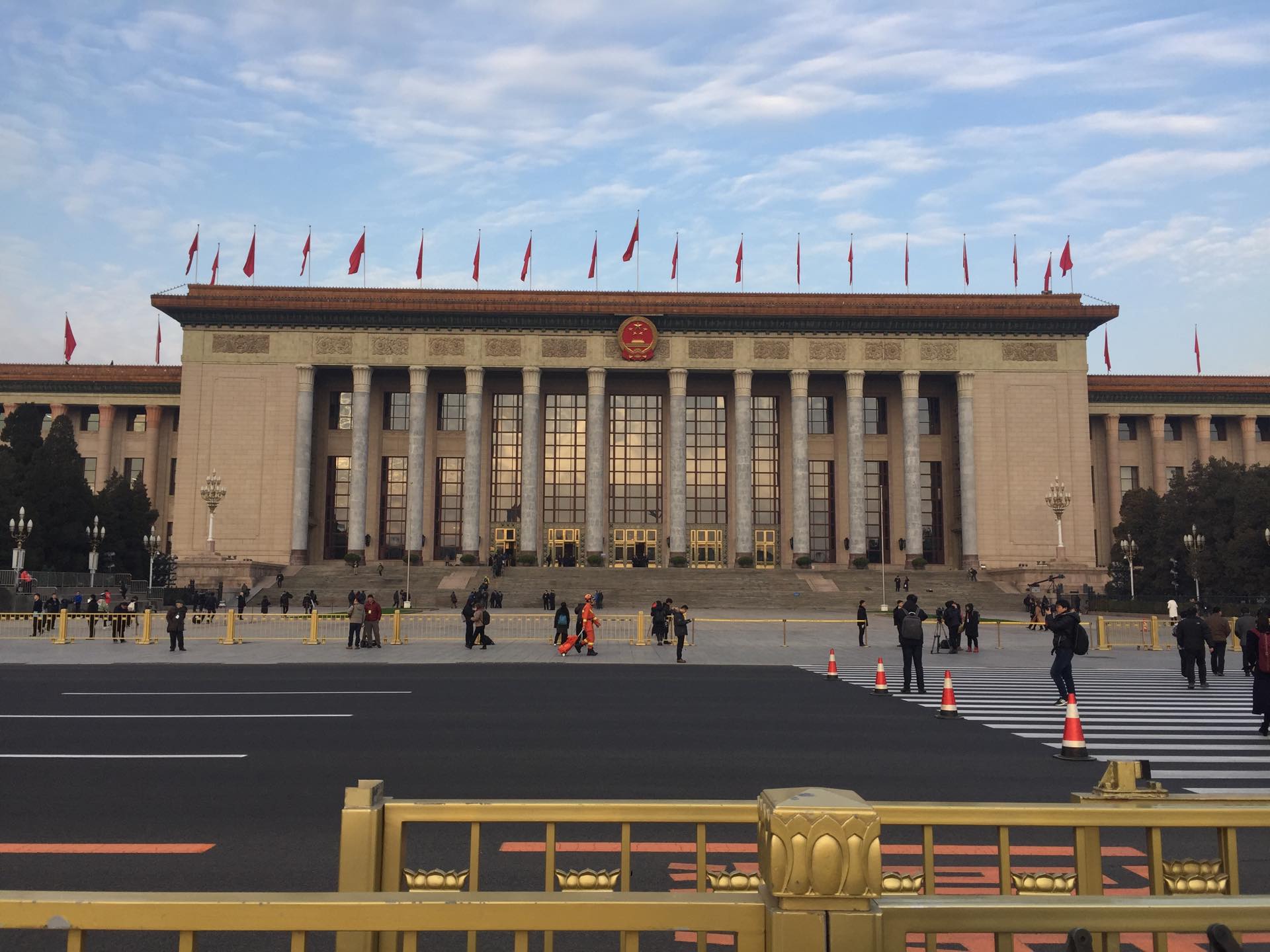
Indeed, the word “global” was frequently mentioned in Premier of State Council Li Keqiang’s opening speech on Monday’s session in the Great People’s Hall for an audience of more than 5,000 — MPs and government workers, media representatives and China’s General Secretary Xi Jinping.
This, according to analysts, is an indicator China is looking to take over a more present role in political world affairs — a move that would certainly match its economic progress the last twenty to thirty years, as well as the cosmopolitan environment of major cities such as Beijing or Shanghai.
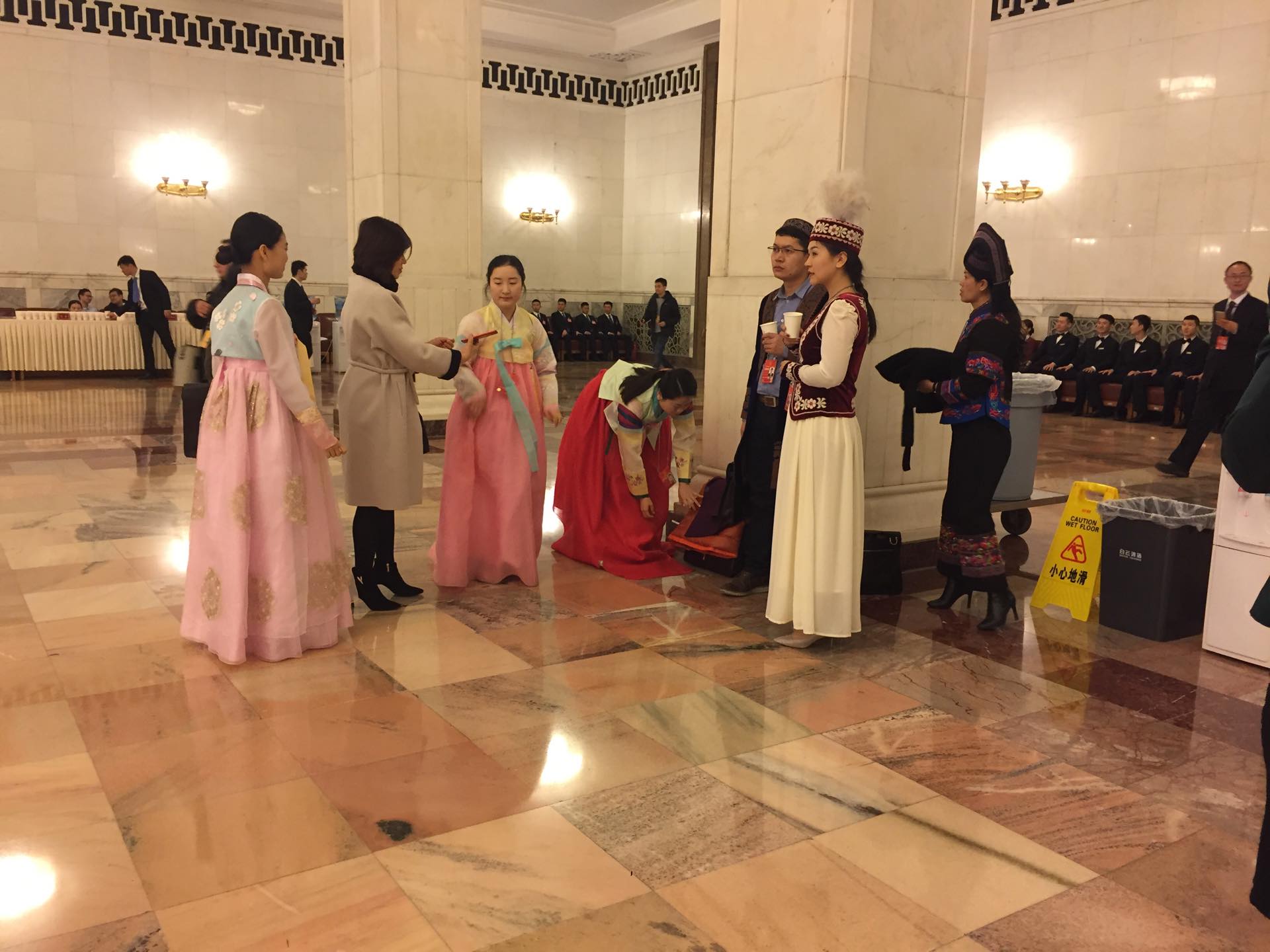
On the other hand, the NPC — the largest parliament in the world — consists of MPs representing China’s even most minor ethnic groups, autonomous regions, and even the armed forces, and who participate in meetings over the course of two weeks dressed in traditional and ethnic costumes.
NPC MPs hold five-year terms; the 13th NPC judicial group is taking office this year. As the most powerful institution of the Chinese government, the NPC has sole authority on laws and constitutional amendments.
In addition, high-ranking officials hold speeches and present work reports that hint at the Communist Party of China’s (CPC) domestic and foreign policy for the next five years.
According to NPC’s report on government work for the last five years, China’s share in the global economy grew to 15 from 11.4 percent, while its contribution to global growth was more than 30 percent.
The One Belt One Road initiative — a 2013 proposal that aims to build a trade and infrastructure network along the ancient Silk Road trading routes connecting Asia with Europe and Africa and reaching the Balkans too — occupied an important role in the work report, with officials saying construction has made major progress.
It was also reported the country managed to create over 66 million new urban jobs, consequently raising its urbanization rate and enabling more than 80 million people to gain urban residency.
The country’s overall requirements for the next five years include a steady 6.5 percent GDP growth, a rise in export and import volumes and a drop of at least 3 percent in energy consumption.
Innovation also took an important place in the country’s long-term plans, with Keqiang saying the country will strengthen efforts to reduce smog and prevent as well as cure cancers and diseases, as well encourage overseas excellent Chinese students to return to China to pursue business ideas and startups.
In reality, these are not the country’s first efforts to reduce pollution which mainly comes from burning coal to generate heat in the winter — Shanghai’s 23 million population fairs with only 2 million cars due to the government’s increased license plates’ prices in a bid to reduce harmful air particles.
In addition, China has provided additional means of transport nationwide to avoid car use, the latest being the high-speed G5 train- – an exclusively Chinese technology which covers the 1,220 km distance from Beijing to Shanghai in little over 4 hours.
The country’s critical battles the following years will be defusing local government debt risk, stepping up targeted poverty alleviation and making greater progress in addressing pollution — especially sulfur dioxide and nitrogen oxide emissions.
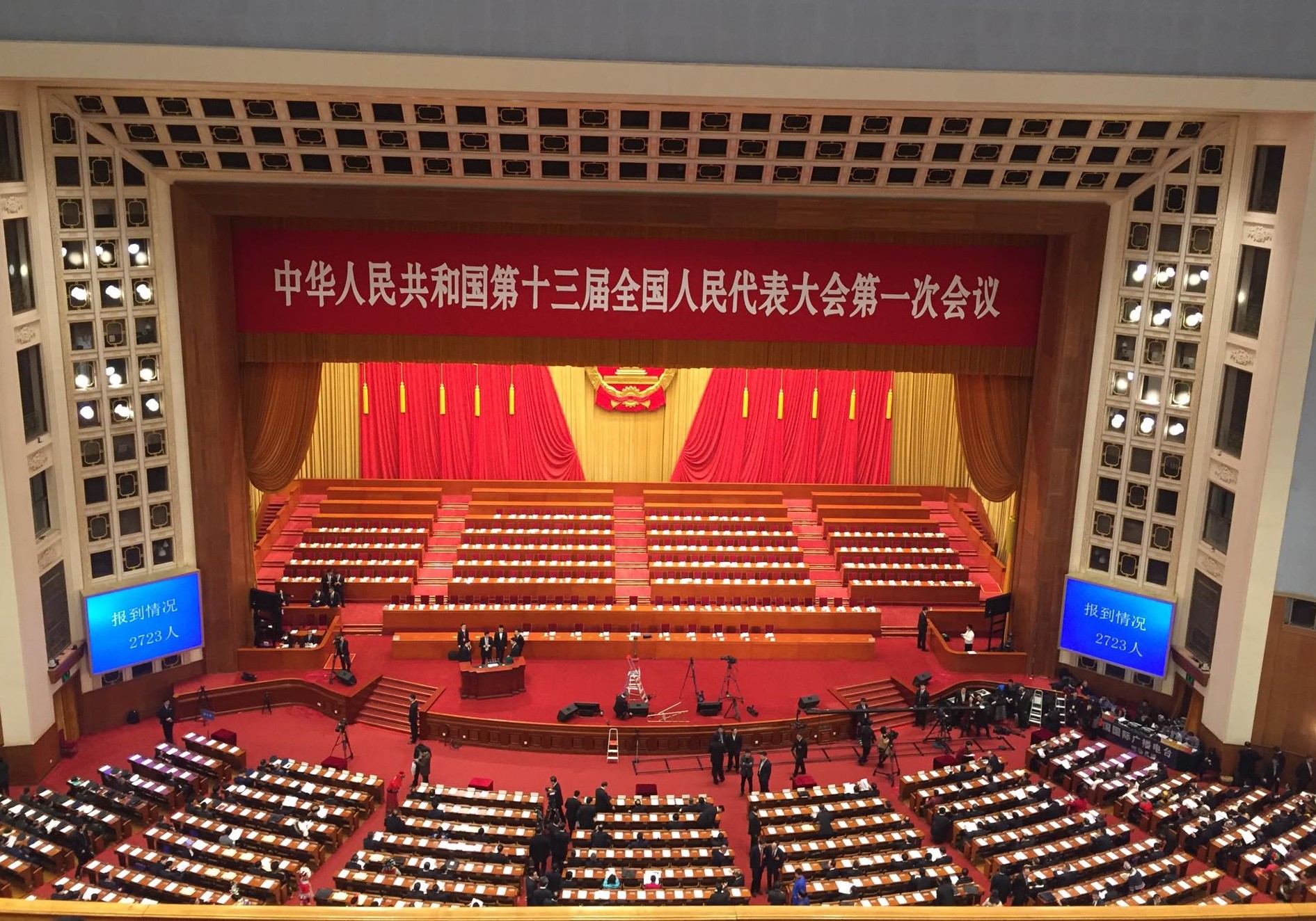
While the world’s main question was whether the NPC will approve Jinping’s proposal to remove presidential term limits (it did), locals and officials alike will be focusing on concrete legislation that will fulfill China’s Communist Party’s goals in becoming a world economic and innovative leader — progress which will no doubt affect global order in its entirety.