
TIRANA, March 23 – Albania’s central bank decided on Wednesday to raise the repo rate by 0.25 percentage points to 5.25 percent after keeping it unchanged at 5 percent, one of the lowest historical levels, for the past 8 months. Governor Ardian Fullani said the move was aimed at keeping inflation rate in check following a sharp rise in consumer prices last February. Data from the country’s Institute of Statistics show the Consumer Price Index (CPI) rose 4.5 percent year-on-year in February 2011, exceeding the central bank’s target band by 0.5 percent. Compared to last January, the inflation rate was up 2.3 percent mainly because of the ongoing rise in food, vegetable, tobacco and medicine prices. In February 2010, the CPI was up 4.7 percent year-on-year.
This is the first time the central bank is raising the key interest rate for lek after a lowering trend aimed at boosting lending which continued until July 2010, when the repo rate was lowered by 0.25 percentage points to 5 percent.
“The Bank of Albania chose the appropriate moment to change its monetary policy direction under conditions of global price increases and uncertainty in the global framework of their relation to the market,” said Fullani.
The governor says the move to lower the key interest rate will boost both domestic demand and direct investments and keep the inflation rate in check within the central bank’s the 3ѱ percent target band in the mid-term.
The central bank’s decision is expected to bring a slight increase in lending rates for the national currency, lek, which has lost considerable ground against the euro in the past two years depreciating by 10 percent.
Meanwhile, the country’s economic performance looks stable. With budget revenues expected to grow by 11 percent, 2 percent more than under the revised 2010 budget, government projects the Albanian economy will grow by 5.5 percent in 2011, up from an estimated 4.1 percent in 2010, which is almost twice higher compared to what international financial institutions expect.
The Finance Ministry’s main priorities in 2011 will be keeping the high public debt under control, currently at 59.5 percent and expected to drop to 59 percent of the GDP by the end of this year, keeping inflation rate within the central bank’s 3ѱ percent and further reducing current account deficit to preserve the country’s macroeconomic stability. The 2011 budget, considered the biggest ever at 4 billion dollars will continue supporting wage and pension increases, and keep deficit in check. The 2011 budget, worth 409 billion lek (4.08 billion dollars) and with revenues at 362.2 billion lek, will take budget deficit to 46.8 billion lek, up from 38.1 billion lek in 2010 or 3.5 percent of the GDP.
Unemployment rate is also expected to be brought down to 12.5 percent down from 13.5 percent in 2010.
BoA raises repo rate to keep soaring inflation in check

Change font size:
Recommended Articles


Latest from Business & Economy

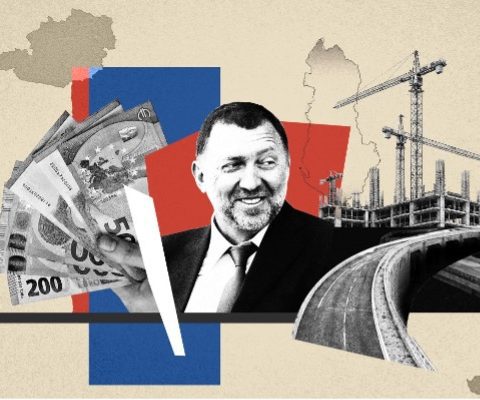
How a Sanctioned Russian Oligarch’s Business Interests Reached Albanian Public Contracts
Change font size: - + Reset Millions of euros flowed to companies linked to Strabag while Oleg Deripaska remained a major shareholder, exposing gaps in Albania’s ability to identify who ultimately benefits
Albania’s Cash Boom Raises Money Laundering Concerns
Change font size: - + Reset Cash outside Albania’s banking system reached a record 5.6 billion euros, last month. Tirana Times, August 30, 2026 – The amount of cash circulating outside Albania’s

Vlora Airport Heads to Arbitration
Change font size: - + Reset Albania faces another potentially costly international dispute after losing several arbitration cases in recent years that have exposed the state to hundreds of millions of euros

Concrete, Cocaine and Corruption: Albania’s Fragile Growth Model
Change font size: - + Reset Albania’s Concrete Economy: How Construction Became the Country’s Dominant Growth Model Tirana Times, July 10, 2026 – A booming construction sector has made Albania an outlier

Austria Leads FDI, but Real Estate Tells the Bigger Story
Change font size: - + Reset Bank of Albania data show Austria topping first-quarter foreign investment flows, while property and construction continue to shape Albania’s FDI model. Tirana Times June 25, 2026