Albania’s future government will bring together the right-wing coalition headed by the Democratic Party (Partia Demokratike, PD) and the left-wing Socialist Movement for Integration (L췩zja Socialiste p철Integrim, LSI). LSI is a former split-off (schism) from the Socialist Party (in 2004) running in the June 2009 elections with its own coalition.
Commenting on the new governmental alliance, the actual Prime Minister of Albania, Sali Berisha, hastened to see colliding points between the programs of the main government parties, PD and LSI. European Union integration and creation of jobs were top electoral promises of both parties.
But as LSI will come from the opposition into the government, the economic challenges that the new governing body will face are expected to be not only economic but also cognitive and strategic.
Cognitive challenges
The main difficulties in the ruling assemblage that will be formed successive to the 28th of June election are expected to be in the cognitive field. LSI believes that Albanian economy has entered crisis since the first months of 2009. PD, the main alliance party headed by Sali Berisha, the actual Prime Minister of Albania, has never publicly recognized a crisis and has claimed that Albania will continue in 2009 with its growth cycle. Recognition of the economic situation, whether Albania is in a critical situation or whether the country is in a virtue cycle of growth will perhaps be the first challenge of the governing body.
Though Sali Berisha and the right-wing government have resolved the question of crisis and have had different stands in different places and occasions, they have never publicly admitted that Albania is facing crisis, though they have recognized that the influence of the global economic crisis will be felt in Albania. On the contrary, LSI believed Albania to be subject to world crisis in 2009 and the web page of Integrimi, the organ of LSI, is still manifesting titles like “Economic crisis, Albania will be hardly hit in the second semester.”
In the case that the forthcoming government will not admit the hypothesis of a crisis and will not adopt economic policies that will try to mend the effects of the global downturn on the Albanian reality, the future economic orientation of the government might be influenced by the past economic policies that might be reiterated, as well as the electoral programs of the main governing parties, PD and LSI.
In the past LSI has been attentive to measures called for by Albanian entrepreneurs and its electoral program included not only measures supporting a healthful economy, but also measures specifically aiding a crisis-bitten economy. While the Democratic Party (PD), satisfied with its own achievements as ruling party, has ignored calls for anti-crisis measures and does not reflect any such particular measures in its electoral program. Before the elections, answering calls for anti-crisis measures, Prime Minister Sali Berisha made claims that Albania had done formerly what the other Balkan countries were doing in front of the crisis (namely tax reductions and other supportive measures) and that there was no more space for such supportive policies. Besides he considered that Albania, though at a lesser pace, will continue its economic growth.
Electoral programs
Whether the ruling political parties will follow their electoral programs or not, or the spirit of which the programs will be predominant, will be difficult to guess. A former study published in January 2009 by the Kosov롄emocratic Institute (Instituti Demokratik i Kosov쳬 KDI) on the influence of the electoral programs of the main parties on the Assembly’s proceedings, finds that this influence has been restricted.
A similar study concerning Albania and the influence of the electoral programs on the parliament as well as government undertakings has not crossed our way. Empiric evidence seems to point out that the Democratic Party (PD) realized the decisive part of whatever fulfillment of its electoral promises during the last months of its governing mandate.
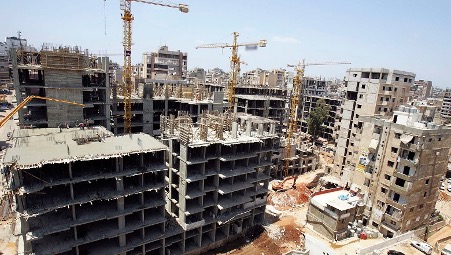
The Democratic Party (PD) has promised 160,000 new jobs which PD hopes will be created by the construction of 104 hydro-power plants, by the construction of multi-kilometers of roads, canals and aqueducts, by the construction of schools and hospitals, by the construction and functioning of new ports and airports, new tourist resorts, factories, mines and by the construction of 6 new industrial parks.
Infrastructure development, jobs and improved wages and retirement pensions echo as the main electoral promises of this party. PD has promised pensions and wages higher than in 6 countries of the European Union (EU).
LSI has promised the creation of 100,000 new jobs and says it would base all its economic, fiscal and educational policies on the necessity to create new jobs. The economic program of LSI is more detailed and foresees the abrogation of reference wages and exemption from taxes for the 3 first years of businesses that employ more than 5 employees.
The economic program that LSI manifested during the electoral campaign is also more fiscally-aware and fiscally-friendly. The left-wing party states in its program the reduction of the Value Added Tax (VAT) on food of primary necessity. From 20 % LSI would want it to become 10 %. LSI foresees a bunch of other fiscal advantages for employees and anti-crisis fiscal measures for businesses as well as would like to see agriculture supported.
Popular expectations
As Sali Berisha, the actual Prime Minister has often liked to put it during the electoral campaign and after the elections, “ƴhe main decisions belong to the sovereign.” The sovereign here means the voting people. A lecture of the popular expectations and the popular economic priorities expected for the future government can be made through a lecture of the polls preceding the election.
Economic-related issues ranked ahead of all concerns expressed by Albanian society. Unemployment and job-related fears or expectations show as the most sensitive issue.
The major concerns of the interviewed people in the pre-electoral polls organized by Zogby International from January to June 2009 were: Jobs and Unemployment; the state of the Economy; Poverty; Inflation and High Prices and Corruption in Government.
Roads, Infrastructure and Utilities, and a list of socio-economic concerns like Healthcare; Schools and Education; Emigration; Crime and Violence and the Environment and Pollution, came next. These findings are the more important from the fact that on each of the polls a new set of interviewed people emerged and the answers were not furnished by a regular panel.
If the future government wants to listen to its electors these are the main issues on which it should concentrate.