Rama-Tusk meeting in Brussels discusses efforts, future goals
TIRANA, Feb. 21 – Albania must “intensify its reform efforts” to reach the next stage in its EU bid, the bloc’s top leaders have told Prime Minister Edi Rama at meetings in Brussels.
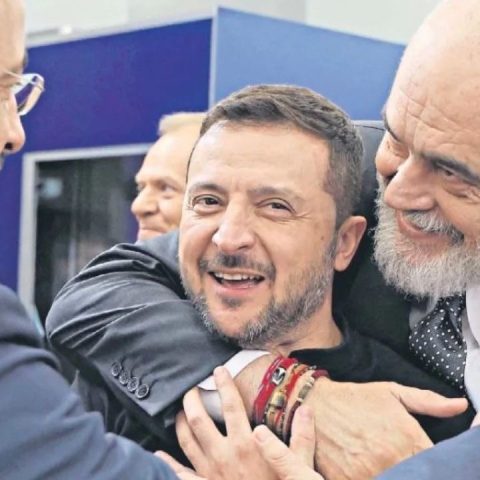
Rama’s visit included a meeting with European Council President Donald Tusk, aimed at discussing Albania’s integration process and enlargement in general, which Tusk repeated that it remains a strong priority for the European Union.
But Tusk made it clear to Rama that “every step on the road ahead will bring new responsibilities and more hard work. Albania is now a candidate for membership of the Union. So we hope and expect that it will intensify its reform efforts,” he said.
Tusk said that though a lot has already been achieved, including on the fight against drug-related crime, what is needed is implementation across the board.
Albania was also hailed again for the positive role it is playing in the Western Balkans, for its commitment to a “zero problem policy with neighboring countries.”
Tusk did not forget however to remind Albania that “Confrontational politics, boycotts and ‘the winner takes it all’ attitude will not help Albanian citizens. To become a modern mainstream European country, Albania needs to build a culture of compromise-based political dialogue. This creates the optimum framework for delivering tough, but much needed, political reforms.”
He mentioned that the June 21 municipal elections would be a good test. “Albania should be as constructive and as reasonable in its own political life as it is in the region,” Tusk said.
Rama thanked Tusk for the encouragement and the constant support to Albania’s EU accession process.
The premier said that Albania considers EU’s enlargement agenda as both a geostrategic and a political project, which is at the very core of the Albania’s foreign and domestic policy.
Rama informed European leaders on his country’s work and also the risk of terrorism in Albania and the region.
He warned Europe that “there is a growing risk that the Western Balkans will remain at the periphery of Europe, especially in terms of economic inequality, and this is something that they want to absolutely avoid.
“The Western Balkans has the potential to be a success story for the EU. The success of Europe’s democratization and stabilization agenda depends on the credibility and success of the enlargement policy in the Balkans,” Rama said.
He added that the European perspective is crucial in keeping the region on the path of peace and cooperation.
He repeated his belief that “the Berlin process is a chance to reinvigorate the accession process and help it to remain a tool that transforms the region into a vibrant and prosperous democratic space.”
He said that Tirana is “focused on concretely following and implementing the decisions of the Berlin Conference through jointly identified region projects that promote growth, competitiveness and employment in our area.”
Rama said that the upcoming conference on the Western Balkans in Vienna in August should turn into a milestone for the definition of regional projects.