TIRANA, Dec. 13 – High transfer costs and complicated procedures in Albania’s official remittance channels remain key barriers for more than 1 million Albanian immigrants in sending money home, with a considerable amount still estimated to flow informally in cash, says Albania’s central bank.
Governor Gent Sejko says costs for sending remittances to Albania are at 9.4 percent of the amounts transferred, compared to a regional average of 7.2 percent while transfer procedures are also considered complicated.
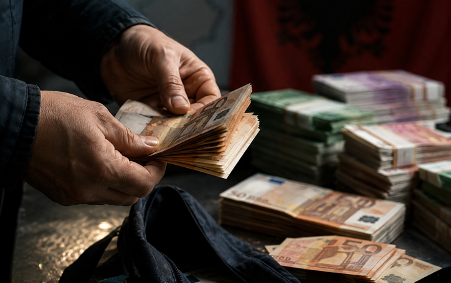
While transfers through money transfer operators and banks dominate the transactions, cash transfers via informal intermediaries or ATM cash withdrawals abroad and carrying cash when travelling back home are still considered at high levels.
“To Albania, remittances represent a sustainable and considerable source of inflows which exceed even foreign direct investment, constituting a major source in financing economic growth. Remittances are estimated to have a crucial impact on Albanian households in reducing poverty and improving the quality of life,” said governor Sejko, calling on the country’s money transfer operators and banks to reduce costs and redesign services targeted for remittance recipients.
The statement came during a deal Albania’s central bank signed this week with the country’s State Minister for Diaspora in a bid to ease the process of sending money home and attracting investment from migrant Albanians.
Pandeli Majko, the country’s first Diaspora Minister, in office since last September when a new wholly Socialist Party-run government took over, described the banking system as key to creating a favorable environment for the Albanian Diaspora.
“Offering information on investment opportunities at home and banking services is an invitation for a different economic future. Diaspora members should be able to invest in Albania under clear advice by the banking system,” said Majko, a former Socialist Party Prime Minister in the late 1990s.
Albania has more than 1 million immigrants, mainly settled in neighboring Italy and Greece where they have been living and working since the early 1990s after the collapse of the country’s communist regime and the exodus following it. The country’s has one of the world’s highest immigration rates with about a third of the population living abroad and the resident population having declined to 2.8 million compared to 4.3 million people on the civil registry.
While Albania has partly benefitted from remittances and know-how and investment, brain drain has been huge and the population is gradually getting older as a result of massive immigration also in the past few years and a sharp decline in birth rates, with a negative impact on the country’s economy.
The government is planning to offer migrants incentives to invest at home and make them eligible to vote in Albania’s next 2021 general elections from their host countries.
Fuelled by a recovery in Italy and Greece, remittances slightly recovered for the third year in a row in 2016 when they climbed to €616 million, but remained about a third below their peak level of €952 million in 2007 just before the onset of the global financial crisis, according to the country’s central bank.
The sharp cut in remittances, one of the main sources of revenue for thousands of households, has considerably affected domestic consumption and the construction sector which has been paralyzed facing lack of demand and a stock of unsold apartments following a pre-crisis boom, especially in some coastal areas.
In addition to crisis impacts, experts say remittances will continue to decline because of social factors as most immigrants create their own families abroad and often even take their parents with them.
Migrant remittances now represent about 6 percent of Albania’s GDP compared to a record high of about 16 percent of the GDP a decade ago.