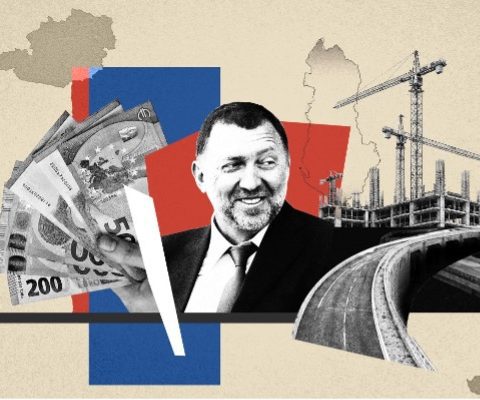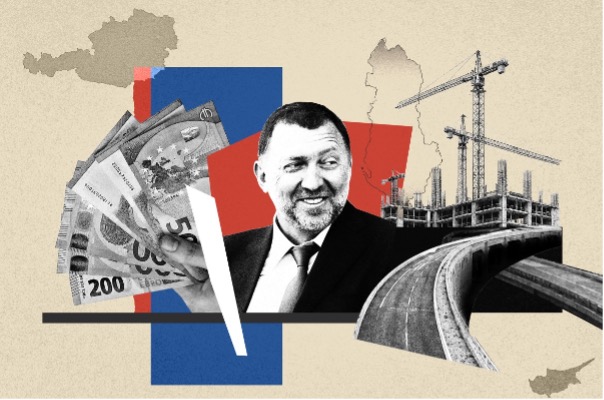
Millions of euros flowed to companies linked to Strabag while Oleg Deripaska remained a major shareholder, exposing gaps in Albania’s ability to identify who ultimately benefits from public money
Tirana Times, September 17, 2026 – For years, Russian oligarch Oleg Deripaska’s economic interests in Albania were largely invisible.
They did not operate through a Russian company bearing his name. Instead, the connection ran through one of Europe’s largest construction groups, the Austrian company Strabag SE, in which Deripaska, through Rasperia Trading Limited, held a stake of about 28%.
At the same time, Strabag and companies linked to it were winning public contracts in Albania for roads, reconstruction following the 2019 earthquake and other infrastructure projects.
Treasury payment records analyzed by BIRN show that from January 2019 through April 2022, companies linked to Strabag received about 23 million euros from Albania’s state budget.
During all of that period, Deripaska was under U.S. sanctions.
The case does not establish that Albanian public money was transferred directly to Deripaska. Strabag says it has no business relationship with him and stresses that neither the company nor its subsidiaries were subject to sanctions preventing them from operating.
But the case exposes a more complicated problem: how governments can determine who ultimately benefits from public contracts when ownership is divided through layers of companies, shareholders and foreign jurisdictions.
It also illustrates the consequences of a four year gap between U.S. and European sanctions against one of Russia’s best known oligarchs.
The United States sanctioned Deripaska in 2018. The European Union did not impose sanctions on him until April 2022, following Russia’s invasion of Ukraine.
That distinction mattered for Albania.
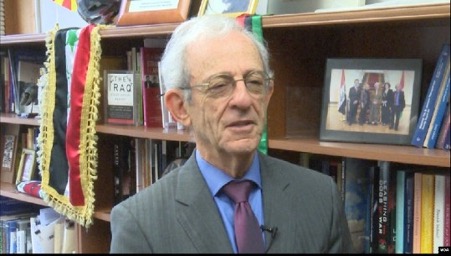
Despite being one of Washington’s closest allies in the Balkans, Albania had no legal basis at the time to exclude an Austrian company from doing business simply because one of its shareholders was sanctioned by the United States, according to Agon Maliqi, a nonresident fellow at the Atlantic Council in Washington.
Albania found itself caught between American pressure and the European regulatory framework, Maliqi said.
The result was that companies linked through the ownership chain to Strabag continued receiving Albanian public contracts and payments until European sanctions changed the legal environment.
A European company as a “shield of legitimacy”
Deripaska built his fortune in Russia’s aluminum industry and has long been regarded by Western governments as closely connected to the Kremlin.
His interests in Strabag were held through Rasperia Trading Limited, initially registered in Cyprus. Through that structure, Deripaska controlled roughly 28% of Strabag shares before sanctions reduced his influence.
Strabag already had a significant presence in Albania, both directly and through Trema Engineering 2.
Tom Keatinge, director of the Centre for Finance and Security at the Royal United Services Institute in Britain, said procurement authorities often check a bidder and perhaps its immediate owner but are far less likely to reconstruct the full ownership chain, voting rights and ultimate economic beneficiaries.
A well established European company can therefore provide what Keatinge described as a “shield of legitimacy.”
Strabag rejects any suggestion that Deripaska currently owns or controls the group, directly or indirectly.
The company told BIRN that after Russia’s invasion of Ukraine it took decisive measures to distance itself from its sanctioned shareholder. Rasperia’s shares and the rights attached to them were frozen in 2022 under EU sanctions.
Strabag also said it was informed in December 2024 that another company, Valtoura Holdings Limited, had taken control of Rasperia, leading to the assumption that Rasperia was no longer controlled by Deripaska.
But European and U.S. authorities have treated changes in the ownership structure cautiously, and Rasperia’s Strabag shares remain frozen.
Albania’s problem goes beyond Deripaska
The Deripaska case also raises questions about Albania’s mechanisms for determining the real owners and beneficiaries of companies receiving public money.
Albania maintains a register of beneficial owners, but economist Zef Preçi, executive director of the Albanian Center for Economic Research, describes it as more of an archive of self declarations than an effective control mechanism.
Formal ownership, he argues, can be only the visible façade of a much more complex structure.
Real control and economic benefit can pass through chains of companies, intermediary shareholders, undisclosed arrangements and offshore jurisdictions.
For Preçi, that makes the issue larger than a question of procurement procedure.
If public funds ultimately create economic benefits for sanctioned individuals, he argues, the issue becomes one of state integrity, economic security and public trust.
He says authorities should be able to stop a tender or trigger financial and criminal investigations when the true beneficiary of a company cannot be clearly established.
Ownership should also be monitored after a public contract is signed, he said, because shares can be sold and control can shift, potentially introducing sanctioned individuals later in the chain.
The concern is not simply whether Albania has the necessary laws and registers, but whether its institutions have the capacity and political independence to look beyond the first layer of corporate documentation.
The four year sanctions gap
The discrepancy between U.S. and EU sanctions illustrates another vulnerability.
Deripaska was sanctioned by Washington four years before Brussels took similar action.
Keatinge said such differences create windows in which assets can be moved, ownership structures reorganized and contracts or financing secured before sanctions regimes converge.
He also cautioned against placing responsibility for that gap on Albania.
Albanian authorities could not simply apply U.S. sanctions as though they were part of European law, he said.
The broader problem is what Keatinge calls a “weakest link” effect: transactions blocked in one jurisdiction can migrate to another where controls are less developed or where sanctions do not yet apply.
For Albania, a country seeking deeper integration with the European Union while maintaining a close strategic partnership with the United States, such gaps can leave institutions operating between two different sanctions systems.
Corruption as a security vulnerability
The risks extend beyond formal foreign investment.
Maliqi argues that Russia may be less interested in traditional investments in Albania than in cultivating corrupt relationships capable of making political and economic elites vulnerable to pressure.
He also says Albania’s elites have had other sources of illicit or corrupt financing, including links to organized crime, which may have reduced their dependence on Russian capital.
But those same criminal connections could create another avenue for foreign influence.
Maliqi said organized crime and its political connections may represent one of Albania’s weakest points from a national security perspective.
The case of former senior FBI official Charles McGonigal provides another connection to Deripaska’s circle.
McGonigal pleaded guilty in the United States in a case involving work for Deripaska after leaving the FBI. Separately, his activities in Albania and contacts with people connected to the Albanian government became part of another U.S. criminal case.
Keatinge describes figures who help build or maintain complex corporate and financial structures as “enablers,” including lawyers, accountants, corporate service providers and consultants whose technical expertise can also give questionable arrangements an appearance of legitimacy.
The larger lesson from the Deripaska case is therefore not whether one sanctioned Russian oligarch directly benefited from a particular Albanian contract.
It is whether Albania’s institutions are capable of seeing through complex corporate structures before public money is committed, and whether they can respond when the legal owner of a company is different from the person who ultimately exercises influence or receives the economic benefit.
For a country whose public procurement system handles hundreds of millions of euros and whose security policy is closely aligned with the West, that question reaches beyond financial transparency.
As Maliqi put it, corruption itself is ultimately a national security vulnerability.