SMI leaves government to join Socialists in coalition ahead of June elections, but will the deal between Edi Rama and Ilir Meta pay off?
TIRANA, April 4 – In a surprising move with major implications for the next parliamentary elections, the main opposition Socialist Party has joined forces in a coalition with the Socialist Movement for Integration, which has left the government, ending its four-year cooperation with the ruling Democratic Party.
Less than three months before the country is scheduled to hold parliamentary elections on June 23, Socialist leader Edi Rama extended an invitation to SMI leader Ilir Meta this week to join forces before the elections. The move has its supporters who see a unified left as key for the Socialists to come to power following eight years of rule by Prime Minister Sali Berisha and his center-right Democratic Party. However, it also has many critics who see SMI just as responsible for major government failures, such as in fighting corruption, as they do the Democrats.
Rama: Goal is to remove Berisha from power
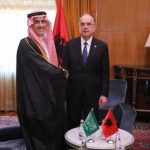
Ending weeks of rumors, Rama invited the Socialist Movement for Integration of Ilir Meta to be part of the leftist political coalition for the forthcoming June 23 parliamentary elections. Meta publicly accepted the next day.
Rama said that such a decision came after deep thinking and based on the idea that the major goal for these polls is removing Berisha from power.
Rama acknowledged that many would not think positively of such a move but added that time would show its worthiness.
While the opposition does not have the numbers to topple the prime minister immediately, even with the SMI deputies, the impact of the new coalition will be seen in places like the Central Election Commission where now the opposition could have a majority thus forcing the Democrats to rely on 5-2 votes for big decisions, something which has now been often asked for by the the Socialists.
Then it also comes to the local governance in many areas around the country where the SMI had joined the Democrats. Their turn now could also impose many other binding decisions in a new coalition.
There is also the hint that such a move will make the Socialist opposition to vote the three laws required in the context of the EU integration process, ones that the government has long been pressing for. The opposition had said that it is useless to vote new laws at a time when the government (including the SMI) did not apply the existing ones.
Support from the European left
Just days before the move, top leaders of the European left made three consecutive calls on the Albanian main opposition Socialist Party and the smaller leftist grouping, the Socialist Movement for Integration to join forces in their political fight to come to power with the June 23 parliamentary elections.
The calls came from Igor Stanisev, a senior politician of the European left, European Parliament First Vice President Gianni Pittella and George Papandreou, leader of the European leftist grouping.
All called on Socialists’ Rama and LSI’s Meta to forget their past political conflict and join forces to take Prime Minister Berisha of the Democratic Party from power in the forthcoming June polls.
All European politicians expressed their concern that Albania had three negative responses for its request on the candidate status in the European Union it had applied since 2009.
They said that “only a new and progressive socialist government can get the country out of the deepening crisis.” They considered this moment as of “historical importance.”
They appealed to their “friends,” – Edi Rama and Ilir Meta – that “there is no time to lose neither for the Albanian people nor for the Albanian Left, be it for the SP or SMI, to unite and win.”
“This is the moment when Edi Rama and Ilir Meta could pave the way to an incredible transformation of the political, economic and social life of Albania. The political cycle of the right wing governance in Albania is over,” said Pittella in his statement. “Albania needs change. Urgent change.”
Critics abound
The move has not been popular with many already inside the opposition.
Skender Gjinushi of the Social Democrats and Petro Koci of the True Socialist Party ’91 both said that the SMI’s arrival into the coalition was not fair, as it first had to exploit its presence in the government to topple it down before becoming part of the coalition. They said that the SMI was a Trojan horse in the opposition.
They also say that such a move will make the governing rotation partial as the SMI is already part of this government and will become one with the opposition in the future. Gjinushi said he considered the SMI as a negative factor in the coalition.
Many critics mentioned that it was Meta’s corruption scandal in 2011 which led to the violent Jan. 21 protest in which four opposition supporters were shot dead by authorities.
Berisha, on his part, reacted only in his Facebook social network site saying that each political force is free to decide on its future. He also reminded everyone that he is to respect the constitution, a hint that it is not that easy to move him from the post until the June polls.
Outside the Socialist Party and the left, Spartak Ngjela, one of the most radical and outspoken leaders inside the opposition said Rama’s move was strategic, however, others weren’t as positive, and at least one key opposition activist — Prec Zogaj — left Rama’s coalition all together, calling the move “immoral.”
Critics like him see the alliance between SP and SMI ahead of the elections as unacceptable on moral grounds – because SMI has been target of many corruption allegations during it participation the Berisha government.
Berisha ambivalent about the move
Prime Minister Berisha on Tuesday said the SMI’s departure would not create any problems for the government to take the country to the June 23 parliamentary elections. Berisha said the cabinet would continue its operation in full compliant with the constitution.
The Constitution asks that a vote of non-confidence should be accompanied with a nominated prime minister. The opposition does not have numbers in the 140-seat parliament to support that, thus leaving the government to run the country to the polls.
Berisha said the governing Democrats have the numbers in parliament. Their former coalition secured 70 seats in the 2009 election and they were joined with four from the LSI. But now they also have two more from the Cham party and also three former Socialist lawmakers who have abandoned their group following controversy with their leader Edi Rama.
“During the days to come all the proper decisions will be taken for the parliamentary majority and also the reshuffle of the cabinet,” he said at a news conference. “The government has a majority and in line with all the rules it will take the decisions and the country will have a full cabinet with all the capacities.”
Berisha said that the Constitution does not foresee a technical cabinet.
He also assured that the new ministers may change their close cabinet but not the staff who enjoy the civil service contract, despite their political affiliation.
Berisha was not clear however on the fact that the governing Democrats in many areas are in coalition with the LSI at the local authorities.
The prime minister reassured his supporters that the Democrats would go with himself on top at the elections and have “a spectacular victory” for a third mandate.
Joining part of the government to topple the rest
Analysts point out that the move essentially means that the opposition invited one half of government to defeat the other half. SMI has been a powerful force inside the government for the past four years, holding key ministries and being the target of much of the criticism over corruption by the Socialists.
Rama’s reasoning that he only way for his party to gain power is by having a coalition with the SMI, the same party that has guaranteed the rule of rival Democratic Party of Sali Berisha since 2009, is a gamble, they say. A third loss in a row would undoubtedly mean the end of Mr. Rama’s political career. He is gambling that by joining forces with Mr. Meta, he can’t fail.
This is not the first time the two parties have been together, however, in fact, SMI simply split from the SP more than eight years ago because Mr. Meta and his supporters were unhappy inside the SP.
Cabinet reshuffle as result of changes
With the withdrawal of three SMI key ministers Prime Minister Berisha named replacements the same day, who were approved by parliament next day.
Berisha named Aldo Bumci, the current tourism minister, to head foreign affairs (instead of Edmond Panariti); Bumci’s place at the tourism ministry was filled from Visar Zhiti; Florjon Mima, a Democrats’ lawmaker, was made economy minister (instead of Edmond Haxhinasto); and Halim Kosova was made minister of health (instead of Vangjel Tavo).
Berisha also replaced Haxhinasto in the post of his deputy prime minister with Myqerem Tafaj, who also serves minister of education.
The three cabinet ministers resigned Wednesday as SMI officially left the conservative-led coalition government ahead of June general elections.
It seems that Berisha has already the number in the 140-seat parliament to calmly pass the new names in his cabinet. Besides his previous coalition with 70 lawmakers he also has the support of the Cham party with two MPs, and also that of three lawmakers who were elected as part of the opposition Socialists and who left following frictions with their leader, Rama.
Earlier this week, Berisha promised that his government would function normally until the June polls, despite the coalition split.