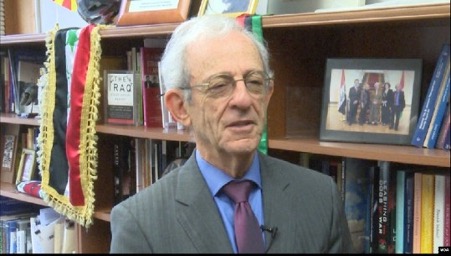
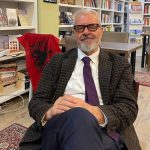
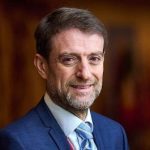
Michael Haltzel, Senior Fellow at the Center for Transatlantic Relations of Johns Hopkins University’s School of Advanced International Studies, gives an exclusive interview to the Tirana Times. Haltzel also delivered one of the key speeches at the International Conference “The Security and Development Agenda of the Western Balkans”, organised by Albanian Institute for International Studies on 15 March 2008. Tirana Times interviewed Dr. Haltzel on that occasion.
– What are the chances of Albania to join NATO?
– The chances for Albania getting an invitation are better than fifty-fifty. I think Albania has made big strides in the last decade. This is the first time I have been back since 1998 and I can see huge progress. It has a long way to go obviously. I think the biggest challenge is fighting corruption. Everyone knows that. You’re not ranking in the Transparency International so good. But 2007 Freedom House report gave to Albania a positive overall which is a trend because of Albania’s efforts to fight corruption. So, that’s positive.
Albania’s strongest asset in the campaign to get a NATO membership invitation is that this country has been extraordinary willing to show its loyalty to the Alliance even before being a member by sending troops to Afghanistan and now even to Iraq.
I get the sense that democracy is taking root, that’s good. Albania has made a peaceful transference of power. There is a very active political landscape. It is not only about Albania but I think politics still seems to revolve under personalities to a huge amount. In every country, personalities matter. Even in my own country, everybody is looking for presidential race largely in terms of personalities. That I would think is a negative side. But in general, the political climate in Albania is calmer than before.
Back to your question, no one knows what are Albania’s chances but my guesses are than they will be better than fifty-fity but no means that is not a sue thing.
– In your view, what do Albania, Croatia and Macedonia benefit from joining NATO and vice-versa?
– They share values. NATO is a political military Alliance. The common values are important to NATO. The biggest argument for NATO enlargement, starting in 1999 with Czech Republic, Hungary and Poland to continue in 2004 with seven other countries, has been the extending of grey zones which are a recipe for disaster. I wish our Russian friends could have understood that better. So, weak unstable governments, weak unstable countries breed problems whether it is smuggling or trafficking and a series of other things. Obviously getting in the NATO is a powerful signal to the rest of the world that these countries are joining the club. It is a seal of the approval. It is not that this means you are perfect. No country is perfect. But it shows you’ve reached a certain level of achievement, maturity, democracy and social stability and that the army is ready to contribute to the security of Northern Atlantic area.
If Albania gets in the NATO, I suspect that it will have a great psychological effect. It will attract foreign investments. In fact, you are already contributing to NATO as Albania is striking to show that it wants to defend the security of the Northern Atlantic area.
– Kosovo is an independent country now. What do you think about the situation there?
– I am not so happy about the situation there. The international community did the right thing as well as the countries which recognized Kosovo. I understand Serbian feeling of anguish and bitterness but you know they misruled and thye prsecuted the people for years. So, I don’t like their behavior. They seem to overrule the territory but they do not want to give people, 90 percent of people there the rights of citizens. Why did not allow the Kosovar Albanians to vote in the referendum on new serving Constitution in December 2006?
I would hope that eventually Serbia and Kosovo will join the EU in the same way I wish Albania joins the EU or Montenegro joins the EU. When this happens, the border between Kosovoand Serbia will become pretty much irrelevant. That’s hard to explain that to people because they do not think in long term. But that’s the reality.
– Do you think the parallel institutions will continue to function in the North of Kosovo ?
– I think that the game plan for the Serbs. Partition has always been the goal. When I was in the US government in 2002, Prime Minister ZHivkov came to the town and he openly said that partition was the goal. Realistically the Serbs’ plan was partition.
– What are the challenges of EU and USA in Kosovo?
– I think the challenges are two-folded. We have to help the Kosovo government implement the Ahtisaari plan. It is a good plan. We have to help the government in every way to educate the judiciary and make them able to get off on their feet to have a smoothly functioning democracy.
Secondly, I would hope to bring the North under the control of the whole country.
How do you predict Serbia’s future?
– I think in long term, Serbia will become a EU member country and will turn away from the absolutely self-defeating policies of the radicals, Nikolic and Kostunica. How long is that going to take? That depends on the Serbian people. The idea of turning it to Russia brings no future. If Serbia wants to be like Belarus, fine but I don’t think this is gone happen. The Serb people are too intelligent for that choice
– What will happe if Tadic win in the next general parliamentary elections? If Nikolic?
– Serbia has elections in May 2008. I really hope that Tadic wins these elections. If he forms a government, then this will be important that the EU makes clear that he wants to bring Serbia back on the track to get into the EU. But Serbia must stop meddling in Kosovo. If Nikolic wins, then Serbia can kiss its EU ambition goodbye. They have to make the choice.
Still one should not deem Serbia for the Serbian people. There are thousands of Serbian people who are not violent, who are democratic, want to have peaceful solution, want to join the EU. Such people are even in the highest state levels, I am talking about Tadic, Serb Foreign Minister, high ranking military people at the defense department who absolutely are western-supportive. In democracy, the majority wins. I hope these people get the majority.