TIRANA, Sept. 30 – Lending to the economy suffered a blow in August 2015 when it returned to negative growth rates after registering sluggish growth rates of 1 to 3 percent in the past year.
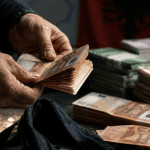
Bank of Albania data shows lending slightly contracted by 1.2 percent year-on-year in August 2015 hinting sluggish demand for new loans by both businesses and households as standards remain tight due to non-performing loans at around 20 percent.
The decline is sharper compared to the end of 2014 when total lending to the economy was at a record 600 billion lek (€4.2 bln). Since December 2014, lending has contracted by almost 9 billion lek (€63.4 million), unveiling poor interest for new investments as the economy continues struggling with growth rates of 2 to 3 percent.
Lending to the economy registered a turning point in July 2014 when it overcame a 12-month moderate decline of around 2 percent as the economy struggled with its poorest growth rate in more than a decade and bad loans stood at around a quarter.
After growing by 30 to 50 percent annually in the pre-crisis years, lending grew by an average of 10 percent from 2009 to 2011 but sharply decelerated to 2.36 percent in 2012 and shrank by 1.25 percent in 2013 as bad loans hit a record of 24 percent.
The decline in interest rates for both lek and euro-denominated loans and the payment of accumulated unpaid bills to the private sector have proved inefficient for a recovery in lending.
Albania’s central bank has kept the key interest rate at a historic low of 2 percent since late January 2015 after 13 consecutive slashes by 0.25 percentage points since August 2011, when the key rate was at 5.25 percent.
Average interest rates on lek-denominated loans dropped to a record low of 7.73 percent in August 2013, down from 8.43 percent a year ago, 9.48 percent in August 2013 and 11.11 percent in August 2012.
Interest rates on Euro-denominated loans continue remaining high despite the European Central Bank keeping its key rate at a historic low of 0.05 percent since Sept. 2014.
Average interest rates on euro-denominated loans, which account for around 60 percent of total lending in Albania, rose to 6.6 percent in August 2015, down from a record low of 5.8 percent last July and 6.5 percent in Aug. 2014.
Meanwhile, deposits continue struggling as interest rates have dropped to below the average inflation rate and banks are facing tougher competition from the emerging investment funds offering higher interest rates.
Bank deposits rose by only 1 percent year-on-year in August 2015 which is one of the poorest growth rates in this month when thousands of migrants return home to spend their summer holidays.
Data shows average interest rates on lek-denominated deposits hit a historic low of 1.31 percent in August 2015, down from 1.9 percent a year ago, standing considerably below the August inflation rate of 1.9 percent.
Central bank data show the deposit growth slowed down to 2 to 3 percent in 2013 and 2014, down from 6.3 percent in 2012, and 11.7 percent in 2011, unveiling the downward trend in consumers’ saving trend.
Albania’s central bank expects lending to slightly improve in the second half of the year supported by lower interest rates promoting demand, and the reduction of perceived risks in internal and foreign financial markets. “The expected decline in government’s demand for new loans in the domestic market will create additional space for a recovery in lending to the private sector,” says central bank governor Gent Sejko.
The Albanian government is seeking to raise €300 million in international markets in a new Eurobond to replace an existing five-year €300 mln Eurobond maturing next November.