
TIRANA, Feb. 5 – The U.S. embassy in Tirana held Monday a seminar of Center for Civil-Military Relations where all top Albanian officials took part. Ambassador Marcie B. Ries held a speech where she made it clear that Albania needs not only to reform the army, to establish democratic rules but also to have a better cooperation among the institutions. Ries hailed the fact that “Albania stand out among its neighbors is the enthusiastic support for NATO accession among the public as well as the nation’s leaders. Albania has shown its dedication to NATO ideals in many ways, but notably by putting its military in harm’s way supporting the NATO mission in Afghanistan, the coalition in Iraq, and peacekeeping in Bosnia-Herzegovina.” She highly evaluated the efforts of the Albanian Armed Forces “currently engaged in a major reform in order to prepare for NATO membership.” “NATO membership and national defense, however, require much more than popular support and reforms in the military. They demand a government-wide approach to defense נone which draws on close cooperation between various ministries, based on their unique responsibilities and capabilities,” she said.
In December last year, a team from the Center for Civil-Military Relations based at the U.S. Partnership for Peace Education and Training Center in Monterey, California visited with MOD officials to discuss military reforms. “The team identified a need to better define the roles of ministries and agencies related to defense under conditions of peace, tension, crisis, and war,” she said, adding that this seminar would help to do just that. “This seminar is meant to spur discussions among you to define the appropriate roles of and interactions between different government ministries and agencies and how these roles and interactions might change according to different scenarios. Let me give you a couple of examples of what I mean by changing roles from our own experience in the United States. In times of peace, the national budget is negotiated between the White House and Congress as an all-inclusive document, but in a time of war this changes – the Department of Defense has special powers that allow it to request extraordinary funding to defend our nation. Similarly, in the event of a terrorist attack, regulations under which commercial airliners fly may change quickly pending interagency consultation between the Department of Defense, Homeland Security, and the Federal Aviation Administration. In both of these examples, the relationships, but also the powers and responsibilities, of two or more ministries or agencies shift in response to a change in the security environment. Each situation is unique and requires very specific measures; and it is for this reason that the overall framework under which government agencies interact needs to be clearly defined. Habits of cooperation developed together during times of peace facilitate sound decisions during times of crisis or accidents,” she explained.
“An effective national defense built on military-civilian cooperation and clear definition of duties and responsibilities of the various ministries and agencies of the government is a sine qua non for NATO members. Close consultation and cooperation within clearly defined trees of responsibility allows NATO members to react quickly and succinctly to any crisis situation and to function efficiently in times of peace as well,” she said.
Albanian Prime Minister Sali Berisha thanked the United States for their assistance along the integration road. “The Albanian government is taking deep political, institutional and defense reforms to comply with the requests and standards of membership,” he said, adding that Albania has entered the final stage toward membership. Berisha also said that the government would allocate two percent of the GDP in its defense budget next year.
Albania, Croatia and Macedonia signed a U.S.-backed agreement three years ago _ called the Adriatic Charter _ outlining a common military strategy and promoting regional cooperation. They hope to be able to join NATO by 2008.
Albania has troops in Bosnia, Afghanistan and Iraq. It is negotiating sending another army unit in Lebanon.
Lot of work for Albania’s NATO membership, U.S. ambassador says

Change font size:


Latest from News
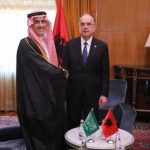
Saudi Ambassador Presents Credentials To Albanian President As Ties Gain Momentum
Change font size: - + Reset Tirana Times, June 05, 2026 – Saudi Arabia’s new ambassador to Albania, Turki Ibraheem Almadhi, presented his credentials to President Bajram Begaj, marking the formal start

Germany’s New Enlargement Formula and Albania’s European Illusion
Change font size: - + Reset For Albania, the real issue is not which accession model Europe chooses, but whether democracy, rule of law, and state integrity can still be restored. By

Pushing Against Inertia: How Harnex Is Testing the Balkans’ Appetite for Innovation
Change font size: - + Reset Tirana loves a good spectacle. Walk through the capital today and you are greeted by sleek new glass towers, vibrant urban spaces, and a relentless political
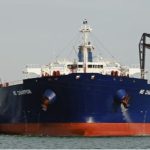
Shadow Fleet, Weak Oversight: How Russian Sanctions Evasion Reached Albania’s Ports
Change font size: - + Reset Tirana Times, May 18, 2026 – Albania’s ports have emerged as a potential weak point in the international effort to enforce sanctions against Russia, following revelations

Albania–Italy Migration Deal Continues
Change font size: - + Reset Tirana Times, May 13, 2026 — The Albania–Italy migration agreement remains in force, despite a brief but politically sensitive controversy triggered by comments from Albanian Foreign Minister Ferit