Currently, some 342 foreign-owned businesses operate in the region of Durres, with around 70 percent or 230 of them with Italian capital
TIRANA, Feb. 25 – Although present in Albania in a considerable number of enterprises, Italian investors are not familiar with the cheap labour force, low investments costs and progress during the transition years after the collapse of the communist regime. The conclusions were made in a conference on the Italian-Albanian economic cooperation in the region of Durres where Italians run around 70 percent of the total foreign-owned enterprises.
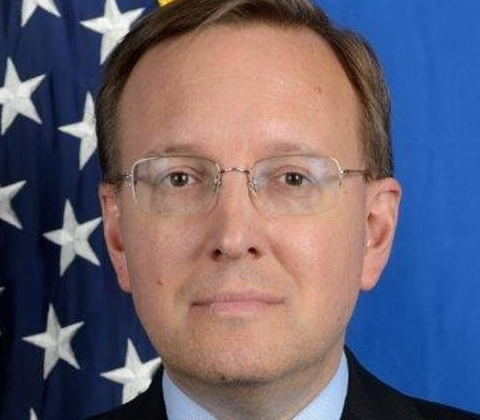
Speaking at the conference held in Durres last week, Italian ambassador to Albania Massimo Gaiani stressed the importance of promoting Albania’s capacities.
“Albanians know Italy quite well but it is not the same thing with Italians. Many Italians still have the perception of a country which has emerged after 50 years of isolation, but are astonished by the tremendous changes when they come here. That is why more has to be done in this respect to promote your country. In the next 10 to 15 years Albania will continue being profitable to foreign entrepreneurs because of the cheap labour force and investment costs,” said Gaiani.
Andrea Xhavara, the head of the Durres Chamber of Commerce and Industry, which organized the meeting to discuss new cooperation methods in order to keep production and employment stable in these times of crisis, says more information should be exchanged between the two countries.
“There is need for more quantitative and quality information between Albania and Italy. In this economic and financial situation, the Italian presence in Albania should have been much bigger,” said Xhavara.
Currently, some 342 foreign-owned businesses operate in the region of Durres, with around 70 percent or 230 of them with Italian capital.
Renewable energy, mining and tourism are some of the sectors Italian investors travelling to Albania are offered as priority sectors during meetings with Albanian officials.
Government officials say Albania offers investment opportunities not only because of the flexibility of its labour market and one of the world’s lowest fiscal regimes, but also because of the tangible assistance to domestic and foreign investors.
Italy is Albania’s top trade partner with 50 percent of total exports and 30 percent of imports. More than 80 percent of footwear and garment products manufactured in Albania, which are the country’s main exports, go to Italy. According to Italy’s Confindustria lobby group, some 300 Italian companies operate in Albania, mainly in the footwear and garment manufacturing.
Italy is the second biggest foreign direct investor in Albania with 401 million Euros of FDI until the end of 2010. FDI inflows from Italy have been on a rising trend climbing from Euro 213 million in 2007 to Euro 401 million in 2010, according to Bank of Albania data.
Exports to top trade partner Italy, the destination of more than half of Albanian exports, have also been affected by the crisis there, with their growth rate slowing down. In 2012, Albania exported around 108 billion Lek of goods to Italy, up only 3.6 percent compared 2011, when exports grew by 28 percent year-on-year.
Exposure to Italy
Sovereign debt crisis in Greece has shown little impact on the Albanian economy due to the limited role Greece plays in exports and imports and due to the recent flexibility shown by exporting firms to diversify geographically, says the Finance Ministry in its 2012-2014 economic and fiscal programme. However, the exposure of Albanian economy toward the Italian economy is greater. The share of Albanian exports to Italy is significant bigger at over 50 percent. Until now, financial problems in Italy have had little impact on trade, possibly due to the fact that this country is not always the ultimate destination of Albanian exports. However, a further deterioration in Italy would have a major impact on the Albanian economy. Remittances, which are used mainly to finance household consumption, are expected to fall significantly (in combination with those from Greece). Influence through foreign direct investment is expected to be smaller, as FDI from Italy decreased and their share of Albania’s GDP is relatively small.
The IMF expects the Italian economy to shrink by 2.3 percent in 2012 and 0.7 percent while Greece is expected to undergo another year in recession.