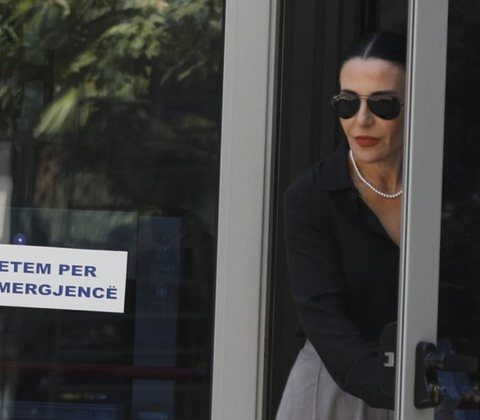
TIRANA, Sept. 2 – The Albanian parliament began this afternoon its new session, in an aggravated political atmosphere, with the main opposition forces having resigned from parliament and announcing a new season of protests.
MPs will begin work on a series of bills rejected by President Ilir Meta, from concession contracts to the construction of two road axes, to amendments to the law on concessions, those to the Criminal Code or the law of the Academy of Sciences.
The majority has announced it will revote the concession contracts, while the Investigative Commission’s work set up to dismiss the head of state resumed on Tuesday.
The parliament has addressed the Venice Commission, whose delegation is expected to arrive in Albania next week.
The opinion of this institution is expected to be decisive, while the process itself will take some time, as the Constitutional Court, which is still not functional as it lacks the necessary number of members, will have to say the final word.
Electoral reform is another challenge for the parliament, for which the majority has expressed a willingness to include the Democratic Party with a decisive role, despite its MPs leaving resigning their mandates.
The Special Commission has until October to pass the electoral reform. The majority, as Prime Minister Edi Rama has made clear, aims to conclude it in the coming weeks, in order to implement last year’s European Council recommendation on opening accession talks.
The Council is expected to deliver its remarks in the middle of October on both Albania and Northern Macedonia.
The majority, as Head of Parliament Gramoz Ruci said, as well as the leader of the Socialist parliamentary group Taulant Balla, remain invited to carry out this reform with the Democratic Party, granting it representation in the Commission as well as the right to veto. Nonetheless, the majority will have to approve the Reform with the votes of the opposition in the hall. Representatives of the latter have championed the idea of changing the electoral system. And this was emphasized by the leader of the Democratic group Rudina Hajdari.
“The electoral reform will put an end to this system that has overwhelmed internal democracy. We will not have good governance with an autocratic government. Changing the system should be the key to intervening in electoral reform. We are in opposition to the constitutional changes for a new system that offers decent candidates and fair competition,” said Hajdari, who also mentioned the need to depoliticize the electoral administration, and to guarantee immigrants their vote.
Even if a sort of agreement on these points could be reached with the majority, interference in the electoral system which also require constitutional interference seem impossible to accomplish in the space of a few weeks. Even the head of the Socialist group Taulant Balla underlined the fact that the reform should be based on OSCE-ODIHR recommendations.