TIRANA, July 23 – The OSCE Representative on Freedom of the Media Harlem Désir sent on Tuesday a legal analysis on the amendments of the “anti-defamation package” to the Albanian Prime Minister Edi Rama.
“AMA (Albanian Media Authority) or any other administrative or regulatory body should not deal with defamation issues, which should remain the competence of the courts,” Désir said.
Amendments to the laws on audio-visual media and electronic communications as well as other provisions related to the regulation of materials distributed via the internet were approved at one of the last parliamentary sessions three weeks ago.
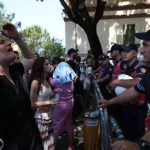
Albanian media circles have expressed concern and have been protesting for many months on the government’s unobtrusive preparation of a group of legal amendments framed as anti-libel packages.
The government said it took this step to avoid fake news distribution, bringing regulation into online media laws, and electronic publications.
Meanwhile, critics say that Albania does not face massive fake news distribution from the media, but the biggest problem is the fake news and propaganda spread by the government, which copies laws from countries with autocratic tendencies like Russia.
Desir wrote to Rama that he is concerned about the competencies given to AKEP on the amendments to the Law on Electronic Communications regarding the measures taken to protect a wide range of interests, including the interests of the country , public security, fundamental rights and any provision contained in the Albanian legal system.
“These notions are very broadly defined and may conflict with international standards of legal certainty, proportionality and necessity, and do not include specific rules to guarantee the protection of freedom of expression,” he wrote.
He stressed that Article 133 of this draft law foresees high-value monetary fines, in case of violations.
“The draft law no longer contains the provision of the previous variants, which provided AMA with extensive and unlimited blocking powers in cases of ‘violations of the provisions of this law,’ limiting them only in cases of pornographic offenses with juveniles, inciting terrorist acts or violating national security,” added Désir in the letter addressed to Rama.
The government adopted these legal amendments in the beginning of July, after hosting a mission of 7 international media freedom organizations, which reported a deterioration of the Albanian media’s state and freedoms.
In their report they called new measures for compulsory online media registration and the creation of a body to fine-tune and shut down online and foreign media without a court order as steps that contradict best practices of international self-regulation and can have a detrimental impact on freedom of expression and information and freedom of the press in Albania.
“During our meeting with the prime minister, he informed us that a new updated version of the draft amendment would be made public soon after international criticism. He stated that in the next draft the possibility of termination would be eliminated and fines would be much lower than they were in the initial project. We welcome these changes and recall international human rights standards that state how ‘states should not impose compulsory online media registration as a prerequisite for their work because this can have a very negative effect on media freedom,” says the report of the seven media freedom organizations.
According to them, the government needs to make sure this legislation is fully in line with best OSCE, Council of Europe and EU practices.
“We are concerned about the ongoing lack of transparency regarding consultations on the draft law, which was introduced during the winter holidays and given an extremely short consultation period. We encourage the government of Albania to ensure that a meaningful consultation process with journalists and civil society is undertaken with the next draft of the amendments,” said the organizations report a couple of weeks back.
The Ministry of Justice stated at the beginning of the month that the Albanian society was disturbed by the spread of fake news that affect the lives and dignity of the family members.
“Online platforms are neither transparent nor registered, so laws are being reviewed to avoid misinformation and fake news,” the ministry statement said.
However, Albanian media representatives say the amendments shown in December were described by international organizations as anti-democratic, they did not consult with media and media representatives, while claiming the government’s intention is to shut down online media without touching on the personal online media of Rama.
The government said that through the anti-libel package, it is interfering in the law on audio-visual media, electronic communications and value added tax, and in children’s protection decision.
According to the government, the intervention provides for swift action to protect the rights of citizens complaining of fake news and creating a registry of online media as taxable persons. The government says portal registration serves transparency, avoidance of conflict of interest, inadequate influence of politicians, journalists’ independence and media pluralism.
But journalists protesting against the amendments say the media situation is worrying and frivolous.
According to them, this is an absurd package of a government that has lost any contact with reality, while the laws it adopts to media do not exist in any European country, but only in Russia and Belarus.