
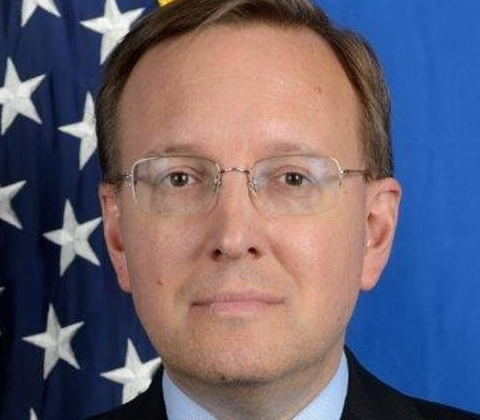
TIRANA, Sep. 11 – Robert Bosch, outgoing head of the Organization for Security and Cooperation in Europe, last week held his report at the organization’s center in Vienna speaking about the situation in the tiny Balkan country where he has served in the post in the last three years.
In his report, he criticized Tirana’s political elite for the failure to resolve the dispute over the results of the June 2009 parliamentary elections.
Bosch said that the Socialist opposition boycott of parliament has hindered Albania’s reforms necessary for the EU integration process while urging the governing Democratic Party to try to give an end to the crisis and reach a compromise
“Although a legislative agenda was maintained over the last year, especially in the crucial areas pertaining to the visa liberalization process, the fight against organized crime and corruption, economic reform and judicial police, the lack of political dialogue hampered the ability of the legislature to pass some pieces of legislation needed to further the integration agenda,” the report said.
The Socialists, who control 65 of parliament’s 140 seats, have contested the results of the elections, narrowly won by the Democratic Party of Prime Minister Sali Berisha, as being marred by fraud.
First they boycotted the parliament until March when a Council of Europe delegation convinced them to return to parliament. They have held a series of protest and a near six-month long parliamentary boycott in order to force the government to agree to a recount of election ballots.
Berisha and his right-of-center party reject the calls, arguing the opposition had exhausted all legal appeals and the government was respecting the powers of the judicial system by not overstepping its authority on the issue.
In May next year the country will hold local elections and a considerable number of amendments are required for the electoral code, which cannot be done without the opposition’s presence in parliament. The opposition takes part at the parliament’s sessions but does not participate at any voting there saying first they would need a clarification of their claim on alleged vote count manipulation.
The OSCE urged both the government and the Socialist opposition to start working on changes to the electoral code, based on the recommendations of the Office for Democratic Institutions and Human Rights, ODIHR.
“The ODIHR recommendations and other suggestions for further improvement of the system should be implemented soon,” noted the report, which was filed with the OSCE permanent council on Thursday.
“After 20 long years of transition, the Albanian public expects their political leaders to put the issue of contested elections in their country to a close,” it said.
Albania is expecting the European union to give the OK for the visa liberalization regime and likely also for the candidate status, both in November.
Governing Democrats claim that the opposition is becoming an obstacle for visa liberalization and for the integration of the country in the European Union, according to prime Minister Sali Berisha.
OSCE urges end of political dispute

Change font size:


Latest from News

Dirty Money in the Skyline: Albania’s Tower Boom and the Laundering of Criminal Wealth
Change font size: - + Reset From towers to “new pyramids”: how money from organized crime, international drug trafficking and entrenched corruption is reshaping Tirana while leaving behind empty buildings, distorted prices

Albania Slips Into Electoral Autocracy
Change font size: - + Reset V Dem places Albania in a category dominated by African states, with Serbia and Bosnia and Herzegovina the only Western Balkan countries in the same group.
Albania Draws a Red Line on Iran
Change font size: - + Reset Parliament’s decision to label Tehran a state sponsor of terrorism formalizes a break years in the making and reflects a broad Albanian consensus that Iran has
US Targets Iran Linked Cyber Network as Albania Emerges as Key Victim
Change font size: - + Reset Tirana Times, March 17, 2026 – The United States has moved to dismantle a cyber network linked to Iran’s intelligence apparatus, seizing four domains used for

Albania’s AI Facade Cracks While Neighbors Win EU Funds
Change font size: - + Reset Tirana Times, February 10, 2026 – Serbia and North Macedonia have secured concrete European Union funding to integrate into Europe’s emerging artificial intelligence infrastructure, while Albania—despite