TIRANA, Feb. 8 – Further details on the Post-Disaster Needs Assessment report show that about 9.2 percent of families in the affected district areas were displaced from their homes following the November 26 earthquake, while their ability to make basic expenses witnessed a downward trend compared to the pre-earthquake period. Additionally, severe material deprivation rates increased by an average of 8.4 percentage points, or 25.4 percent. During the post-earthquake period, subjective poverty lines in the affected districts increased by 2.3 percentage points, reaching 18.9 percent. This indicates a significant decline compared to the ‘at-risk-of-poverty’ rate.
The overall health status of family members also deteriorated after the earthquake, with around 5.6 percent of the population affected. Individuals from the affected areas reported memory loss and difficulty seeing, hearing, walking or climbing, following the earthquake, while 42.9 percent of people reported emotional exhaustion, sleep problems, depression and anxiety two weeks after the event. Furthermore, the provision of educational services was briefly interrupted for at least a week. In total, 96.5 percent of children returned to school after schools reopened/
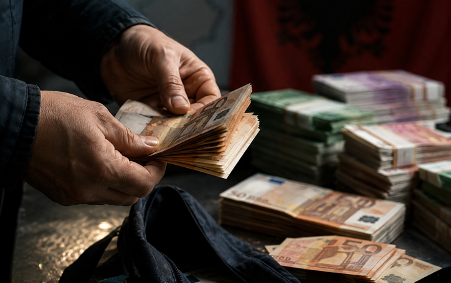
A total of 20 billion lek from the 2020 budget will be allocated in efforts to improve the situation after the earthquake, of which 106.6 million euros will go for the reconstruction of houses in the affected areas and 57.4 million euros will serve as grants for recovery projects.
In addition to the donations received from various domestic and international actors, the total amount of government donations is currently 15.2 million euros.
Additionally, it has set up a compensation fund to provide families of deceased members with scholarships for children and pensions for surviving adults in the amount of 8200 euros per household.
Despite the concerning results of the recent PDNA report, officials seem optimistic about the post-earthquake recovery process. On Thursday, the Governor of the Bank of Albania, Gent Sejko, held an official meeting with the World Bank delegation, led by Johanna Jaeger, to discuss the country’s economic performance and foreign investment inflow. Sejko said the country’s economy was significantly affected by the November 26 earthquake, which slowed its performance and had a negative impact on inflation. However, according to the governor, even though the country’s economic growth rate was halved compared to 2018, the overall reconstruction process is expected to have a positive effect on the current economic situation.