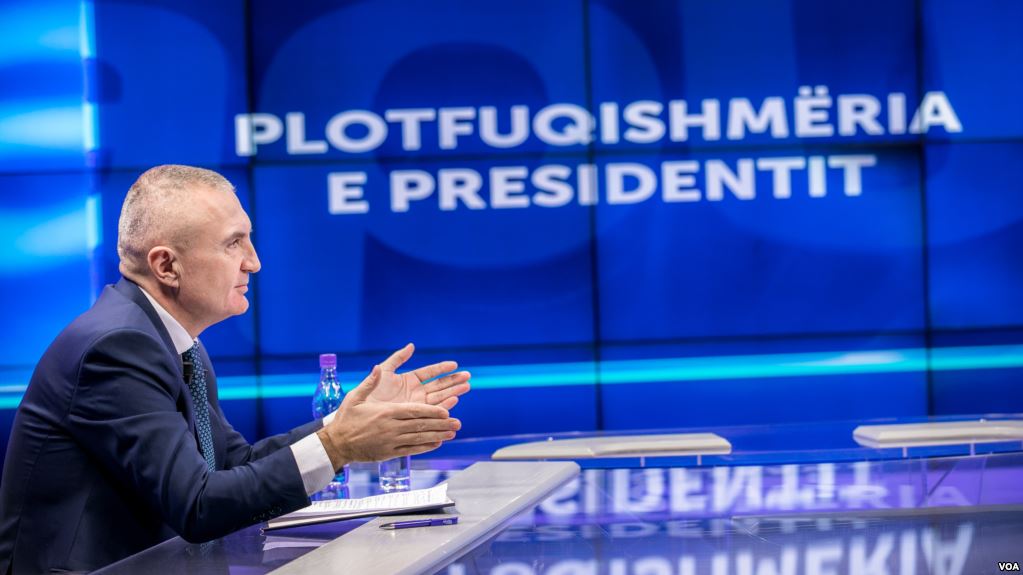
TIRANA, March 21 – The country’s President Ilir Meta authorized this week the Minister of Foreign Affairs Ditmir Bushati and the negotiation group to proceed discussions with Greece to reach a new maritime border agreement between the countries.
Meta’s decision came almost a month after the foreign affairs ministry presented him with the official request to authorize negotiations, creating even more tension in the ongoing debate over the new maritime agreement and the negotiations’ transparency.
Negotiations will aim to reach a completely new agreement than that signed by the Democratic Party (DP) government of 2010, which the Constitutional Court rejected a year after being signed by then Prime Minister Sali Berisha.
In his authorization, Meta asked the Albanian state institutions and negotiation group that will participate in the discussions to fulfill their responsibilities in accordance with the Constitution and other local and international agreements and to guarantee the country’s security, social and economic prosperity.
Initially, Meta deemed the ministry’s request as incomplete, and published the letter through which he asked the ministry for further clarifications.
According to him, the request’s goal was not properly explained and was not accompanied with maps and a draft agreement, the names of the negotiators were absent and the concrete methodology that would be used during negotiations as well.
“The president can never sign a white paper that at the same time has problems which first need to be addressed according to the Constitutional Court’s decision,” Meta wrote at the time.
The ministry’s reply, which was delivered to Meta as soon as possible, concluded by saying the new maritime agreement involves a “complex process which requires calmness, maturity, institutionalization and not projecting an non-existing anomaly.”
While Meta asked for further clarifications only a week after the ministry’s reply, the issue also saw debate over one of the negotiators, Artur Mecollari, who according to the opposition resigned from the naval force back in 2012, where he was deputy commander of the fleet, for “giving classified information to foreign agencies.”
Authorities retorted these accusations, saying that past surveillance of Mecollari had brought no compromising evidence into light.
In this context, the names of the group’s 12 negotiators underwent scrutiny by a number of institutions according to Meta’s request for individual verification.
Reaching a new maritime border agreement is part of a number of open issues that have hindered the relations and have sometimes even caused tension between the countries, but which Athens and Tirana now look to resolve.