If the new law is approved as is by parliament, Albania will trim its local governing units to 61, far less than the current 373, but the plans has gained many opponents, including the political opposition and the Greek ethnic minority.
TIRANA, July 22 – The Albanian government on Tuesday approved a project prepared by a special parliamentary commission on territorial reform, the next step in reshaping the country’s internal map.
If the new law is approved as is by parliament, Albania will trim its local governing units – municipalities or bashkia in Albanian — to only 61, far less than the current 373.
The reform has started following considerations that the old structure in the country led to too much useless spending and not offering the proper services to the people.
The parliament, which has a majority of the Socialist-led leftist coalition, created a commission for the project. The opposition, by led by the Democratic Party of Tirana Mayor Lulzim Basha did not agree to take part, despite continuous offers like enjoying the co-chairmanship and the right of veto.
After some months of work the commission agreed last week with the last draft after also taking into consideration the proposal of an opposition party, the Justice Integrity and Unity Party of the Cham community, to increase the number of municipal units from 47 to 61. That found a strong reaction by another other small party which represents the ethnic Greek community in the country, which says the community is made weaker through the new territorial divisions.
The new project has three municipalities in minority areas in southern Albania, but leaves some ethnic Greek villages out of them, the critics say.
On Tuesday the government passed the project for the new territorial-administrative division offered from the parliamentary commission.
The opposition Democrats do not accept such a project saying that aims at getting stronger support for the local elections expected to be held next year.
Opposition representatives said the country should make constitutional amendments on the powers of the local authorities before passing to the new territorial division.
As usual the political fight in this country results in no compromise in such big projects. The opposition Democrats also boycotted the new constitution drafting process in 1998, which was approved in a national referendum.
Post-communist Albania has suffered during its 24 years since the fall of the former regime from the lack of trust between the two main political forces, that has often resulted in useless efforts and money spent for certain major projects.
The government will send to the parliament the project where it is very likely to be passed without the opposition presence, as it has boycotted parliament for the last two weeks.
The voting is expected at the end of the month and of the parliamentary session.
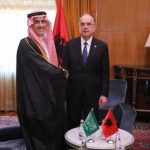
The administrative territorial reform in Albania, which is opposed by the representatives of the Greek minority threatens to become another issues of contention between Tirana and Athens. Greek Foreign Minister Evangelos Venizelos made a call to Albanian Foreign Minister Ditmir Bushati to express concern over Greek minority municipal units.
“The issue of administrative reform in Albania changing local and regional entities in areas of particular importance to the Greek national minority,” was the focus of the conversation, according to the announcement of the Greek Foreign Ministry, which added Venizelos had previously sent a letter to the Albanian minister on June 10 which addressed a number of diplomatic issues.
Venizelos stressed “the importance of territorial reform, high sensitivity that exists around it and the need to step forward to resolving open issues between the two countries without adding additional ones.”
The Greek foreign minister said Albania should follow international and EU norms of the manner, especially after gaining EU candidate status, earlier this year, a move which Greece supported.
Albanian Foreign Minister Bushati, according to official sources, told his Greek counterpart that “this is an internal matter” and that the reform is important and necessary and is still being discussed during the Albanian parliament and the content of the draft is handled by a special parliamentary committee.
“The reform aims to increasing the functionality of local units and increasing their capacity and financial resources in the interest of all citizens, in respect of the principles and European standards,” Bushati said.
Albania is divided into 12 administrative counties (qark or prefektur멮 These counties are further divided in 36 districts (rreth) which in turn are divided into 373 municipalities (bashki or komun멮
The reform will leave the county borders unchanged because changes to them would require constitutional and electoral code changes, but it will erase most rural municipal units from the map. They will be governed from cities and towns nearby as a cost-saving effort.
The central government and Albania’s international advisers say, the current high number of municipal units is expensive and inefficient for a small country. The communes spend 2.5 billion leks annually, about 24 million dollars, on salaries alone, with about 100 of these units spending more than 80 percent of their budget on paying salaries to their employees. In addition, half of the total number of communes raises no money through local taxes, relying entirely on the central government for funding. Fifty percent also make no investments in the communities they govern, according to a study published late last year with the assistance of the Swedish government.