By Jezerca Tigani
Tirana Times, June 15, 2026 – Every time I visit Albania, the conversation is always the same — not about politics, elections, the new airport, or the promise of membership in the European Union. It is about leaving. For several years now, the country has been gripped by a sense of apathy, a kind of collective resignation, in a society that for decades has been fed with the idea that its future lies somewhere else.
That is precisely why the flamingos immediately caught my attention.
When, at the end of May, videos began circulating of bulldozers destroying the protected wetlands of Zvërnec, of private security workers dragging a protester through the sand while the police stood by, and of barbed wire being erected along the coast, I expected the usual Albanian reaction: a sigh, a shrug, that calm comment that this is how things work here; that nothing changes; that those with influence have already left.
But this time, thousands of people took to the streets of Tirana. Then thousands more joined them. After that, solidarity protests broke out in various cities across Europe and North America, organized by the Albanian diaspora — precisely by those people who had emigrated. From afar, they were following developments and, perhaps for the first time in a long while, finding a cause that made them feel connected again to their country.
In their hands they held pink flamingos and placards reading: “Albania is not for sale.” They did not look like people who had given up.
Something has changed. And to understand that change, it is not enough to look only at the resort project linked to Jared Kushner, Donald Trump’s son-in-law. One must also understand the decades of abandonment, geopolitical bargains, and political disregard that have brought the country to this point and made this moment almost inevitable.
The Deal That Ignited Public Anger
The project at the center of the protests is a planned luxury development linked to Kushner’s firm, Affinity Partners, involving the uninhabited island of Sazan and several hundred hectares of protected coastal wetlands on the mainland opposite it.
These wetlands constitute one of Europe’s last wild coastlines and are home to flamingos, Mediterranean monk seals, and nesting grounds for sea turtles. The investment is estimated at up to 4 billion euros, and the project foresees around 10,000 hotel rooms, villas, a yacht marina, as well as the transformation of a former Soviet-era military base into a luxury resort managed by Aman Resorts.
The Albanian government has granted Kushner’s company the status of “strategic investor,” a designation that enables the acceleration of permit procedures and various administrative exemptions. Work began at the end of April, without environmental impact assessments being carried out and without public consultation.
On May 31, Kushner’s wife, Ivanka Trump, said in a podcast that she and Kushner had “discovered” Sazan while swimming nearby after diving from a friend’s yacht. In a country where this island had been public property for generations and had been classified as a military zone precisely in order to preserve its untouched character, the suggestion that it had been waiting to be discovered and could now be transformed into a private resort provoked as much anger as the bulldozers themselves.
Since then, the Special Prosecution Office against Corruption and Organized Crime, SPAK, has opened an investigation into the reclassification of the protected area, a decision that paved the way for this deal to be carried out.
Between Two Powers
It would be tempting to present this story simply as a case of America overstepping boundaries — a Trump family business deal that went too far. But a balanced analysis brings to light a more uncomfortable reality, both for Washington and for Brussels.
Albania has spent the past year moving rapidly toward membership in the European Union, at a pace that many analysts describe as surprising. After opening all clusters of negotiations with the EU in less than 12 months, the country has been presented as the model pupil by the European Commissioner for Enlargement, Marta Kos.
Kos has described Albania as “the best example of the transformative power of enlargement.” Meanwhile, the President of the European Council, Antonio Costa, told Prime Minister Edi Rama that EU membership before 2030 was “fully possible.”
Yet the uncomfortable truth is that this acceleration has very little to do with genuine reforms. It is mainly a geopolitical response to Russia’s invasion of Ukraine, as Brussels rushes to consolidate the Western Balkans within its orbit before Moscow or Beijing further strengthen their influence in the region.
Rama himself said: “If it were not for the war in Ukraine and this situation in the EU, perhaps the doors would still be closed.”
Meanwhile, core reforms — judicial independence, media freedom, and the fight against institutional corruption — remain unfinished.
Washington, on the other hand, has its own game. Since Trump’s return to power, the Western Balkans has become a terrain where American economic influence is expanding, with American investors entering the energy, real estate, and tourism sectors across the region.
U.S. Secretary of Energy Chris Wright has stated that “President Trump is opening a new era of cooperation with Southern, Central, and Eastern Europe.”
Albania, a loyal NATO ally that has enthusiastically supported American military actions in the Middle East, has become an attractive destination for these interests. Rama has spoken publicly in very positive tones about the “great privilege of cooperation” with the Trump administration. In this context, the deal with Kushner was not an exception to the rule; it was the logical continuation of a relationship that had been under construction for some time.
Waiting Endlessly in the Waiting Room
Before criticizing the Albanian government or Albanian citizens for being impatient with Brussels, it is worth remembering the path that the European Union has asked this country to travel.
Albania applied for membership in 2009 and received candidate-country status in 2014, after five years of conditions and requirements. Then France and the Netherlands blocked the opening of formal negotiations for another six years, demanding a new enlargement methodology. Official talks finally began only in July 2022.
Rama himself described this situation with irony at the 2022 EU–Western Balkans summit, referring to the absurdist play Waiting for Godot: “Albania is Estragon, the European Union is Samuel Beckett.”
An entire generation of Albanians has grown up constantly hearing that their country’s future lay in Europe, only to see year after year how the target moved, the conditions multiplied, and the promise became ever more distant.
The European Union’s demands have been continuous and often procedurally exhausting: justice reform, anti-corruption targets, public administration reform, environmental standards, rule-of-law assessments, screening reports, assessments of negotiating clusters, the fulfillment of IBAR benchmarks.
It has been a process designed more to manage waiting than to welcome membership; a bureaucratic labyrinth that demands the constant fulfillment of conditions without offering economic development, strong investment mechanisms, or a concrete perspective of opportunities that would make Albanians want to stay in their country.
Meanwhile, the country continues to lose people. Every year of waiting, around 50,000 people leave Albania. Every postponed deadline and every unmet condition pushes another qualified professional to conclude that, even if EU membership is achieved one day, it will come after his or her children have grown up somewhere else.
Since 1990, Albania has lost nearly one million inhabitants. From a population that peaked at around 3.3 million, the country today has only about 2.4 million residents, recording a contraction of 21 percent since the beginning of the millennium — the deepest demographic shrinkage in Europe outside zones of armed conflict. According to United Nations projections, if this trend is not reversed, Albania’s population could fall below 2 million by 2050.
It is a country emptying from within.
Anger Accumulated Over Decades
Tens of thousands of citizens filled “Dëshmorët e Kombit” Boulevard on the 11th day of the protest. Photo: Xhemali Moku/BIRN.
“The Flamingo Revolution” is not, despite appearances, primarily a protest against a luxury resort. Unfortunately, it is not only about the flamingos either. It is connected to something that has been accumulating for almost 40 years: the refusal of Albanians to continue being treated as passive subjects of decisions made over their heads, as people constantly treated with contempt.
This is not a protest against development. Albanians are not against investment, tourism, or the modernization of their country. What they oppose is the repeated experience of being excluded from decision-making about their land, their institutions, and their future.
The development in Sazan/Zvërnec has been decided between the Albanian government and a foreign investor. Local residents learned the scale of it only after the decision had been made. When they came out to oppose it, they were confronted with barbed wire and private guards. When images of violence became public, the government’s response was to defend the investment and attack the protesters.
And, as in the case of Sazan and Zvërnec, the coast and the mountains are filled with concessions granted to developers and oligarchs. The most beautiful parts of Albania have been quietly distributed among the wealthy. Ordinary Albanians cannot afford to enter the resorts being built on land that once belonged to them.
Rama’s response to this situation has been, in its own way, as revealing as the treatment of the protesters. On CNN International, he dismissed reports of unrest across the country: “There are no protests all over Albania. There is a protest in the capital.” He described the movement as a coordinated disinformation campaign, claiming that Albania was “under attack” by competitors and online networks spreading false information.
He told the protesters, including the young people who had come out in their thousands, that those “with good intentions” were simply “deeply misinformed.” When confronted with questions, he declared bluntly: “There is no possibility that this investment will be stopped.”
No offer of dialogue. No public meeting, no question-and-answer session, not even the minimal political gesture of acknowledging that tens of thousands of citizens might have legitimate questions.
Movements do not grow because governments ignore them. They grow because governments treat them with contempt. Every time Rama mocks a young protester, he only strengthens the reasons that have brought them into the streets. The arrogance is not accidental. It is the essence. The protests still do not have a political home; the Albanian opposition is too weak and too compromised to channel this energy. But movements that are born without a political channel tend to create one themselves.
I am moved by these protests in ways I did not expect, not only as an Albanian who has followed the country from afar for a long time, but as someone who has worked in places where civic courage is rare and costly.
This is civic courage. It deserves support: from civil society, from European institutions, from the diaspora. And it requires Albanians inside the country not to give up. This is the beginning of a political culture that demands accountability, inclusion — and the fundamental right to self-determination.
__________________
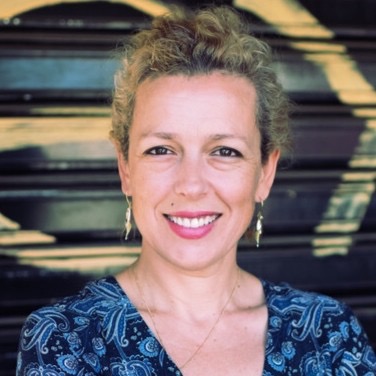
Jezerca Tigani is an international executive and human rights activist with more than 20 years of experience in the Western Balkans, Europe, and the Middle East. She holds Albanian and British citizenship.
In courtesy of BIRN.