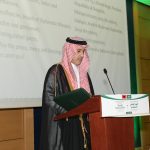
Gjergj Bojaxhi Head of the National Urban Construction Inspectorate speaks for Tirana Times
As Head of the National Urban Construction Inspectorate you are directing an action to demolish buildings constructed outside of the law.. Could you please explain to us in detail what the current state of affairs is, that is, how many illegal buildings are there, in what areas are they concentrated the most, how do you work together with other law enforcement agencies?
It must be said that the current situation is alarming, to say the least, because in almost all the more affluent economic, cultural or tourism urban zones of Albania, construction work has gone ahead on the basis of zero criteria. Allow me to pause a moment on the word ‘criteria’, I believe that individual, private companies constructed the bulk of the buildings without being subjected to any inspection by construction, town planning or architecture expertise, and this resulted in an enormous jungle of different buildings of all sizes and shapes, which, in the majority of cases are blatantly unsuitable or unfit for the zones where they are located. Over these past years, the tidal wave of construction work to throw up buildings, chiefly without local government units issuing any permits to do so, has been accompanied by mounting numbers of citizens’applications to legalize ownership, and later on by the passing of a series of legislative decisions which resulted in the creation of the Agency of Legalization, Urbanization and Integration of Informal Zones (ALUIZNI). You ask me how many illegally built objects there are, unfortunately this is a question that has to remain without an answer. At the moment we can find out the number of illegal buildings that have been registered in the process of legalization procedures, but as far as acurate data on these buildings is concerned on a national scale, there are no numbers due to the current on-going dynamics of this situation in Albania. However, in the zones we are working through in a programmed manner we do have acurate numbers on illegal buildings. Primarily, we focused our day to day demolition operations on the tourist zones, such as the coastline of the Ionian and Adricatic Seas. We work together with ALUZINI which provides us with aeriel photographs of the zones officially recognized as informal zones and this makes our work a great deal easier, but even more so this prevents any further destruction of national assets. We have observed that irrespective of legal deadlines, hundreds of people have gone ahead with illegal building. We have taken action against 320 objects in Ksamil and Berdesh alone which were constructed after the 2007 aeriel photography. An identical situation prevails in Vlora in the Pylli i Sodes area, where during the first phase alone we demolished about 100 objects. Without going through every single zone, I can safely say that almost everywhere, this “urban cancer” has spread unchecked, devastating and polluting, even though the Government passed the legislation that terminates the years of toleration of illegal building. As regards cooperation with ALUIZNI, we are in daily contact with them because we check out every single decision of the National Urban Construction Inspectorate to demolish with the case files ALUIZNI has already approved for deomolition. We have also called in the backing of the State Police during some of our operations.
How do citizens react to the intervention by the Construction Inspectorate?
Well, as I expected, during these weeks that I have been at the head of the Inspectorate, I have come up against two kinds odf reactions, which are extreme reactions if you compare them. First, there is the reaction that comes from those hundreds of individuals who are directly affected by the decisions we adopt. Chiefly their reactions stem from the fact that their properties have been constructed illegally and automatically become non-functional. One thing I have observered in all our disputes with these people is that they are fully conscious of the fact that they have broken the law, but have banked on the tolerance or grace of the State, which is not going to happen. This is the fault of the situation that has prevailed for many years of the transition period, because there has always been tolerance, an amnesty or promises made by different politicians.I appeal to all those persons who build unlawfully, that this period has gone once and for all, there will no longer be any tolerance against any kind of illegal construction, irrespective of its size and in which zone it has been built. Whilst the second reaction is far more powerful than the first, because it originates from hundreds and thousands of people who have not broken the law. They now feel that the law functions equally for everyone. Apart from this they are witnissing that this “urban cancer” is being eradicated phyiscally in many areas which have begun to be restored to their former state. As an example I quote the reactions we had to our operations in the city of Vlora, where both in the course of and following these operations deep in the Pylli i Sodes (a forest), we noted a very positive public reaction because we were clearing out the ‘clogged green lungs’ of the city of Vlora, a forest planted decades ago which rendered a primary service to the community and environment.
Many reserach projects and studies indicate that there is a very low level of observation of the law in Albania of today. From your personal experience so far at the head of two important institutions such as the Albanian Energy Corporation and the National Urban Construction Inspectorate, what are the main causes and factors of this situation?
Briefly, I believe that the overwhelming majority of the Albanians are law-abiding citizens, as against those who are not. Both during the time I directed the Albanian Energy Corporation and at the head of the Inspectorate I observed citizen reaction closely. In other words, there are thousands of people who steal electric power, public or private properties, build without permits, or devastate, while, on the other hand, there are hundreds of thousands of Albanians who do not steal, do not damage, and do not dare violate the rights of others. My position is very clear, that by enforcing the law I represent the silent majority which is awakening and is demanding an end to the theft of public space and the respect of private property. There are many, many factors which would require a special interview to name, but in essence, the collapse of social values and norms following the nineties’ constitutes the main root of this problem.
What is the experience of the neighouring countries in relation to lawful construction work following the nineties’, especially in the tourist zones?
I can’t speak in detail about this, but I certainly do not believe that they has such an alarming situation of total disrespect of the Law, wholesale devastation of territories and take-over of public and private property. As far as I am aware, in the neighbouring countries there has never been this level of tolerance of such massive infringment of the law as there has been in Albania.
There exists an opinion that no small number of citizens are taking advantage of the process of legalization to register and legalize illegal buildings? What is your opinion?
I am not the competent person to provide an opinion on that process which for years has had an official and legislative basis. What I could say in this case is that not a single construction, either new or added to an existing buiding following the aeriel photographing of the country by ALUZINI will be tolerated by the National Urban Construction Inspectorate.