
By P쭬umb Xhufi
“UNMIK Fatigue,” would probably best describe the general state of politics and morale in today’s Kosovo. The most convincing message has now been sent out by the elections of November 17th. The poor turnout in an election that was rated as being of exceptional significance, due to the moment and weight, sounded the alarm bells for those who think that the course of events will unfold in the direction taken since June 1999, when Kosovo was liberated and “handed over” to the forces of NATO and the administration of UNMIK. “Neither the bad weather, nor the disillusionment of the people of Kosovo in their politicians can justify this shocking turnout,” tried to declare certain Internationals, like the well known Mr. Giovanni di Stasi of the Congress of the Local and Regional Authorities of the Council of Europe.
The truth of the matter is that, apart from its incontestable, positive sides, the exaggeratedly dragged out existence under the administration of UNMIK, in a certain sense, has tainted both society, and the institutions of Kosovo. Furthermore, this situation has convinced everyone, down to the last citizen of Kosovo, that, in the final account, it is the “internationals” and UNMIK that decide on everything. They run the country and offer employment, salaries and assistance. They are the ones who do the defending andŮthe representing. If we were to follow this line of reasoning through, then, the turnout in the voting would have been higher, if in Kosovo, it had not been Tha詠and company the country was voting for, but Ryker and company. Let there be no illusions: the politicians of Kosovo, and even those in Albania to a certain extent, have been “devalued from the very outset. In the perceptions of the ordinary citizen, these politicians in addition to failing to ever decide or solve anything, are also a very heavy burden due to the high salaries, the corruption, or the abuse associated with their careers. For the “intellectuals” of Kosovo, especially the ones who have managed to approach, in a certain manner, the offices of UNMIK and to play a role in the mechanisms of the international presence, Albanian politicians have even become an annoyance, with their ignorance, provincialism and “primitive” patriotism.
It is of inconsequence just what degree of truth lies in such perceptions: skepticism that goes as far as hostility towards “one’s own ilk” is nurtured by the excess of power the others have – the “internationals”. In this diseased state of soul, even the most outrageous facts of abuse, corruption and immorality amongst the highest of UNMIK employees are destined to be buried, whilst the most insignificant “indiscretion” committed by the most irrelevant employee of the government of Kosovo becomes the target of bitter attacks by public opinion and the media. Before the internationals, an Albanian Prime Minister, even the most glorious of Heroes in the war for the liberation of Kosovo, is required to disperse meaningless smiles, just like the most honoured Rugova had to. The exaggerated dragging out of the moment of granting Kosovo its independence has caused tremendous damage, and the biggest damage of all is that it has devalued, divided and creased the elite and the political class of Kosovo.
Furthermore, this has created “ex novo” an individual species, “the Kosovo UNMIK-ian”, another kind of Komsomol who can be found playing some debasing role in the many offices of the internationals and in the main streets of Prishtina, where he plays the role of the companion, the guide, but in most cases, that of the interpreter, the English language being the sole virtue of the majority of the representatives of this species. These are the new, spineless beings, who, interested in their jobs only, concealing their identity as much as they can, fight tooth and nail to keep them. There is not a chance of speaking to this species about politics, about Kosovo, or about its independence. They have neither seen nor heard anything: they are “internationals” and their superiors are internationals!
After it has moved out of Kosovo, alongside all the benefits that deserve gratitude, UNMIK will also have left in its wake the following peril: the opportunity of political promotion for this species of UNMIK-ian, in whom, behind the countenance of sterile, cold, and heartless test-tube creatures, (Max Fischer would probably have named him ‘Homo Faber’), lie hidden, ambitions and the greed of a shark. We have already witnessed several of them, in action, in Albania: ministers, advisors, legal experts, and NGO offspring who have thrown themselves into the fight for power, to ravage its spoils with the voracity of a conqueror.
The drafters of Resolution 1244 of the Security Council, first of all the United States of America and the countries of the EU, were well aware of this situation of apathy and dependence when they defined one of the clauses of this Resolution that foresees that after a given period of time, (implicitly, after three years), the status of Kosovo must be determined on the basis of certain criteria, the most important of which was valued to be the will of the people of Kosovo. But all that has been forgotten. The advent to office of the Bush administration and the shift in the priorities of the United States resulted in the US lowering its profile somewhat in Kosovo. In Belgrade and elsewhere, this was interpreted as a sign that from here on, for tactical reasons, the USA and the EU had defined a larger tolerance margin for every indiscretion that Belgrade or Koshtunica might commit. This moment of “vacillation” in the Balkans, sparked off by circumstances outside of the Balkans, was pounced on by Koshtunica and taken instant advantage of by an interfering more, and far more stridently into the affairs of Kososvo.
In this atmosphere of tolerance, given countries within the EU went a step further. They began to articulate stands of a different strategy towards Serbia that foresaw Belgrade being drawn into and included in European processes, and not being isolated or being levied conditions against. Belgrade was sent the initial signals of the opening of SAA negotiations with the EU and of its move closer in the direction of NATO’s Partnership for Peace Initiative. There was even talk that units of the Serbian Special Forces, the infamous “Red Berets,” who have murdered and slain in Bosnia and in Kosovo, would be sent to the anti-terror fronts in Iraq and Afghanistan.(Which, fortunately, did not happen). Ideas like Belgrade’s release from obligations imposed by the International Court of Justice in The Hague, and even the lifting of all obstacles for the “rehabilitation” of Belgrade began to surface. In European environments, the request to dissolve this Court was heard even. Concessions in principle were made to Belgrade, as its “special responsibilities” toward the Serbs in Kosovo were recognized. And so it came to pass that the UNMIK Administrators began to pay visits to Belgrade and to open talks with the Serb Government about the problems of KosovoŠAnd it came to pass that the Serbs in Kosovo were allowed to take part in the elections of Serbia, whilst Belgrade pressurized them to boycott the elections in KosovoŠAll this was tolerated, neglecting and offending the sentiments of the Albanian Majority and, in the final account, allowing the flagrant violation of Security Council Resolution 1244.
Therefore, the international community conscientiously put at risk what it had itself planned to build: a multi-ethnic Kosovo, where all its citizens, including the Serbs, could feel themselves citizens of Kosovo. The Serbs were allowed everything. They were even allowed to aggressively attack forces of the Police of UNMIK and KFOR. Who can forget what happened in North Mitrovica on 8 April 2002, when a crowd of young Serbs from the infamous “Bridge Sentinels,” caused the wounding of 22 police officers, several seriously injured? The reaction of UNMIK on that occasion was emblematic: its Chief, Stefan Feller, “really overdid it” by calling these Serb aggressors “criminals and gangsters.” And that was it. No measures adopted, no concrete action against this band organized by Belgrade. The “bridge sentinels” whose HQ was in a sleazy club, but elegantly named club, “Dolce Vita,” continued to throw up road blocks across the Mitrovica Bridge and to organize incursions of violence against Albanians, and against the police and military of UNMIK and KFOR. The history of the “bridge sentinels” constitutes one of the blackest pages of the UNMIK Administration in Kosovo, the most debasing evidence of the lack of desire, the incompetence and the vacillation of the international community, in general, to carry out its mission properly in Kosovo.
The very first victims of this atmosphere of unprincipled tolerance towards Belgrade were the Serbs of Kosovo themselves. Illusions began to take root in this community that perhaps Belgrade was going to be their capital and not Prishtina. The example of the “bridge sentinels,” which did actually function, or in other words, the example of a para-military force, not recognized but, all the same, tolerated by the UNMIK Administration, encouraged Belgrade to go for even higher summits. It encouraged them to go far as to promote the creation of a special Serb Police Force for Serb enclaves in Kosovo, or the opening of Serb Courts. Insane ideas, in full contravention to Resolution 1244, but which, at the end of the day, did begin to find silent listeners throughout offices of particular employees of UNMIK and the EU. Edging in the direction of the theses of Belgrade, in March 2004, Italian Foreign Minister, Marco Frattini, cautiously launched the idea of Kosovo’s “decentralization”, defending himself by declaring that, “this is not to be understood as a definite solution, nor as a solution that would place the Serbs on one side and the Albanians on the other.” Looking back, today, we could say that Fratinni had no need to be cautious. Ahtisarri’s project sanctions precisely the division of Kosovo into cantons, the division of the Serbs on one side and the Albanians on the other.
In the meantime, the expectations of the Albanians were being openly ignored. And up until this moment the Albanians had maintained an exemplary stand. It seemed as though everything that was cooked up in the UNMIK offices was done deliberately to put off the “special moment”; the definition of the status. The enigmatic formula of “pre-status standards” was invented, which threw everyone into a frenzy of work to solve the already age-old puzzle of the chicken and the egg. It is a known fact that without having space and freedom within which to maneuver, in other words, without a status, it is futile to claim standards. The words “Balkan Fatigue” began circulating ever more densely around European negotiating tables. On the one hand, this encouraged Belgrade to radicalize its stands towards Kosovo. On the other hand, with the implicit threat of a “European disengagement,” it faltered the courage of the Albanians to push forward their fair demands and shunted them into a sidetrack of endless concessions and postponements. And let’s not forget that this was also a message for Montenegro, which at that time had “made up its mind” to break away from Serbia and create its own independent State.
It was against this backdrop of errors, indecisiveness, postponement and tolerance that the grounds were laid for the eruption of the violence in Kosovo in March 2004. Beyond the astonishment of certain naivet鬠the general assessment of these events was that this was the eruption of tensions and frustrations that had been building up for some time, following years of postponement and unilateral games by the UNMIK Administration and the international community in general. Analyst Patrick Moore, in an interview for “Radio Free Europe” on 5 April 2004, contested every allusion made to the existence of an “organizational centre” of the March riots of that year, and defined the ignoring of the issue of Kosovo’s status by the international community as the main reason for this unrest. In no case and for no reason whatsoever, will Kosovo ever be able to be excluded from the process of de-colonization, begun following World War Two, or from the other process of the disintegration of Yugoslavia, which began in 1990 precisely in Kosovo. Dushan Janjich, Chairman of the Forum for Ethnic Relations, and a very observant analyst of Kosovo developments, reasoned in a similar manner at the time. He stated that the vacuum created as a result of the absence of the status cannot be filled with the UNMIK, which has now fulfilled its duty.
Today, as 2007 draws to a close, looking back over all the positive and negative experiences of these eight long years of transition, the exact right moment has come to take that final step of independence and to break away from UNMIK and the UNMIK-ians with the required respect and gratitude. Time has come to break away, in particular, from a culture of apathy and non-involvement, spawned in Kosovo by the dragged out period of “the asymmetrical bi-authority” and manifested in its most worrying form in the poor turn-out in the elections of November 17th .
Unmik Fatigue

Change font size:
Latest from Op-Ed
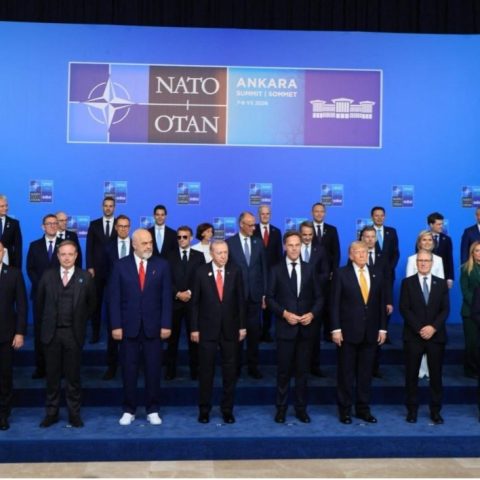
NATO’s Ankara Summit and Albania’s Uncertain Moment
Change font size: - + Reset Tirana Times, July 07, 2026 – The next NATO Summit, where the leaders of Allied member states gather annually, will take place on July 7–8, 2026,

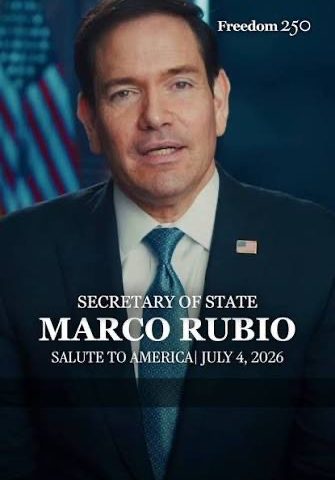
A salute to America
Change font size: - + Reset By Marco Rubio Two hundred and fifty years ago today, in a brick hall in Philadelphia, our forefathers declared their independence from the most powerful empire
From the Nile to the Balkans
Change font size: - + Reset By Dr. Arben Ramkaj Tirana Times, July 3, 2026 – If you sit by the banks of the Nile on a quiet afternoon and allow its
The Strategic Price of Non-Enlargement
Change font size: - + Reset By Albert Rakipi Tirana Times, June 30, 2026 – For more than two decades, the Western Balkans have lived inside the promise of European integration. In

The Political Myth of the “Beautiful Protest”
Change font size: - + Reset A Barthesian Reading By Diana Gëllçi, Ph.D. Tirana Times, June 30, 2026 – A beautiful protest has been unfolding in Tirana for several weeks. What is particularly