
TIRANA, April 4 – While the fiscal amnesty draft law government has approved continues remaining a hot issue, the World Bank suggests that the process should be transparent, credible and done independently.
“It is also important that amnesty is done in such a way that it minimizes moral hazard. Moral hazard is a notion that you can disobey the law, not pay taxes, not be punished and get away with it. It can be managed. For avoiding this, it is important that new cases of behavior which have been amnestied are made impossible through a combination of enforcement, punitive measures and incentives encouraging responsible financial behavior of individuals and companies,” Kseniya Lvovsky, the World Bank country manager told reporters last week.
Economy expert Zef Preci, the director of the Albanian centre for economic research supports the initiative which will unfreeze undeclared assets but says the money collected should go to finance public debt, currently at a record 59.5 percent.
“The money collected from this process should not go to finance the annual budget, but be destined to pay off the public debt, which continues remaining the biggest and most serious threat to the country’s macroeconomic stability,” Preci told Deutsche Welle in the local Albanian service.
While the government is seriously considering making a tax amnesty reform by the end of this year, the opposition Socialist Party, whose votes are determinant to achieve a qualified 3/5 majority that the bill requires is skeptical about the project government has approved ahead of local elections and the periodical precedent it might set.
The Tirana Chamber of Commerce and Industry considers the tariffs government has set for the fiscal amnesty process as very high, saying that any tariff of more than 3 percent is unacceptable.
Government says it intends to implement a full tax amnesty, excluding only businesses connected to current and former public office holders and those whose origin of capital is not legal business.
The Finance Ministry says that the legalization of the informal businesses would produce positive results for the economy, unfreezing some USD $3 billion.
Meanwhile, the business community represented by Konfindustria claims the fiscal amnesty can also be approved under a simple majority vote.
“There is no single case in all EU countries where the fiscal amnesty requires 3/5 of the votes,” says Konfindustria administrator Gjergj Buxhuku.
World Bank demands transparency over tax amnesty

Change font size:
Recommended Articles

Latest from Business & Economy
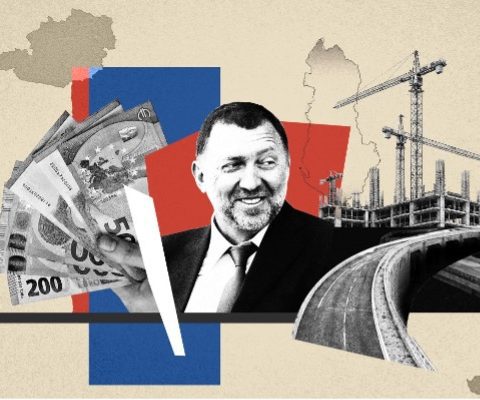
How a Sanctioned Russian Oligarch’s Business Interests Reached Albanian Public Contracts
Change font size: - + Reset Millions of euros flowed to companies linked to Strabag while Oleg Deripaska remained a major shareholder, exposing gaps in Albania’s ability to identify who ultimately benefits
Albania’s Cash Boom Raises Money Laundering Concerns
Change font size: - + Reset Cash outside Albania’s banking system reached a record 5.6 billion euros, last month. Tirana Times, August 30, 2026 – The amount of cash circulating outside Albania’s

Vlora Airport Heads to Arbitration
Change font size: - + Reset Albania faces another potentially costly international dispute after losing several arbitration cases in recent years that have exposed the state to hundreds of millions of euros

Concrete, Cocaine and Corruption: Albania’s Fragile Growth Model
Change font size: - + Reset Albania’s Concrete Economy: How Construction Became the Country’s Dominant Growth Model Tirana Times, July 10, 2026 – A booming construction sector has made Albania an outlier

Austria Leads FDI, but Real Estate Tells the Bigger Story
Change font size: - + Reset Bank of Albania data show Austria topping first-quarter foreign investment flows, while property and construction continue to shape Albania’s FDI model. Tirana Times June 25, 2026