On the most impressive works exhibited at the 4th Biennale currently being held in Tirana is that of Jewish artist Yael Bartana. Her short film entitled Mary Koszmary (Nightmares) features the Polish left-wing critic and activist Slawomir Sierakowski delivering a speech on a podium in the middle of a long-abandoned, dilapidated stadium. In his speech Sierakowski urges Jews to return to Poland. The artist skillfully exposes Poland’s and Poles’ contemporary struggle to be fully accepted in Europe, as Europeans, their struggle with their past, the bigotry and anti-Semitism. Poland needs its Jews to return to accomplish a sense of multiculturalism and tolerance, and thus to fit the image of a multicultural and tolerant Europe to which Poland’s current monolithic composition stands at a stark contrast. The artist astutely claims “3,300,000 Jews can change the life of 40,000,000 Poles.” The work is worthy of much more discussion of the political, social and psychological relations and undercurrents between ‘Europe’, Poland and Israel. However, this introductory interpretation of its essence will suffice to bring some perspective on the current debate on history in the Former Yugoslav Republic of Macedonia.
The Academy of Arts and Sciences of FYROM has published an encyclopaedia, as such institutions ordinarily do after intense research guided by widely-agreed principles that guarantee the objectivity and accuracy of the information collected and structured into an encyclopaedia. Such types of books are important works of reference and have, with time, acquired a reputation of authoritativeness and impartiality. It is indeed the careful and meticulous work of academics that stands behind such a reputation.
The Encyclopaedia of FYROM does not seem to be such a case. It is being widely contested by Albanians of FYROM – academics, journalists, politicians, writers etc – as well as by the international community. The basis for this contestation is the accuracy of what it presents as facts, of the account of history it presents of Albanians, Macedonians and Fyromians, of Kosovo and the war there etc.
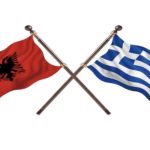
FYROM’s Academy of Arts and Sciences describes Albanians as “pllaninci” – highlanders. And that is fine. One hopes nobody seriously takes that as an offence, for it’s not. Problems start with the explanation given for the considerable Albanian presence in FYROM. It seems Albanians descended from their high mountains to cruelly conquer the territory on which FYROM now precariously rests on. The Academy’s academics also explain the transformation of Albanians from conquerors to an ethnic minority.
Historians regularly struggle with accuracy and it is common sense that the absolute truth about the past, if there is one, cannot be known. Smaller truths can. But even with those smaller truths one needs to be careful. And historians worthy of their titles must be constantly aware of the risk of accounting the past through contemporary lenses. In hindsight, especially in an ideological or political hindsight many things look different.
All in all, a sense seems to be conveyed of an unfair, illegal, immoral and burdensome presence of Albanians inside FYROM. The country is providing plenty of material to suggest that it is an intentional re-accounting of history and the precious little that is known of it that we are dealing with here. The belittling of Albanians in the course of history very well finds parallels in efforts to belittle them politically, socially and culturally at present.
Let us recollect some very recent history: FYROM tried to abolish the visa-free regime between Albania and itself; FYROM did not invite the President of Kosovo to a meeting of regional heads of state even though it had, somewhat reluctantly, recognised Kosovo; FYROM downgraded a state official visit of the President of Kosovo to an unofficial visit; FYROM started to segregate Albanians from Fyromians in schools. Let us stop here and not go much into the bizarre behaviour domestically so as not to run the risk of being accused of partiality. Let’s stick to facts and the fact that all of these facts have been served by FYROM in the space of less than two years.
The linearity of thought behind such behaviour cannot be ignored. All of these acts constitute acts of backwardness in light of the integration processes the region is in, as well as in light of FYROM’s status as a candidate country for both the EU and NATO in these processes.
The intents and consequences of the instrumentalisation of history are chillingly fresh in this region. The political manipulation of history, of the understanding of interethnic relations in terms of time and space, is the dough segregation, apartheid, ethnic cleansing, genocide are made of. At a time when scholars, civil society activists and politicians gather in Tirana or other cities of the Balkans to discuss integration and other ways to bring interstate and intrastate relations in the region from the realm of security to normalcy, FYROM invests, actively and adamantly invests in antagonism and ethnic division.
And in all its focus with what certainly seem like well-orchestrated perversions of history, we still are not clear of what FYROM itself is. FYROM itself switches from the glorious Ancient Macedonia of Alexander the Great to the Slavs, keeping its own inconclusiveness of identity under the spotlight. Instead of trying to prove a kind of authenticity it seems to have trouble proving, for its own good, for its own longevity, FYROM should irreversibly embrace tolerance and multiculturalism. FYROM should finally realise that such a twisted vision of governance not only will not lead it to some dreamlike image of glory and fulfilment of megalomaniac aspirations, but it might very easily lead it to disaster, for the state and for the lives of those that depend on its governance.
The work of FYROM’s Academy of Sciences does not only risk damaging the authoritativeness of its title, its publisher, and its commissioner. These are in fact minor risks in comparison to what such works lead to by belittling and demonising communities of human beings, no matter how big or small.
While FYROM resents its Albanian population as well as its neighbours, Poland seems to resent the flight of its Jews. It seems to be resenting having induced that flight. The nostalgia of a small number of Polish intellectuals for the multifaceted contributions of Jews to the country’s life is not worth much in light of the sufferings we all know of. It is worthy as a lesson however, a lesson of where discrimination takes us. This lesson needs to be learned all over, not by the same mistakes of prejudice and discrimination and war being committed all over, but by remembrance, by the promotion of an accurate collective memory. Identity and definition continue to be troublesome universally and ‘the other’ is a prerequisite for the definition of ‘me’, a definition that will always remain fluid to a degree or another. While a definition of ‘me’ or ‘us’ is pursued however, ‘the other’ cannot be left without for, as Yael Bartana reminds us “”with one culture, we cannot see; with one language, we cannot speak; with one religion, we cannot listen; with one colour, we cannot feel”.