By Marcie B. Ries
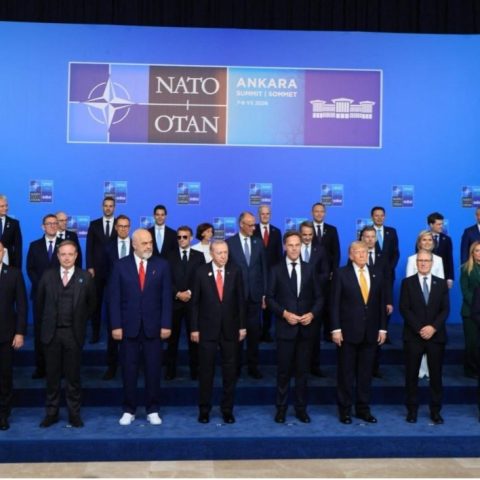
Recently, the United States Embassy in Tirana has become the Point of Contact Embassy for Albania as a NATO aspirant, succeeding the Embassy of Poland. This means that my Embassy is responsible for facilitating contact and the flow of information between Albania and NATO Headquarters.
It is in that capacity that I will be introducing our distinguished visitor from Brussels, but first I would like to say a few words.
As the Prime Minister has mentioned, one thing that makes Albania stand out among NATO aspirant countries is the nearly universal support for NATO accession among the public as well as the nation’s leaders.
Albania has shown its willingness to contribute to international peace and security by supporting the NATO mission in Afghanistan, participating in the coalition in Iraq, and by being a part of the EU peacekeeping in Bosnia-Herzegovina.
Albania plays a responsible, moderating role in its home region. And, it has demonstrated its willingness to work cooperatively with its neighbors through active diplomacy, participation, and leadership in the A3, SEEDM, and other regional initiatives.
The Ministry of Defense and the Albanian Armed Forces are currently engaged in a major reform as part of Albania’s efforts to secure an invitation to join the Alliance in 2008.
NATO membership, however, requires more than popular support and military reforms.
Since 1999, Albania, like all NATO aspirants, has had a Membership Action Plan which describes the steps the country must take to meet NATO standards, both military and non-military.
Among them are the strengthening of democratic institutions and the rule of law.
You may ask why membership in a military alliance requires meeting such standards. The answer is that NATO is a community of shared values whose members share a commitment to collectively address issues related to their shared security.
It is important to keep in mind that the reforms – whether for NATO membership or EU membership – are valuable for the society as a whole, for present and future generations.
Good governance, reduction of corruption, tackling organized crime, and strengthening the system of justice benefit all citizens in a democracy.
But success in achievement of these goals requires a national, non-partisan effort among government and the Parliament but also among civil society and normal citizens.
It is appropriate that all of these constituencies are represented here today to discuss specific objectives and ways to achieve them.
* Remarks by Ambassador Marcie B. Ries, NATO Conference in Tirana