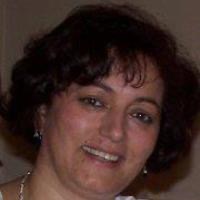
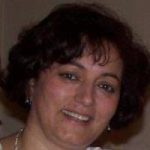
Pamela G. Griffin is the Executive Director of the Foundation for Albanian Visual Arts Across Borders (FAVA). She is also member of the development Board of the Albanian National Gallery of Arts. Pamela and her husband have been in Albania for five years.
Jeffrey Griffin is the President and CEO of Albanian-American Enterprise Fund. I meet her in front of our office and we decide to go for coffee. She is very busy trying to handle the Gala dinner she co-organizes annually. The TIA airport is also inaugurating soon the new terminal, and she has to be present in the important day for her husband who is in the Administrative Board. You can see that she is very fond of her job and has a great passion about arts. She pulls out her bag numerous brochures of several artistic activities happening that relate to her friends and to the work of the Gallery.
She confesses to Tirana Times her impressions and her challenges as an arts lover in Albania.
PG – I have been to Albania for five years now and I have seen some wonderful changes. I came from Washington D.C and have worked with what you call NGO-s. I worked more on the administrative side. So when I was asked to help with the NGA I thought maybe I could bring something to help them both in that way and also in fundraising which is a new thing here but very valuable. I believe we brought a new tradition that we started: the Board of Development, composed by 8 people, mostly Albanians. We meet once a month. I believe we have started this concept that the successful businesses in Albania can support the arts. They are doing this and it is wonderful. It started with this Gala dinner. They come to this event and they know they are supporting arts with this dinner. They have been coming now for 4 years and with the funding we were able to do things like restoration. Our focus is on preservation and we try to help the artists and this is why we have this auction in the dinner every year, to try to help Albanian artists.
AC – What are some of the perks of your job?
PG – Well for me its meeting Albanians, meeting the artists, and understanding the culture which always is harder to grasp. I have been just wonderfully exposed to some of that. I would say that for me it’s my main perk. And to see progress, offering solutions, trying to make new strategies, setting goals
AC – You have worked with Albanians for a long time now. Do you find them to be good co-workers? And what about Albanians as friends?
PG – Wonderful friends that I hope I will always keep because of course I won’t live forever in Albania. I hope that I can help promote them when I go back, especially some of the artists. One thing I have noticed is that people here have a hard time cooperating and collaborating and its something I always try to help facilitate. It takes time ad it is not something that comes overnight. Now I my work it has been wonderful, I have seen progressively more and more collaboration. I hope very much that it will continue. In the Gallery we also have something called The Special friends of the Gallery. It’s about 35 people, Albanians and Internationals who work together to make the gallery a friendly place, a place that people want to come visit, to socialize. We are trying to get more young people interested in that. We have promoted different things like Arts in the Corporate Office. We are going to do a Zef Kolombi exhibit with both music and poetry. We have worked with friends of Music here. In everything that we do we try to collaborate, even with smaller galleries. When I first came here somebody said to me “Ok Pam but we can’t work with us because you work for the Gallery!” and I said “but why not?” we ca find ways to work together.
AC – When you consider difficulties in working with arts in Albania, which one irritates you the most? Is there a structural impediment that should be overcome soon?
PG – I would say it is structural. Of course there is a lot of need in the gallery for structural changes: for roles to be defined, for goals to be set, for strategizing in general. What I find frustrating though is that there is a lot criticism no matter what one does. It seems that artists want to criticize each-other all the time. No criticism is good as long as it is constructive and as long as people look forward. For sure criticism is good. But negative criticism that does not add anything is for me very frustrating.
AC- What is FAVA and what are the activities it organizes?
PG – FAVA was established so that we could be more independent in terms of when we fundraise how to give to specific projects. FAVA gives not only to the National Gallery but also to other galleries. It tries to play a significant role in cross-border artistic collaboration. One of the exhibits that we had for instance has been this one called PRESENT which was last June in the National gallery. It was by some of the professors of the Arts Academy here together with an American professor of Arts, Caroline Whitefeather. Now that collaboration is continuing, this is what we wanted. Najada Hamza (one of the artists whose work will be in the Gala auction) will be going to new York State to have a show there. Sometimes we have helped small galleries. We like galleries that are community-galleries. The community does not have to have just another restaurant but a cultural center.
AC – What are your comments on the cultural life and the arts scene in Albania?
PG – I think it is very rich but it is a question of having more aces to overseas. That’s terribly important to be exposed to what’s happening in the global arts scene. I think the Biennale of this year is going to be fabulous for Albania because that’s true exposure. Young artists will get exposed in that place. The American curator of the show is also the director of a museum in Miami, that brings another person that had never been to Albania before. She came for three days and was impressed with some of the artist here. I think she will open up some doors.
AC – In the context of the image of Albania how do you se our art promoting the country abroad?
PG – Artists are ambassadors of the country. They are showing all kinds of work, and providing exposure all over. It’s a wonderful time because a lot of European countries know Albania but where I come from, the States, many people do not know. So when they get to see the art work they go “Wow!” I have also had friends visiting that were impressed. When they se the art works people want to come visit.
AC- Who have been your main partners in the coordination an important event like the annual Gala Auction dinner?
PG – We have had five constant and committed sponsors for four years which I would really like to thank: Vodafone, Sigal, Sheraton Tirana Hotel and Towers, Raiffeisien Bank and Edil Al-It. And there is also a long list of other contributors that have helped in many ways including the AAEF.
AC – Are you looking forward to the dinner?
PG – Yes, definitely! Because it’s not only an auction and a diner but since last year we have started with a whim but it was s successful, this little fashion show. It’s not particularly professional but the fashion is designed by the Arts Academy students. Its fabulous what they come up with. This year we have called it the heritage collection so it is gong to be a modern version of your beautiful costumes. We get professional models to show the works. It takes around 15 minutes but the students love it because they don’t get a lot of opportunities to show their work. And we love it too because it’s so much fun and makes the dinner more vivid.