
TIRANA, June 8 – The June 28 election is attracting the attention of the international community, not only of those institutions operating in the tiny Balkan country but also of the US Congress.
Jonas Rolett, Regional Director for Southern Central and Eastern Europe at the Open Society Institute, made a presentation at a briefing of the Commission on Security and Cooperation in Europe of the US Congress regarding Albania’s elections and the challenge of the democratic transition.
“It’s not often that a small country like Albania receives the attention it’s getting today,” said Rolett, adding Albanians’ pro-American stand noted during the Bush visit two years ago.
Rolett said that his briefing, held June 4, was an important signal to all political players “ƴhat Washington cares about the integrity of Albania’s democratic system and is paying attention to the quality of the electoral process.”
Civil society has been moderately successful in Albania, he said. Non-governmental organizations have improved the flow of information between government and citizens; they have raised the stakes for unethical or unlawful behavior by political actors; and they have provided avenues for citizen participation in public life. But he added that what civil society cannot do is guarantee the integrity of the democratic process.
Compared to its neighbors in the Balkans, Albania has a relatively robust civic life.
In Albania the government recently applied pressure on NGOs, asserting the right to tax them and setting up a state account to fund them – which of course would undermine their independence. So far neither of these measures has been implemented; and the government deserves credit for bringing NGOs into a discussion about how to proceed on these issues.
More problematic is the tendency of political players to accuse civic organizations of partisanship – and the tendency of NGO leaders to drift in and out of political parties.
On Election Day they will be observing the vote in polling stations all over the country. Through their efforts we will get a pretty accurate picture of the quality of the electoral process. How much they can deter partisan efforts to manipulate the process is open to question.
Albania’s media is vivid, pluralistic, un-transparent and chaotic. A country of just over three million people is served by 69 private TV stations and close to 50 private radio outlets. Newsstands are crowded with as many as 200 tabloid-style newspapers covering a range of interests and political perspectives. If there is a problem with freedom of expression, it’s that the media is a little too free with its reporting. Journalistic standards are lamentably low.
As a rule, private media aligns itself with one or another of the political formations.
Investigative journalism, some of it of good quality, is on the rise.
The main problem with Albanian media is its murky relationship to business and politics. Media financing is also shrouded in mist. Another problem with media in Albania is the politicization of the state television and radio agency.
Albania’s inclusion in NATO and aspirations to join the EU should require a higher standard of electoral behavior, said Rolett.
Albania ranks 85th on the Transparency International index, roughly on par with the rest of the region. The effects of corruption are destructive, leading to the loss of life, property and opportunity. The Gerdec case, which resulted in the deaths of 26 people and the destruction of 4,000 homes, demonstrates how dangerous it can be.
Corruption has fed a profound public cynicism about politics, leading many people to retreat into private life.
At the political level there have been relatively few convictions for corruption.
Albania is a work in progress, said Rolett. On the one hand, the country has built credible systems to compete for and apportion power. On the other, it suffers from clan-based political and social structures and an informal economy in which everything can be negotiated.
No one I know expects Albania to turn into Sweden overnight, he said ironically, adding there is still a lot of work to do.
There was a briefing of the Helsinki Commission about Albania’s upcoming elections.
Alcee L. Hastings, Co-Chairman of the Commission on Security and Cooperation in Europe, said that there was concern that these elections will not meet OSCE standards.
The congressman said that neither the ruling parties nor those in the opposition suffer the full consequences of these delays. It is the voter.
Albania’s electoral situation discussed in the US Congress.

Change font size:

Latest from News
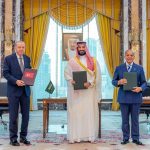
Mecca Defense Pact Signals Saudi Arabia’s Bid to Shape a New Security Order
Change font size: - + Reset The agreement with Turkey and nuclear-armed Pakistan strengthens Riyadh’s position as a central architect of regional security, while reflecting a broader shift toward a more multipolar

SPAK Brings New Charges Against Former Deputy PM Balluku
Change font size: - + Reset Tirana Times, August 07, 2026 — Albania’s Special Prosecution Office Against Corruption and Organized Crime has brought new allegations against former Deputy Prime Minister Belinda Balluku, widening
Milošević’s Language Returns to Serbia’s Government
Change font size: - + Reset Ethnic Cleansing Remark Tests Serbia’s Claim to Have Broken With Milošević A Serbian minister’s declared willingness to expel Kosovo Albanians has drawn condemnation across the region
Saudi Ambassador Meets Head of Albania–Saudi Parliamentary Friendship Group
Change font size: - + Reset Tirana Times, July 6,2026 – Saudi Arabia’s Ambassador to Albania, H.E. Turki bin Ibrahim Al-Madi, received Albanian MP Baldi Çomo, Chairman of the Albania–Saudi Arabia Parliamentary Friendship

Anti-Government Protests Escalate in Tirana as Demonstrators Block Parliament
Change font size: - + Reset Tirana Times, July 03, 2026 – Albania’s month-long anti-government protest movement entered a more confrontational phase on Thursday, as demonstrators gathered outside Parliament, blocked access points