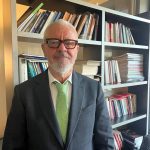
Interview with Nicholas Pano
By Edlira Majko
The Albanian Institute for International Studies and its partners organized last weekend the international conference “Twenty Years After: Rethinking Democracy and State in Albania” where you were one of the keynote speakers. What’s your opinion of the topics covered in the conference?
– First of all, it was really an outstanding conference from the point of view of the topics that were covered and the participants that were in the conference. I was very much impressed by the efforts to be impartial in the approach. In general, I think the conclusion of conference was that in most areas of the Albanian life, there has been a degree of progress. Progress has been most pronounced and achievements have been especially noteworthy in the area of foreign relations, where Albania in the past twenty years has ended it isolation from a large portion of the world. Albania is now an active player in the international scene; especially noteworthy are the Albanian participation and involvement in regional activities and the significant contribution that Albania is making towards Balkans’ stability.
Another noteworthy area is the developments that have taken place in economy. Clearly, the standard of living in Albania is getting to improve, the government has given significant attention to building an infrastructure in the country, especially during the past five years, the Durres to Prishtina road system has been a factor not only in an improving context, but it should be a boom to the development to the economy of both Albania and Kosova. The economy has also been prospering in terms of attracting new business, although a lot more has to be done.
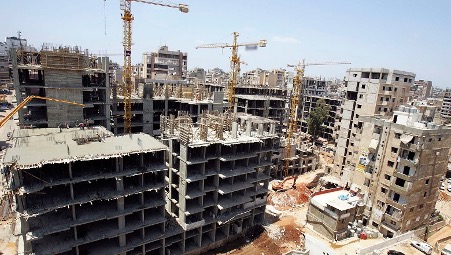
And I think one of the things that is most noticeable to anyone coming to Albania, who comes on a periodic basis, and I have been coming regularly in the last twenty years, are the tremendous visible changes taking place in the country, especially in the cities. So, I think that basically Albania has two areas were significant progress has been made: outstanding progress in the area of foreign relations and I would say very good progress in the area of economy.
The downside of course is the situation in areas such as the rule of law, an issue that still has to be addressed. I think that significant progress has to be made in overcoming corruption, both official corruption and corruption in business. I think more attention has to be given to social issues in the country, although progress has been registered here. But overall, I would say that the balance-sheet is positive, and as I indicated at the conference as I look at the development over the past twenty years looking into the future, I would say the glass is half full and Albania can, I hope, sustain the progress made in the economy, international relations and really begin to seriously tackle the areas which need attention in the country.
Can we say for sure that the Albanian transition has already ended?
– The Albanian transition is a work in progress. There have been advances in specific areas as I indicated previously. Given the work that needs to be done in terms of establishing a strong parliamentary system ending the tradition of “winner take all politics”, ending the distress of the electoral system which I think is the key element that still needs to be addressed, as well as dealing with the corruption issue. I would say the transition is still a work in progress.
There is currently a deadlock going on in Albanian politics since the June 2009 parliamentary elections which the opposition Socialist Party contests and demands transparency refusing to give approval on important bills requiring a qualified majority of votes. What is your comment on that?
– I think this is a great tragedy for Albanians that since the June elections of 2009 both parties have not been able to come to some kind of understanding or compromise regarding the situation. The elections results clearly need to be investigated. There were certainly some problems, especially in the tabulation and recording of the votes. There are procedures in place as I look the electoral code with the amendments that were made in 2008-2009, both amendments of the code of the constitution. But I think what needs to occur here is that the election authorities need to have the will and the discipline to implement the provisions of the code. It is a very serious problem. I think that also some means have to be found to create a central electoral commission that is not just simply made up of representatives of the parties. Certainly, there must be a number of people in Albania who are above the parties and politics and be appointed to that body and be trusted to make decision that are based on law rather than party political interest.
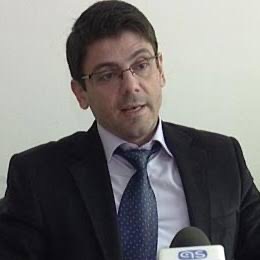
Nicholas C. Pano is Professor and Dean Emeritus at Western Illinois University of Albanian origin. He was educated at Tufts, Johns Hopkins, and Northwestern universities. His research and publications have focused on the history, politics and international relations of Albania. He is the author of the book, The People’s Republic of Albania, and of book chapters, articles, book reviews and scholarly papers dealing with various aspects of Albanian affairs. Professor Pano first visited Albania in 1973 and since 1990 has traveled extensively in the country both for research and as a participant in projects and programs sponsored by various government agencies and NGOs. He was editor of The Journal of Developing Areas from 1977 to 2000 and has served on the Board of Managing Editors of Southeastern Europe and the Editorial Board of Albania. He is currently president of the Society for Albanian Studies and a member of the Advisory Board of the Fan S. Noli Library and Archives.