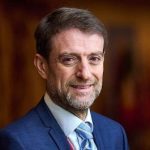
By Ambassador (retired) Alexandros P. Mallias
Special Advisor to ELIAMEP
I believe I am one of few ambassadors who did not use note takers during meetings. While I was ambassador to Washington, a visiting Minister from Athens said to me: Alexandros, I am surprised to see that you keep notes yourself. Well, I replied, half jokingly, these notes will be my main source of income when I retire. I am not sure he understood. In any case, with the austerity program in Greece and the drastic reduction of my pension, my prognosis proved to be accurate sooner than I had anticipated.
These notes which relate to our topic today do not necessarily follow a chronological order.
The first Summit Meeting of the Southeast Europe Cooperation Process – let’s call it the first post World War II meeting attended by all Balkan leaders- convened in Crete in November 1997. Then Foreign Minister and currently Vice Premier Theodoros Pangalos confessed over dinner to Prime Minister Fatos Nano that his search for a new ambassador for Tirana was proving a difficult task. There are no volunteers, he pointed out. Keen not to miss any dinner hosted by Pangalos – I will not further elaborate – I managed to get myself invited.
I said to him point blank, I am very much willing to go to Tirana when my term in Skopje comes to an end. With his trademark sarcastic tone, Pangalos turned to Nano, and said, Mallias is either really crazy or really ambitious. Or both.
I never regretted my decision. In fact, it was well thought out decision, not an emotional one. My term in Albania was one of the most wonderful and enriching experiences of my life and of my Balkan journey.
Throughout my tenure in Skopje (November 1995-February 1999) as the first Head of the Liaison Office, to be in line with the orthodoxy of the language of the Interim Accord, developments in Albania and in the Federal Republic of Yugoslavia, particularly in Kosovo, were at the top of my interests. I always had the opportunity, and indeed the privilege, to have good contacts with Albanian leaders across the board and the borders. Ibrahim Rugova, Veton Surroi, Skender Hysseni, Arben Xhaferi, one of the most sophisticated thinkers of our region, Abdurrahman Aliti, Menduz Thaci, Rufi Osmani, Imeri, Bedjeti and many others.Hashim Thaci,Ramush Haradinaj,Ali Ahmeti,Teuta Arifi,Alush Gashi,Blerim Shala, Ardian Ghini and many others were later added to the original list.
My main source of information on developments in Tirana was Albania’s Ambassador to the former Yugoslav Republic of Macedonia (fYROM), Shaban Murati. We maintained an open channel of communication even when he was later called back to Tirana. Later, during my Tirana ambassadorship, he was one of the most useful sources of critical analysis on Greek-Albanian relations.
From the Skopje post, developments in Kosovo were rather predictable.
Milosevic was a disaster for Yugoslavia and for Serbia. As early as March 1996, I reported that if Milosevic were to continue on his course of action, Serbia was going to turn into another Iraq. My cable received a rather angry response from our Ambassador to a neighboring capital. Yet, my forecast proved accurate.
The 1997, events in Albania were a source of legitimate and genuine concern for the European Union and for Albania’s neighbors, Greece and fYROM.
Actually, those events generated unprecedented political interaction and dialogue between Athens and Skopje, giving the green light for high level visits. In March 1997, Pangalos visited Skopje for the first time. The preparation of the entire visit was kept completely confidential. I informed my staff at 6.30 in the morning that I had to go to the Skopje Petrovac airport to receive Pangalos. The same secrecy was also maintained by President Gligorov, Prime Minister Crvkovski and FEM. Frsckoski. I recall that as Frsckoski and I entered Petrovac Airport – Alexander the Great and the ancient world had not yet become a priority for fYROM – we were told that the Airport’s staff and security officers thought that the aircraft was carrying a top Albanian political figure from Tirana.
A necessary parenthesis here. Kiro Gligorov, while the architect of the smooth transition towards independence and international recognition under the provisional name “the former Yugoslav Republic of Macedonia,” had underestimated the deepening of divisions between ethnic Slavs and Albanians. The preamble of the 1991 Constitution was at the basis of the statutory division and discrimination between Slav/Macedonians and Albanians. I always thought that Albanians and Slavs should have an even stake. As an aside, let me point out that during the early days of the 2001 conflict we proposed to then Foreign Minister George Papandreou that Greece should take the lead within the European Union to secure, inter alia, amending the preamble of the 1991 Constitution. Many of the ideas and proposals included in that memo- leaked to the Greek media- were later reflected in the Ohrid Agreement.
Notwithstanding the return to a kind of normal political life in Albania, with the proactive role of OSCE, Operation ALBA and a high international assistance program, huge Greek bilateral aid included, Albania remained a quasi big question mark until almost the end of 1998. Despite ongoing domestic rivalries between the Democratic and Socialist Parties, as well as between Socialist Prime Ministers and their own Party, the factor which generated Albania’s entrance as a player in the international political and diplomatic arena, had a single name: Kosovo.
The entrance of K.L.A. (UCK) in the public arena since early 1997, Milosevic’s iron feast policies and civilian massacres in Kosovo, the NATO adoption of the October 1998 Activation Order – the green light for military operations against Serbian targets – the deployment of NATO’s Extraction Force in Kumanovo, and a long list of failed efforts and attempts towards Milosevic, including sustained and continuous efforts by Greece, made clear, at least to some of us, that D Day for Kosovo and Serbia was not far off.
In November 1998, a new Government took office in Skopje. In mid-December, I remember visiting Arben Xhaferi at D.P.A.’s headquarters in Tetovo. In sophisticated and detailed manner, he briefed me about events to come. In January 1999, the Greek Think Tank ELIAMEP which, since 1994, has a long record of proactive policies for, and around Kosovo, made a last attempt to devise a negotiated settlement. Veton Surroi was there. Late President Boris Traikoski was also present, as well as key personalities from Tirana and Belgrade. Another lost opportunity for Belgrade. Rambouillet was the next station in Kosovo’s long journey.
In mid- January 1999, rumors were soon confirmed by facts. The Government in Skopje decided to recognize and establish diplomatic relations with Taiwan. Obviously, it was a disastrous move. In a nutshell, the P. R. of China closed its Embassy in Skopje. But the incident had another, even more important international dimension, which, a few weeks later, proved to be harmful to fYROM’s interests. China, a permanent member of the Security Council, vetoed UNPREDEP’s presence along the borders with F.R.Y./Kosovo. For the first time since 1992, fYROM was out of the United Nations preventive deployment umbrella. The diplomatic complications and implications of the Taiwan recognition have not yet been fully explored. I have my own theory.
I left Skopje for Tirana via Athens during the first round of the Rambouillet Conference. The situation in Tirana was less alarming than expected. In our first meeting, Prime Minister Pandeli Maiko, a man with a deep sense of moral values, integrity and patriotism, was surprised that I could understand some Albanian. That same day, I presented my credentials to the much respected President Rexhep Meidani, one of the few Albanian leaders in Tirana who knew Kosovo well.
Twenty-four hours later, the newly-appointed Greek Foreign Minister, George Papandreou, makes his first Balkan tour. Kosovo was the main agenda item.
In late February or early March, in a somewhat diplomatically unusual, yet politically significant move, the Albanian Government, via Verbal Note addressed to the Embassy of Greece in Tirana, declared that Greece is a strategic partner of Albania. Pandeli Majko liked to use the term “confidential relations” between Tirana and Athens. He had a fine rapport with George Papandreou.
Kosovo was on the top of the agenda in my late February dinners at the Embassy with Fatos Nano and Sali Berisha. I was amazed to learn from Fatos that this was the first time he had entered the premises of the Greek Residence. On the contrary, Sali Berisha, accompanied by Shaban Murati and Besniq Mustafaj, was familiar with the premises. With Dr. Berisha, dinners were ascetic and austere, while with Nano they were rather epicurean.
From March 25 to mid-June 1999, from a largely unknown or ill-known country, with a negative image in many European chancelleries and much bad press in Europe, Albania became the host of unprecedented high level visitors. Tony Blair’s visit in May was unforgettable.
The influx of roughly 500.000 Kosovar refugees in Albania generated a genuine and spontaneous wave of solidarity and humanitarian compassion.
Since the beginning of NATO’s bombing campaign, domestic rivalries and well-known lines of division eclipsed from Tirana. Albania and the Albanians were entering a most decisive phase for their country. From nowhere to everywhere. From merely nothing to everything. That was, in fact, the turning point in the history of modern and democratic Albania.
Greece’s plan for providing shelter and accommodation to thousands of Kosovar refugees focused almost exclusively in supporting Albania’s efforts. In the early days of the massive exodus of Kosovar refugees from their homeland, Greece and George Papandreou, personally, played a decisive role.
First, by persuading fYROM’s President Kiro Gligorov and Prime Minister Georgievski to open the General Yankovic/Blace border cross-point, where thousands of Kosovar refugees were blocked and prevented from entering fYROM’s territory. Papandreou flew to Skopje and joined the same night Tirana accompanied by fYROM’s Foreign Minister Sasho Dimitrov.
Tensions were high between Tirana and Skopje and Greece’s mediation proved to be the catalyst for a solution. Pandeli Maiko was angry. He used tough language towards Dimitrov before the cameras. When the media left, the trilateral meeting progressed more smoothly. Greece offered to organize refugee camps near Pogradec to host up to 7.000 Kosovars. Sadako Ogata, then U.N. High Commissioner for Refugees, with whom we all met later, around 10.00 p.m. at the Rogner Hotel, was relieved.
Secondly, by organizing three Refugee camps in Kukes, Tirana and Pogradec, in close cooperation with the Albanian Government and personally with Pandeli Majko, Ilir Meta and Kastriot Islami. Total capacity of the three camps reached 10.000. The Tirana camp, constructed with prefabricated housing, was generally considered the best in Albania. President Rexhep Meidani visited that camp, while Vice Premier Ilir Meta visited the camp in Pogradeci.
These were good days for Albania for Greece and of course for Kosovo.
These excerpts from the journal of the Ambassador of Greece in Tirana could be summed up as neither roses nor thorns. Yet, those were truly unforgettable good moments of partnership and trust.
A last word from this diary. On March 29, Sabri Godo asked to meet me urgently. He asked in confidence, whether Greece could help rescue from Kosovo a historic Kosovar figure. Sabit Brokaj, then security advisor to President Meidani, reiterated the request. We did what we had to do and could do.
I earnestly believe that those moments, days and months galvanized the will of the Albanian people to abandon the fringes of European architecture and become regional, European and international players. In less than 180 days, Albania had become a different country.
They owe much to Kosovo. But Kosovo ought to be grateful to Albania, as well.
Why? Because the careful, moderate and most well-calibrated bipartisan Kosovo policy of all Albania’s Governments since 1999, also helped Kosovo’s path towards independence.
These comments were made by Alexandros P. Mallias, former Greek Ambassador to Albania at the AIIS conference “Twenty Years After: Rethinking Democracy and State in Albania” held from October 22 to 23 in Tirana