By H.E.Mr. Jeremy Newman
Over the past few years contact between Albanian and Australian Prime Ministers and Foreign Ministers has greatly increased. Those meetings reflect the two countries shared concerns about international security. There are a number of common reference points: NATO, of which Australia is a contact country; Afghanistan, where Australia has one of the larger troop presences; and the OSCE, of which Australia has recently become an Asian partner for cooperation. In terms of the deepening and intensifying of its own relationship with the EU, Australia follows with interest Albania’s EU trajectory.
Australia is a medium-sized country which is dynamic and outward looking. It has to be – international engagement is vital to its economic prosperity and security.
Of all the developed economies, Australia has been the only one to maintain growth during the global financial crisis. This was due to its open and competitive economy which in turn is a legacy of deep economic reform from the 1980s onwards. Anticipating the tide of globalization, Australia abolished tariffs, deregulated the market, floated its currency and opened its economy to the world.
Globalization has been one of the biggest drivers of change in the international order and the inexorable shifting of global economic and political power in recent decades from West to East. The global financial crisis has further accelerated the shift in global economic weight. Europe and the United States will remain major global players, but the change in relativities requires an adjustment by all to a much more complex multipolar world.
This period of change challenges assumptions about global security at many levels. It is far more uncertain than the relative stability of a bipolar world, or the brief unipolar moment at the end of the Cold War.
In determining its approach to foreign policy in such a world, the Australian government set out three broad pillars of foreign policy
נa reinvigorated commitment to multilateralism, particularly through the UN system
נdeepening engagement with our Asia-Pacific partners
נand a reaffirmation of our long-standing alliance with the United States.
A commitment to an effective multilateral system is the bedrock of Australian foreign policy. Real security cannot be achieved unless international norms are created, and all countries, whatever their size, have a role in creating and maintaining international order. Since 1945, Australian foreign policy has been informed by the underlying principles and purposes of the United Nations: to maintain international peace and security, to develop friendly relations among nations, and to achieve global cooperation.
Australia regards the United Nations as an essential forum through which to influence world affairs, promote a stable international framework, defend Australia’s security and sovereignty, pursue trade and economic interests and promote Australian values. Australia has made important contributions to UN activity for more than 60 years, including in the areas of peace and security, human rights, development assistance and social, economic and environmental affairs.
Australia has been a member of the UNSecurity Council on four occasions: 1946-47, 1956-57, 1973-74 and 1985-86. Australia is a candidate again for membership for the 2013-14 period. Australia’s record shows that it can use that position to make tangible differences for the small and medium countries of the world. And we believe there is a strong case to increase the number of permanent members of the UN Security Council to appropriately reflect the fundamental geo-political changes since it was founded.
A key driver of those changes has been the growing influence of Asia-Pacific economies on the future of the world economy.
Australia is located in the middle of the Asia-Pacific region. It is both a dynamic and a volatile region of the world. It contains three of the world’s most dangerous strategic flashpoints: the Taiwan straits, the Korean Peninsula and Kashmir, as well as traditional rivalries between the great powers of the region.
Unlike Europe, Asia has no security architecture such as NATO provides, nor a political and economic group such as the European Union. Australia has traditionally worked hard to develop regional structures. We were a founding member of APEC, the Asia-Pacific Economic Forum, a group which accounts for approximately 41% of the world’s population, approximately 55% of world GDP and currently half of world trade and rising. Australia also has an active role in the East Asia summit and the ASEAN regional forum to promote cooperation and policies that will provide stability and prosperity.
Australia has a strong sense that as a nation it has the obligation to contribute to broader global security. That is reflected in the contribution to UN peacekeeping and the strong commitment to Afghanistan where Australia is the largest non-NATO force contributor. Australia appreciates enormously Albania’s contribution there.
It is important that states are contributors to global security not just takers, particularly as we face a period of transition towards a less stable multipolar world.
Europe is a key player in this world, with considerable intellectual, material and strategic resources to contribute to global order and prosperity. But one of the challenges Europe faces is its tendency to inwardness. The sheer complexity of decision making makes it hard to project a coherent, proactive diplomacy. A major challenge for Europe is establishing relations with the Asia Pacific, a diverse and dynamic region driving change in the world. Through the Partnership Framework Agreement, Australia can help the EU in developing comprehensive engagement with the Asia-Pacific. The Lisbon Treaty and the establishment of European External Action Service will also bring Europe’s strengths to bear with the weight they deserve in the emerging multi-polar world.
Albania is naturally focused on its EU membership aspirations and on its immediate neighborhood. Australia sees Albania as integral to the achievement of lasting stability in the western Balkans. Albania has historical ties with Asia and is well placed to contribute to an outward looking Europe. Albania is also a member of the Organization of Islamic Conference which brings a valuable additional dimension to its foreign policy. Albania’s painful first- hand experience of the consequences of breakdown in global stability, has given it a very clear-headed understanding that disengagement from the world is not an option.
Change in the world is driving convergence: convergence between domestic and foreign policy, and convergence between countries and regions that are far apart. Convergence means that countries as geographically far apart as Albania and Australia have more reasons than ever to work together closely towards a secure, peaceful, and prosperous future for our citizens .
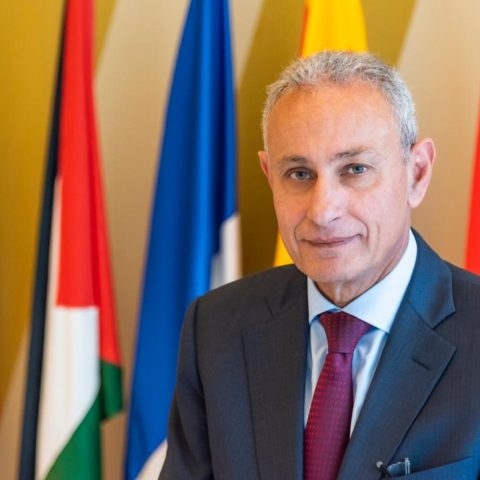
(The speech Australian Ambassador to Albania, H.E. Mr Jeremy Newman, during a foreign policy forum organized by the Albanian Council on Foreign Relations, Tirana, March 2, 2011)