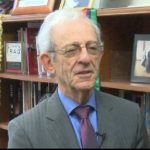
By Elez Biberaj Ph.D,
Thank you so much for the invitation to participate in this important conference. I am delighted and honored to be here to mark the 20th anniversary of the opening of the American Embassy in Tirana.
My task here today is to talk about U.S-Albania relations during 1990-1992 – a critically important period in Albania’s contemporary history. After a long absence of no contacts, in 1990 Albania suddenly became the focus of high level American attention.
United States’ objectives were clear:
נTo induce, through a variety of means, including VOA broadcasts, Europe’s last Communist dictatorship to undertake much needed democratic and economic reforms.
נAssist the Albanians to lay the groundwork for a peaceful democratic transition, that would help Albania assume its rightful place among free and democratic nations.
First, let me begin with some background information.
From 1945 to 1990, the United States and Albania had no diplomatic contacts. In the wake of Washington’s aborted attempts to liberate Albania in the early 1950s, Tirana dropped from America’s radar screen. At certain critical moments, such as after Albania’s break with the Soviet Union, the Soviet invasion of Czechoslovakia, and Tirana’s break with Beijing, the United States made overtures to Albania. The United States was prepared to offer Albania – as it had done in the case of Yugoslavia after Tito’s break with Stalin – substantial economic and political assistance. Albania’s reclusive and paranoid regime rejected these overtures and showed no interest in resuming ties until April 1990.
During the long period of Albania’s self-imposed isolation, the Voice of America was essentially the only contact between the two peoples and the two countries. Through its broadcasts, VOA gave Albanians hope that they had not been forgotten, and expressed America’s commitment to one day see Albania join the ranks of free and democratic nations.
Before 1990, Albania had not been a significant American foreign policy issue. Soon after Nicolai Ceausescu’s demise, however, attention turned to Albania. In the early part of 1990, there were clear indications that the social compact that had ensured the regime’s survival was eroding rapidly and that Ramiz Alia was willing to compromise the regime’s long ideological stance to stay in power. This became evident at the 10th plenum of the Central Committee, in April 1990, when Alia announced some important policy changes and called for the normalization of U.S.-Albania relations. He also announced that his country would seek admission to the Conference on Security and Cooperation in Europe (CSCE). Albania had been the only country in Europe to boycott the Helsinki process.
In the past, Washington had appeared willing to restore relations with Tirana’s government without preconditions. By April 1990, however, America’s position had evolved significantly. The United States now saw an opportunity to promote political and economic changes that would finally end Albania’s long Communist nightmare. Albania had finally become an important part of Washington’s vision of building, what President Bush had called, a Europe whole and free.
Applying lessons from the revolutions in the other East European countries, Washington began to articulate a clearer policy, assuming a more direct and prominent role in efforts to influence internal developments in Albania. Working closely with its key European allies, the United States intensified pressure on the regime, and predicated the restoration of diplomatic relations and support for Albania’s membership into the CSCE with progress toward political pluralism.
The State Department and the National Security Council at the White House were responsible for the formulation of the policy toward Albania. However, influential members of the United States Congress – Rep. Tom Lantos, Sen. Dennis DeConcini, Rep. Steny H. Hoyer, Sen. Claiborne Pell, and Senator Bob Dole – also played a critical policy role. They began to focus on Albania, providing forthright support to calls for democracy and freedom. And the Albanian-American community effectively lobbied the administration and the Congress for support and played a pivotal role in elevating the Albanian cause.
Washington responded to Alia’s overtures with a two pronged approach – a policy similar to the package of “sticks and carrots” that had been so successfully employed a year earlier in other former East European countries. It agreed to open a dialogue, and American and Albanian diplomats held several informal meetings during summer and fall. While agreeing to engage the Tirana government, the United States was not prepared to reward the last Communist dictatorship in Eastern Europe with a full normalization of ties without the implementation of fundamental political reforms.
Secretary of State James Baker, in public testimony before the U.S. Senate Foreign Relations Committee in June 1990, bluntly laid out the conditions that Albania had to meet if it wished to join the community of free nations: progress toward political pluralism, full respect for human rights, release of political prisoners, free elections, and the implementation of reforms that would eventually lead to the creation of a marked economy.
Alia received a similar, direct message in meetings with visiting senior members of the U.S. Congress. In May 1990, Rep. Tom Lantos became the first U.S. official to visit Albania in more than four decades. And in August 1990, an official U.S. Congressional delegation, led by Senator Dennis DeConcini, paid a three day visit to Tirana.
Despite his public statements about Albania’s democratization, Alia, however, was not willing to implement fundamental political and economic reforms. He was interested in reforming rather than changing the system. His domestic policy initiatives and calls for restoring relations with the United States were grounded in self-preservation. Alia continued to respond to demands for change with insufficient measures.
The U.S. decision to introduce conditionality in its policy toward Albania was aimed at encouraging Albania’s reformist forces and promoting democratic change.
The VOA, at the time the only Western international broadcaster in Albanian, continued to maintain its focus on Albania. By 1989-1990, VOA had succeeded in breaking the Communist regime’s information blockade, and had gained prominence as a credible, alternative news source for information-deprived Albanians. VOA served as a significant agent of change by successfully challenging the regime’s monopoly on news and information and promoting the ideals of a free, pluralistic, and democratic society. VOA provided extensive coverage of Albanian domestic events as well as cross-reporting of developments in Eastern Europe. VOA broadcasts emphasized the contrast between political and economic reforms in other East European countries and Alia’s policies. Through careful gleanings from the Albanian press, VOA identified and highlighted reformist measures and statements. By May-June 1990, VOA was in a position to conduct in-depth telephone interviews with opinion makers in Albania. For the first time, officials and intellectuals with liberal, reformist inclinations were willing to express views which went beyond what were the standard Communist Party talking points. By providing news and information that was empowering, and engaging members of the political and intellectual elite on politically sensitive issues, VOA was able to some extent to frame the political debate in Albania.
The outbreak of student demonstrations in December 1990 and Alia’s decision to sanction the creation of opposition parties propelled Albania to the top of the international agenda. Albania was finally on the threshold of a dramatic political transformation.
Prior to the December events, Albania had rarely been the focus of high level American attention. Now, the United States saw its first, real opportunity to significantly influence the course of events in Albania. Washington adopted a tough line, sharpening its criticism of the government, calling for a peaceful and orderly transition of power, expressing support for the emerging democratic opposition, and demanding the unconditional release of all political prisoners. American actions and statements were coordinated with European allies and carefully calibrated to have the greatest impact on developments in Albania.
Because of the harsh repressive nature of its regime, Albania was the only East European country which was not able to develop an opposition movement before the collapse of the old political order. Moreover, unlike in other East European states, lack of contacts and presence in Tirana had prevented the United States from identifying, engaging and cultivating relationships with individuals – potential agents of change – that could assume positions of responsibility once the country embarked on the road of democratic change.
Immediately following the student demonstrations, Albania witnessed the creation of several non-Communist political parties, whose platforms called for the establishment of a Western-style democratic system based on the rule of law and respect for human rights, a free and independent media, a market economy, and a reorientation of Tirana’s foreign policy toward the United States and Europe. Almost immediately, the Democratic Party emerged as the most important party and Sali Berisha as the main opposition leader.
The leadership of the emerging opposition forces was a combination of former regime supporters, liberal democrats, and students. Their understanding of democracy and the rule of law were rudimentary at best. It was clear that the emerging leadership elites would desperately need assistance and guidance in their uphill battle to force the Communists to relinquish power.
The student demonstrations were followed by a dangerous breakdown in governance and violence in Tirana and other cities. The popular desire to settle score with the Communists was enormous. There were legitimate fears that this would propel Albania into civil war. Through their public pronouncements, U.S. officials attempted to exert a moderating influence, emphasizing national reconciliation and the need for Albanians to put their tragic past behind them and embrace democratic principles.
With Albania facing economic meltdown, political collapse, and a real threat of descending into a civil war, the issue of normalizing relations with Tirana suddenly became an urgent matter for those shaping Washington’s Albania policy. Some policy makers advocated postponing the resumption of relations until Albania had made significant progress towards democracy. Others urged immediate recognition, arguing that this would significantly increase Washington’s leverage, strengthen Albania’s democratic forces, and speed up the transfer of power. Albanian opposition leaders as well as prominent Albanian-American personalities weighted in, urging the United States to restore ties.
After a break of more than fifty years, the United States and Albania restored diplomatic relations on March 15, 1991. The State Department ceremony was carefully organized to ensure that the Communists could not take credit for the diplomatic recognition. The White House Press Secretary Marlin Fitzwater emphasized that the United States viewed the establishment of diplomatic relations with Albania as “an opportunity to support democratic reform in that country.”
In a highly unusual but significant move, Sali Berisha and Gramoz Pashko were invited by the Department of State to attend the signing ceremony and to meet with senior U.S. officials. While Albania was officially represented by its Foreign Minister, Muhamet Kapllani, American attention was focused almost exclusively on Berisha and Pashko. I believe this was the first face-to-face contact between the two opposition leaders and American officials.
In the wake of the establishment of diplomatic relations, the United States was now in a position to provide forthright and effective support for the cause of freedom and democracy in Albania. A diplomatic delegation was dispatched to Tirana to prepare the ground for the opening of the U.S. embassy. This was followed by a large U.S. Helsinki Commission delegation that observed the March 31 elections.
Unlike the swift revolutions in other former East European communist countries, the transition in Albania devolved into a protracted struggle between the Communists, who continued to control all levers of power, and the fledgling opposition.
Albania failed to make a clean break with its Communist past in its first contested elections, on March 31, 1991. But despite their huge election victory, the Communists faced daunting challenges and their support collapsed rapidly under opposition and international pressure. In early June 1991, the Communists were forced to enter into a coalition government with the opposition, and agreed to hold new elections within a year.
The United States had laid out strict conditions and had effectively used its leverage in dealings with the Albanian Communist government. The establishment of the coalition government, in which the Democratic Party-led opposition received seven posts, was seen as a significant step in Albania’s tumultuous and protracted transition. In recognition of this progress, the United States endorsed Albania’s full membership in the CSCE, and Secretary Baker visited Tirana on June 22, 1991.
Baker’s visit was clearly intended, as the Secretary of State emphasizes in his memoirs, to use American prestige “to prod the Albanians toward democracy and free markets.” To this end, Baker expressed support for the democratization process; extended America’s moral and political backing to the democratic opposition – noting in his speech before the Communist-dominated parliament that he was visiting at Berisha’s invitation; and pledged economic inducements if the country’s political leadership continued to take concrete steps forward in implementing political and free market reforms.
More than 200,000 Albanians gathered in Tirana’s main square to give Baker a massive and highly emotional welcome. This outpouring of genuine affection for America and the hope that the United States would help Albania out of its dire situation was perhaps best reflected in this slogan, “Welcome Mr. Baker! Albania Has Been Waiting for You for 50 Years!”
In the midst of this huge outpouring of affection and huge expectations, the Secretary of State told the Albanians gathered at Skenderbeg Square that, “America is returning to you,” “Freedom works,” and “You are with us and we are with you.” In his speech before the People’s Assembly, Baker urged Albanians to put the vestiges of communism behind them. He emphasized the imperative of the peaceful settlement of disputes, adding that in “the new Albania” there was no place for violence, intimidation, and the use of force. “Let us see an end to all fear in Albania. This is a new Albania, and you are members of a new Europe.”
In his talks with Alia and other senior officials, Baker emphasized that Albania needed rapid changes, arguing that the country could not afford any delays. Addressing deputies from both sides of the aisle, the Secretary of State said that Albania’s emerging political order had to reflect full respect for human rights; democratic control of repressive security organs; a free and pluralist media; the rule of law; democratization at every level of government and society; and the holding of fully free and fair elections at both the national and local levels. “Here, as in America, democracy must be not only an ideal – it must be a reality. In this endeavor, as long as you are true to these principles, we will stand with youŢ
Baker announced that the United States would grant Albania $6 million in humanitarian aid. He held out the prospect of further assistance as an incentive to affect fundamental changes, which included taking concrete steps in building democratic institutions and a market economy. While reaction to Baker’s visit was overwhelmingly positive, many Albanians were disappointed that the Secretary of State had not come with a Marshall Plan for Albania.
Perhaps it was to be expected that given their country’s dire situation, the Albanians would have unrealistic expectations of what the United States was prepared to do for their country. Although Baker and other U.S. officials had attempted to introduce a sense of realism and keep Albanians’ expectations low, opposition leaders offered triumphant messages of hope and promises of U.S. foreign assistance, thus further increasing those expectations.
The Communists, who seemed humiliated by Baker’s open support for the opposition, launched a well coordinated campaign to belittle the results of the visit. They underscored what they characterized as the low amount of assistance being provided by the United States, contrasting this with the much higher dollar value of the assistance offered by Italy. This was perhaps best reflected in a Zeri i Popullit headline: “Six million dollars for three million Albanians!”
Baker was visibly overwhelmed by the reception. According to one of his top aides, on the plane returning from Tirana Baker ordered the implementation of new programs, “along with the instruction that he would tolerate no delay in implementation.” (Hutchings, p. 266)
In the wake of Baker’s visit, the United States launched a set of assistance programs, which were implemented during the period leading up to the March 1992 elections. These focused on sustained democratization: strengthening parliament and developing impartiality in the functioning of the political system; promoting democratic culture; helping with political party development; training in election techniques and the general workings of democratic elections; experts to help draft a new constitution and develop a functional, post-Communist legal system; and providing support for an independent media. Washington also dispatched an economic assistance mission to assess Albania’s needs and to assist the authorities to design a strategy of economic recovery. In addition, the United States mobilized international support and was instrumental in Albania gaining membership in the IMF and the World Bank.
The opening of the U.S. Embassy in Tirana in October 1991 represented a significant milestone in bilateral relations. The small group of American diplomats, led by Ambassador William Ryerson and his deputy Chris Hill, played an extraordinary role in promoting Albania’s democratization process and in helping Albanians craft a transition plan. While continuing to engage President Alia and other leading Communist officials, American diplomats focused their activities on helping the fledging democratic opposition. Baker, in his meeting with opposition representatives during his June visit to Tirana, had urged them openly to unite to defeat the Communists in the next elections. American diplomats as well as representatives of the International Republican InstituteנFormer Congressman Jack Buchner and Mary Catherine Andrewsנand the National Democratic Institute helped the opposition develop a coherent strategy to oust the Communists from power, providing pre-election support, civic education, party training, and technical assistance. They also worked to foster cohesion among opposition ranks and reconcile fractions, parties, and groups.
In the run-up to the March 1992 elections, VOA intensified its Albanian broadcasts. While VOA went to great lengths to ensure that it represented views across the political spectrum, its reporting was critical of the Communists and sympathetic to opposition forces. With the Communists still controlling and manipulating the media, VOA made a strong-effort to provide coverage of opposition forces, thus in a way becoming the voice of the democratic opposition.
The American vision of Albania was one of a country with a pluralistic system with full respect for democratic norms. There was a widespread belief that only a quick transfer of power to a post-Communist government would put Albania on the path of democratic transition and economic recovery.
The Democratic victory in March 1992 signaled the end of Albania’s long Communist nightmare as well as the beginning of a new and very special, strategic relationship between Albania and the United States. During the last twenty years, the United States has served as the most important external factor promoting Albania’s democratization and economic wellbeing. America has also been the driving force behind Kosova’s independence and Albania’s accession to NATO, and a great supporter of Albania’s integration into the European Union. Albania, for its part, has emerged as a staunch American ally. Tirana has been very supportive of the U.S. policy of promoting regional stability and cooperation in Southeast Europe.
The early 1990s were a period when most foreign observers, including myself, were more idealistic than realistic regarding Albania’s democratization prospects. There is no question that since then, Albania has undergone profound transformations and has made great strides in building a functioning procedural democracy and institutionalizing democratic freedoms. Tirana’s profile in the region has been elevated, turning Albania into an increasingly constructive regional player.
Nevertheless, two decades after the fall of Communism and after a series of parliamentary elections, Albania finds itself in the midst of a complicated transition. There is much that is tentative and fragile about the quality of its democracy. Albania’s stability and democracy continue to be undermined by the fierce competition between the country’s two largest political forces and their inability to abide by democratic rules, along with poor governance and daunting social and economic challenges.
The United States has made substantial political and economic investments toward Albania’s democratic development. Yet despite this unwavering commitment toward Albania’s democratization and prosperity, it is clear that Albania’s future success and growth will depend on the ability and willingness of its political leaders to put aside their narrow interests. For in the final analysis, it will be Albania’s leaders who must take responsibility for tackling the myriad uncertainties and daunting challenges that their country faces.
These are times that demand great leadership and a clear sense of direction. I remain hopeful that Albania’s leaders will rise to the occasion.
The Author is Director Eurasia Division Voice of America.This paper was delivered at the International Conference on the Occasion of the 20th Anniversary of the Restoration of U.S.-Albania Relations organized by Albanian Institute of International Studies and US Embassy in Tirana