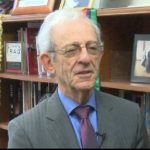
In a scathing interview with the Albanian service of Voice of
America, former U.S. Ambassador to Tirana John Withers
discusses the state of Albanian democracy and political class.
VOA: How do you see the country today, as much as you follow it?
Withers: Ɖ do worry about the direction that democracy is going in Albania. I worry that Albania is not following the path of western democracies, it is going the direction of Hungary, which is cracking down on its media, trying to control its media. It’s going the direction of Ukraine, which uses courts to attack opposition political leaders or to protect friendly political allies. I think it is going the direction of Russia, in which elections are simply not at the international standard that we would require of a full-fledged democracy. I worry about those things.
VOA: In the cables that were made public in Albania that you sent to D.C., you expressed these concerns and other concerns about the state of the justice system, the corruption, and all the endemic social problems and political problems in Albania. Why do you think the country has been unable to tackle these problems?
Withers: I regret to say I think it is a problem of leadership. And that, for Albania, is particularly unfortunate and ironic, because Albania has one of the great models of leadership throughout history, and that was Scanderbeg. Simply look at the example at which Skanderbeg has provided. He was a leader who brought unity. At the treaty of Lezh묠1444, he brought all the warring factions together, to combine in the national interest. The leadership today are not uniters. They’re dividers. Do they represent the national interests? It seems to me that rather they represent the interests of factions and of parties. They represent the narrow interests of retaining power, not for governing for the benefit of the people. Albania needs a Skanderbeg today more than at any other time, and it has no Scanderbegs. There are no Scanderbegs in today’s Albania and I regret that.
VOA: This is a sort of chicken and egg question. Do you think that the leaders that we have are unable to move Albania ahead, or that the environment feeds these kinds of leaders?
Withers: I don’t believe it is the environment, from what I witnessed. I do not believe that it was the environment. From what I witnessed in Albania was a lot of dynamism, a lot of creativity – people looking for all kinds of opportunities and ways of improving themselves. One of the things that is very striking to me about Albanians – I heard an interesting thing, an interesting custom. If there is a time in which say, a family is hungry, or is thirsty, when they do get food, or they do get drink, they give it to the children first. In many societies, that is not the case. But, in Albania, it is and it represents not only the value which Albania puts on the family relationship, but it is really a testament to Albania’s belief in the future, in betterment, in improvement. I don’t believe that that is the problem. I believe that the political system, quite frankly, is failing. It is unable to create consensus, it is unable to find that which the people need and to act on their behalf. Let me give you, again, an example of history. One of Scanderbeg’s most famous statements was, “I did not bring you freedom. I found it already among you.” He understood the aspiration of the public at large and that is what he devoted himself to achieving. In today’s Albania, I’m afraid first that spirit is still there. The aspirations of Albanians for their freedom, for their betterment, for their improvement is still very very much there. And, my question is: Why do those in power not capture that sentiment and move forward with it? Why in almost every action that they take, do they thwart the spirit that is so evident amongst Albanians in general.
VOA: Have you identified any answer to that?
Withers: I think that the partisanship, I think that leaders who simply do not have within them the democratic instinct, for whom democracy is something outside of them, democracy is something that is an inconvenience for them, it is something to be manipulated, for the outside world, but not really to be practiced, not really in the heart. I think that is the major problem. Abraham Lincoln gave the single most clear definition of democracy in a very few words, “Democracy is government of the people, by the people, for the people.” And my question to the Albanian people is, “Do you see that in your political leadership? Do you see a government of the people, or do you see a government of ingrown small groups that is devoted to maintaining itself in power? Do you see government by the people or do you see a government that is aloof from the people, that carries out its interests or party interests and not the interests of the people as a whole? And, do you see government for the people or do you see government for whatever party or particular leader might represent or a government that is simply devoted to a relentless pursuit of power, not a strong, devoted, commitment to governing?
VOA: It is not a secret that you have criticized the government and its PM Mr. Berisha during your tenure there. What do you think of his leadership style?
Withers: Let me first say that I have heard that there have been recent incidents in which the PM’s health has not been good. I would like to take this opportunity to wish him well. I hope that his health recovers swiftly and completely. He has a tremendous responsibility and I think he needs to be at full strength to carry that out. I think that I would rephrase your question. In my view, it was not a criticism of the Prime Minister. In my view, it was not a criticism of the leader of the opposition, or of any personalities in Albania. The question is policy. The question is the larger picture of democratic principles. That’s what is really important. It is not a matter of pointing to a single individual here or there, because there is nothing personal involved in this. It is a matter of looking at actions, which are not in accord with the principles of democracy. My support is for democratic principles in Albania, which I think reflect both the interest of the Albanian people and the interest of the American people. We want to see a healthy democracy in Albania. So, it is not a matter of a particular individual. It is a matter of structures; it is a matter of principles; it is a matter of institutions and creating healthy institutions.
VOA: But someone is at the top of the government and someone is at the top of the opposition and you know that that person happens to be there and sometimes the way that people lead a certain government or a political party has an impact on the way that politics goes. That is why I mentioned criticism.
Withers: Right. I understand that, but I just simply want to make the distinction that one can disagree, one can disagree with an opinion, an approach, and still maintain respect for a person as an individual. And I want to make that very clear. Now, in terms of the approach of the current government, I think that I would advise it to think again, maybe that is the way to term it. Albania has opportunities, Albania has needs, Albania has a future that must be addressed, not only for the citizens of Albania today, but for the children of those citizens. And, when the government attacks the institutions of democracy, and when it ignores the principle of democracy, then that is something about which I would have deep concerns. Let meō
VOA: Do you have any specifics?
Withers: Yes, let me give you an example. We are very close to the anniversary of the January 21st. four people died. Blood was in the streets of Tirana, precious Albanian blood. And one would think that under those circumstances, the government would be the first to want to find out what really happened, to want to empower the investigators and the prosecutors, to discover the truth of what happened that night, caused the deaths of four Albanians and the spilling of Albanian blood. Instead, the government attacked the prosecutors. In this case, the PM used horrific language against the Prosecutor General, language that quite frankly was undignified, that was embarrassing to the nation. A PM simply does not do that. But more important, why would the government attack those that it appointed, those that it empowered instead of trying to aid them in finding out the truth. Who gave those orders? Overwhelming force is invested in police throughout the world. who gave the orders to fire? Where did they come from? Is there something that the Albanian public isn’t being told about why the government would go after the people who could discover the truth rather than the other way around? Sarkozy, the leader of France, spoke to this and I thought he spoke very powerfully. He was speaking about the Syrian government and what it has done to its people and when asked the difference between Syrians and Albanians in terms of the shooting incident, he said that there is no difference. An Albanian life is worth that of a Syrian or any other life. And my question is, why would the leader of France be more caring and concerned about the blood of Albanians than the leadership of Albania itself?
VOA: The PM has accused you of personalized positions. How do you respond to that?
Withers: Well, that’s absurd. I did not bring it today, but upon my retirement from the State Department and from government service, Secretary Clinton sent me a very very nice certificate of appreciation. And at a retirement ceremony just a few days ago, I was privileged to be able to shake her hand and I will soon be receiving a picture with her, which I also honor greatly and in which she thanked me for my service. I think that it is a mistake for leaders to try to thwart disagreement or criticism by playing games with or trying to manipulate the truth about the way the American Government works. All over the world, the American Government works the same way. All over the world, American Ambassadors operate the same way. We represent the President of the United States, we are his personal representatives and we represent the interests of the American people. We represent that regardless as to which party is in power. I was appointed by President Bush, I served under him, I served under President Obama. As long as the policy was one way, that’s the policy that I would defend, regardless as to these attempts to try to deny what I was saying.
VOA: But, I have to say as an outsider that I have noticed that the tone of your successor was a little different with regard to the government and with all the criticism or, well, constructive criticism by you for the government and institutions, there has been a discrepancy between the strong stance that you have taken and the way that headquarters have behaved toward Albania as a friend, not only as a country, but as a government that has cooperated. So, there is that thing that there has been a change in tone, I would say, at least from the perspective of an outsider.
Withers: Well, that’s a different thing. That is a very very different thing. Each Ambassador will have his or her personality, his or her ways of expressing things.
VOA: Personality counts in a certain way.
Withers: It counts in, say, forms of expression. It has to count in terms of forms of expressions. Previous Prime Ministers in Albania were very close to the United States. Their forms of expression were very different from the forms of expression now. That is obvious. My predecessor, Ambassador Ries, terrific ambassador and her tone was quite different from mine. Ambassador Arvizu is doing a terrific job, he’s a great ambassador. His tone, his means of expressing is going to be different from mine. And the one who follows him will be different, but the critical point is this: if I had Ambassador Ries and Ambassador Arvizu sitting right here next to me at this moment, we would be absolutely united in our defense of democratic principles and democratic behavior in Albania. There would be no absolutely no disagreement on that. So, however we choose to express it, the policy is the same and the policy is unchanged.
VOA: If you have so much concern about the level of democracy, about the corruption that you have expressed about people that were close to Mr. Berisha and government people, nepotism in the government, you’d think that there would be some sort of an action from headquarters, or from the government and, at least, someone from the outside does not see that there has been something like that.
Withers: Oh, believe me, the government has all manners of ways of expressing its views and its opinions. I would say for all that Wikileaks was a very unfortunate matter, because diplomacy cannot operate without the mutual trust of our diplomatic exchanges, the one thing that it showed and it showed very very very clearly was all of the different communications, which was not public at the time, which is public now, between the government here in Washington and its embassy abroad. I regret that it was made in this way, but it was very very clear. It also made very very clear that we, when I was there, when Ambassador Ries was there, now Ambassador Arvizu is there, you can be absolutely sure, we report the truth as we find it. We do not play favorites, we do not allow personal matters to interfere with that which we see in the reality of the countries that we’re responsible for. For all of the questions that you ask about relations with the Prime Minister, I think Wikileaks showed that there was plenty of disagreement with the other figures as well, with the leader of the opposition, with the leaders of the small partiesō
VOA: Of you course you left, I think, at the beginning of the preparations for the local elections, but you may have followed. Did you have those talks with the opposition representatives about the climate and the perpetual conflicting politics of Albania?
Withers: The discussions that I had with the opposition about just the simple constant boycott strategy were, shall we say, frank. And, these are not as public just because of the nature of an opposition as opposed to the government, but believe me, I am no different. I am no different in speaking with anyone about what I consider to be fundamental practices and behaviors in a democracy.
VOA: Was there a shift in your behavior, which was commented after what happened in G쳤ec? The PM himself has acknowledged that you had a very good relationship, of course institutional, but has acknowledged in interviews that something changed after that happened and how would you characterize that kind of shift?
Withers: Oh, something changed, something changed, it wasn’t me, though. I did not change. The G쳤ec incident was really, I think, a turning point for this government. Because up until then, perhaps because NATO had not yet been achieved, but up until then, the behavior of the government towards its institutions, particularly toward institutions of justice had been much better. And immediately upon the occurrence of the G쳤ec incident, explosions, the government changed. The attacks upon the courts, the attacks upon the prosecutors, the attacks upon the media became overwhelming and really, for a person like myself, who was not used to that, impossible to understand. You had letters from the speaker of parliament to the prosecutor general that were remarkable in their overstepping the line between the legislative and the judicial branches of government, that essentially tried to dictate what the prosecution should be. You had attacks toward the Prosecutor General such as I have never seen and, from that point on, the attempts to control who would be a justice, the attacks upon that part of the media, which was simply to do its job in finding out what went on. The highly unusual thing that the then-Defense Minister who was deemed to have to leave his job as Minister of Defense was brought back in another ministerial capacity. Now, one would think, again, that those actions first conflict with the way that democracies operate, but why would a government do that, why would it not be the lead agency in wanting to find out what happened? We all sat and watched in horror the images on the television.
VOA: There was a decision today for Mr. Meta. It was unanimous, that he is innocent of what he was accused of. Any comment?
Withers: Well, I haven’t seen the decision, I only just now heard about it. Therefore I cannot comment, except to say that beyond, again, the legalities, there is a perception and it is important that the perception for leadership be higher and at a higher standard than for others. I hope that the perception of what has come out of this isn’t too negative, both for Mr. Meta’s actions and for the court’s actions. I think that there is a higher principle involved and involved throughout all of the things that we have talked about and that higher principle is: Are you, are the leaders, is the leadership truly committed to democracy? Is it part of their inner being? Or is it something that is used to try to manipulate the levers of power and let me give you one final example. The spirit of democracy, the spirit of leadership, the spirit of Scanderbeg. There will be a vote for a new president. By the constitution, it can be a simple majority. That is the letter of the law. But the spirit of democracy, were there a true Scanderbeg there, were there a true leader who believed in the greater good of democracy, the greater interests of the nation, that leader would not hide behind a legal statute. That leader would be the first to go out and say: in this time, when the European Union and our American friends are very concerned about deep partisan divides, party against party, I am going to be the one to insist that we have a consensus president. That’s what leadership is. There are no Scanderbegs in Albania today.
(Courtesy of VOA/Albanian Service)