Despite affinity, the relationship between authorities in Albania and Kosovo is not as friendly as it looks, particularly on practical matters such as trade.
TIRANA, Feb. 7, 2013 – By the time two key government ministers went in front of the cameras in Tirana this week to accuse authorities in Kosovo of unfairly damaging the reputation of Albanian milk to favor Kosovar products, the local media had already given its verdict: It’s trade war.
The entire region is currently facing a food scare due to milk contaminated with cancer-causing aflatoxin, and after Kosovo authorities went public with a ban of two Albanian brands, their Albanian counterparts weren’t too pleased.
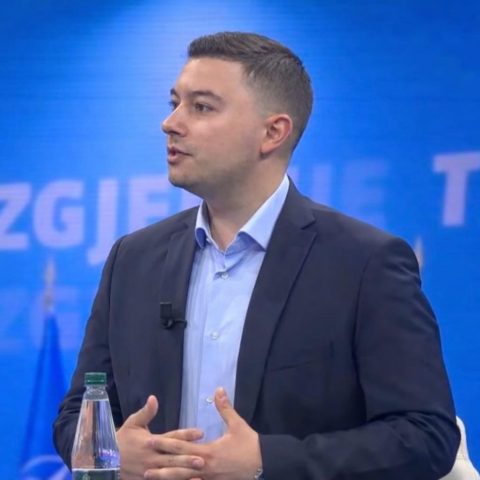
“The alarm over aflatoxin was not raised to protect consumers, but as an unfair trade fight among regional countries,” said Albanian Agriculture and Food Minister Genc Ruli. “It is a political, but also professional obligation, for us to protect from such blows not only our modern milk processing and packaging industry, but what’s most important to also protect the interests of around 20,000 Albanian farmers who produce the milk that is processed in plants and which Albanians can safely consume.”
Specialized testing done for the toxin, which comes from mold in animal feed, found that the Albanian milk did indeed contain alfatoxin, but in small amounts that would still allow it to be sold in American, Canadian or Australian stores, despite failing to meet EU’s much lower threshold. Kosovo authorities first said their local milk was safe, and then admitted that aflatoxin is a region-wide problem this time of year due to the wet conditions and feed all of the region’s animals get, and it indicated it was present in milk produced in Kosovo as well.
This latest incident is not unique in the two countries, which share a strong affinity due to a shared language and culture, and where politicians have continuously called for a unified market. In fact, despite such affinity, the relationship between authorities in Albania and Kosovo has always showed cracks, particularly on practical matters such as trade.
War heroes and practical matters
Exactly 15 years ago, the massacre at Prekaz, started the Kosovo War, which would eventually lead to the independence of Europe’s youngest country. Adem Jashari, the local leader killed at Prekaz, is seen as Kosovo’s top modern hero and honored by Kosovo authorities every year in early March.
As part of Albania’s 100 years of independence, a large statue of Jashari now sits at a small square named after him in Tirana near the Durres Street entrance of Skanderbeg Street, where many foreign diplomatic missions are located, which is why it is better known as Embassy Row. The message to the world in Albania regarding Kosovo is clear: “We are one,” and is defined by a popular song produced by the pro-government private television channel, Klan TV.
There are movements in Albania and Kosovo which want to see the countries united into a single entity, but the international community has made it clear no border changes would be allowed in the Balkans.
And after angering Albania’s neighbors and getting chided by key allies in the EU and the United States for nationalist rhetoric tied to Albania’s celebration of 100 years of independence and the upcoming parliamentary elections, the Albania’s prime minister, Sali Berisha, has backtracked from his original talk of uniting “Albanian lands” in Albania, Kosovo, Montenegro, Macedonia and Greece.
In a visit to Tirana this week by the Kosovo prime minister, Hashim Thaci, both prime ministers aimed to calm the storm created by the statements.
Berisha and Thaci said the two countries did not intend the change of the borders.
“Albania is totally committed, and in the interest of the Albanian nation, in preserving, the respect of the existing borders in the western Balkans,” said Berisha.
Thaci, added, “The only alternative for us is the European integration and NATO. We shall be united in the big European family, in a territorial space of the European model.”
But before the countries join the EU, the international community would have no opposition of creating a single market, economic experts say. In fact, it would likely be encouraged because would make development on both sides of the border easier. However, rhetoric on national unity might be easy on the political side, it is hard to implement on the practical side when it comes to matters of trade and diverging market interests.
Cementing the potato war
As what the Albania media has labeled as “the milk war” continues, Tirana and Pristina have only recently come out of another trade conflict.
Last year, both Albania and Kosovo were involved in trade disputes over customs reference prices on cement and potato exports with fierce reaction by both the business community in Albania and Kosovo, and which were considered as unacceptable under the CEFTA free trade agreement. In essence, Kosovo made Albanian cement more expensive, and, in turn, Albania made Kosovar potatoes more expensive than Albanian ones.
Albania and Kosovo officials have described current customs procedures between the two countries as a trade barrier and proposed their simplification or removal.
Albania has also for years offered to “give” its northernmost port on the Adriatic to Kosovo, which is landlocked but now connected to the Adriatic by a fast modern highway built by Albania.
Shengjin Port is underutilized and needs major investment, and what “give” means has never been defined, so despite the fact the Kosovo has shown interest, the proposal, which would increase trade and make life easier on Kosovo has never been implemented.
Analysts note unless authorities on both sides of the border go beyond words and use the affinity Tirana and Pristina enjoy to deal with the practical matters of implementing initiatives that are win-win situations for both countries, the relationship will continue to show cracks in practical matters such as trade and development.
(Read more about the milk dispute in this week’s business section.)