“Strengthening property rights, improving contract enforcement, and simplifying the tax system would encourage investment and medium-term growth,” suggests the IMF in its latest country report on Albania.
TIRANA, Sept. 24 – At a time when global crisis impacts on the Albania economy continue escalating, even the central bank supports the idea of a new economic model based on structural reforms that will increase the country’s competitiveness.
Albania’s central bank governor Ardian Fullani says the global crisis effects have slowed down the country’s economic growth, curbed investments and lending, and deteriorated the finances of the public and private sectors. Speaking in a recent conference with experts of the Oxford university which have assisted the central bank in shaping an economic growth agenda, governor Fullani said “it is undisputed that in the long-term, the country’s economic growth is determined by its work force and the degree of its qualification, productivity, technology and the ability for innovation, the accumulation of capital.”
” All these factors are conditioned by a country’s economic structure and their promotion is carried out only through structural reforms. I would like to underline that in the long-term, the economic growth is determined only through structural reforms and the competitiveness of the Albanian economy against the trade partners and the global market,” Fullani said.
European integration must be Albania’s strongest anchor in structural reforms, including legal, regulatory, institutional, infrastructural or political ones. “Of course Albania has a lot to do and the characteristics of its economy have all the necessary space for the adoption of these models in compliance with the competitive advantages and the country’s primary needs,” suggests the governor.
The Albanian business community must also do more to promote the integration process. “They should be more active in the adoption of technologies and advanced manufacturing and managing processes,” says Fullani.
Regional integration is a necessary step that should precede European integration. “Regional economies are small in comparative terms with our trade partners but the establishment of unified zones in terms of customs tariffs, legal systems and practices, financial integration and development policies creates the necessary promotion for the attraction of foreign investment and increases our negotiating power with international partners,” says Fullani.
“Strengthening property rights, improving contract enforcement, and simplifying the tax system would encourage investment and medium-term growth,” suggests the IMF in its latest country report on Albania.
Albania’s central bank expects the Albanian economy to grow at around the same levels of 2012, when at 1.6 percent it registered the lowest growth rate since the collapse of the notorious pyramid schemes in 1997, and half of the average of 3 percent growth rate from 2009 to 2011. The forecast is in line with international financial institutions which expect the Albanian economy to grow between 1.5 to 1.8 percent compared to government’s projection of a 3.1 percent growth for 2013.
SP’s new economic growth agenda
The Socialist Party says it will identify new resources to drive economic growth or alternatives to some current resources which in the short and mid-term are expected to have a lower contribution.
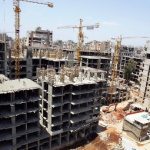
“The end of the 22-year transition period and the economic and financial crisis has put the country in front of an undisputed fact. The current economic growth model in Albania, mainly supported on income from remittances, donations as a poor and developing country, soft loans and foreign assistance were an important driver which regularly supplied the Albanian economy. The massive privatizations which gave the Albanian budgets the luxury of being in equilibrium and at minimal deficits and self-employment mainly in agriculture, the 15-year boom in construction, and the reduction of unemployment through immigration seems to be heading to total or partial exhaustion,” says the SP-led left-wing coalition in its new programme for the 2013-2017 term.
“We are clear on the key development goals and the model of economic growth for the next 15 to 20 years. We will build the profile of the Albanian economy in the next two decades identified through several priority sectors such as manufacturing, energy, tourism, agriculture and agri-industry, education and services. We will draft more structured and well-addressed policies to promote maximum economic growth, increase domestic production and exports, and massively open new jobs,” says the winning left-wing coalition in its programme.
Former Prime Minister Sali Berisha who has led the Albanian government for the past eight years says Rama’s promises are completely unrealistic and not accompanied by a financial bill. He says the deceptive promises, which the Democrats could not make, were the key reason for their landslide loss in the June 23 general elections.