The draft law comes at a time when government has unveiled its plan to privatize major remaining state-owned assets and dozens of concessions are scheduled for public services in a bid to improve the quality and efficiency of current services and reduce costs to the state budget
TIRANA, April 7 – Foreign investors will be offered simplified and accelerated procedures in the next three years for strategic investments in energy, mining, transport, telecommunication, infrastructure, urban waste, tourism, agriculture and fishing and special economic zones, according to a draft law government has submitted to Parliament.
The draft law comes at a time when government has unveiled its plan to privatize major remaining state-owned assets and dozens of concessions are scheduled for public services in a bid to improve the quality and efficiency of current services and reduce costs to the state budget.
The law which is expected to extend its effects until December 2018 is a temporary measure targeting to attract foreign direct investment and know-how in strategic sectors by lifting barriers such as red-tape and lack of transparency which have prevented FDI inflows in key sectors.
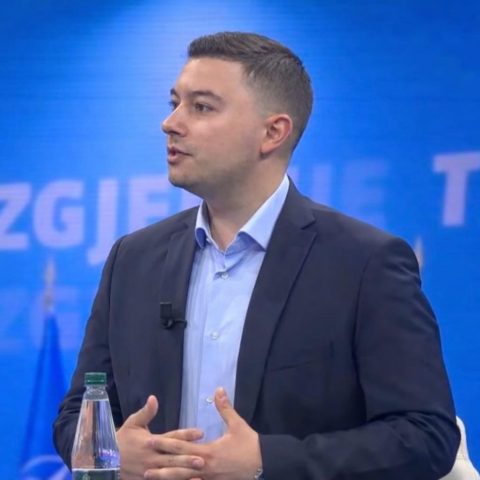
Economy Minister Arben Ahmetaj has described the new law as guarantee to investors who will have their contracts approved by Parliament.
“This is guarantee to investors because we are naturally talking about investments of over Euro 50 million which will bring development in strategic sectors and guarantee employment,” Ahmetaj has said.
The draft law also envisages the establishment of a Strategic Investments Committee, an administrative collegial body which will be chaired by the Prime Minister to approve strategic projects and monitor the functioning of one-stop shop services to strategic investors.
Investors will have to invest a minimum of 30 million euros to gain the status of strategic investor with an assisted procedure and a minimum of 50 million euros for the special procedure status which provides special regulations for investments with in impact on economy, employment, industry, technology or regional development with the target of easing and accelerating investments.
The investment thresholds in tourism, agriculture, special economic zones, and special priority zones range from Euro 1 to 5 million for the assisted procedure status.
Investors can also gain a special status for investments of more than 100 million euros in projects not envisaged by the strategic investment law.
The Albanian government has recently invited international investors to participate in the privatization of Albpetrol oil company and get involved in onshore and offshore oil and gas exploration. In its 2015-2017 national economic reform programme approved last January, government says it plans to restructure Albpetrol oil company, the biggest remaining state run company whose privatization in 2012 registered a spectacular failure after a fake Euro 850 million bid by an Albanian-led consortium.
Energy Minister Damian Gjiknuri has also announced government would soon initiate tender procedures for the exploration of the first three oil and gas blocks under concession contracts.
Albania currently has 13 free onshore and offshore oil and gas block which are scheduled for concession.
Foreign investors engaged in oil and gas exploration in Albania are exempted from the 20 percent VAT, can have their exploration stage extended from 5 to 7 years and engage in production from 25 to 30 years. Studies show Albania’s oil and gas reserves are estimated at 400 million tonnes, of which around 10 percent are easily extractable.
Economy Minister Arben Ahmetaj says state institutions have already identified some 65 public-private partnership projects under which the state budget would benefit by 375 billion lek (2.6 billion Euros).
The public-private partnerships include services in the agriculture, health, real estate registration, food safety, road maintenance and operation, tourism and e-taxation.
“The new public-private partnerships would not only bring an additional 350 billion lek (Euro 2.45 bln) to the Albanian economy but also strip the state budget of a 150 billion lek burden (Euro 1.05 bln),” added the minister.
The key concessions in the transport sector include the Durres-Kukes highway linking Albania to Kosovo which is set to become the country’s first toll road, and the concession of the Arbri road after Chinese interest to complete its construction.
Government also plans concessions for the food safety and the veterinary service in the agriculture sector and basic cheek-ups and administration of hospital waste in the health service as well as e-taxation on properties.
Lack of privatization revenue and the increase of the corporate income tax by 5 percent to 15 percent are estimated to have had a negative impact on foreign direct investment which suffered a slight decline in 2014.
FDI dropped to 878 million euros in 2014, down from a historic high of 945 million euros in 2013 registering a 7 percent decrease, according to revised data published by the country’s central bank in its balance of payments for the final quarter of the 2014.