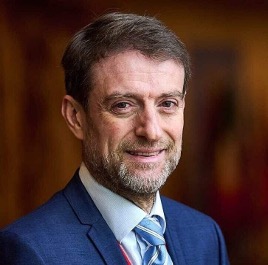
By Bernd Fischer
I have watched developments in Albania from far since 1990 with the eye of one who considers himself to be both sympathetic and as objective as any observer can be. Over the years I have seen the country and its people make enormous strides in the direction of the stated goal of the creation of a functioning democracy and a thriving market-based economy. The road has often been quite difficult, with major, often self-inflicted, setbacks. But Albania has come a long way, and would be unrecognizable for someone who had left during the last stages of communism in the 1980s.
We often hear accusations – in the context of the heated rhetoric of contemporary Albanian politics – that this politician or this party is communist. I know of no politician or party that longs to return to the heyday of the Hoxha regime with its state-of-siege isolation, its political murders, its prisons, its forced labor camps, and the hardship of internal exile – all of which created a state of terror presided over by the party and the dreaded Sigurimi which allowed Hoxha into the homes but also the minds of Albanians. This produced a population cowed into a fearful state of conformism and apathy, with their thoughts kept secret, and like their leader, paranoid and suspicious of all around them, losing their sense of personal dignity and responsibility. Show me the party or person who seriously advocates a return to those days. Show me the person who is a communist in that sense of the term.
Although the communism of Enver Hoxha is gone, this does not mean, however, that all vestiges of the old regime are gone as well. Some aspects of the old ways inevitably linger and tend to exacerbate Albania’s many remaining challenges. And the challenges are enormous. Albania still has a road to travel before it achieves the status of a capitalist democracy. Understandably, many Albanians are discouraged by the seemingly slow pace of progress but perhaps the complexity of this process was underestimated by both Albanian actors and interested foreigners. The intensity of the Hoxha regime, the extreme backlash following its collapse, complicated by some missteps by international organizations, required Albania to begin again the construction of a state, including a political structure, an economic structure and in many ways the bases of a society.
I would like to present a personal view of one aspect of these ongoing challenges, the construction of a functioning progressive political system, a process which is ongoing, and will likely always be ongoing. While there are of course many aspects of this process, let us describe the basic issue and principal challenge as simply the strengthening of the bases of democracy. In my estimation these bases include political culture, and the affiliated considerations of the nature of political parties, and the nature of political leadership, all of which in Albania are still informed by the past.
Political culture in Albania as elsewhere is influenced by the past, by the environment, by social and economic forces. As in the past contemporary Albanian political parties are essentially clan-based social groups where personal and family connections are more important than ideology. Party affiliation has less to do with policy differences than it does with family and clan loyalty, patronage or clientelism and therefore becomes very personal. As a result many Albanians view the opposition with acrimony verging on low-level war. The opposition are seen as traitors, who need not just to be defeated, but must be destroyed, for the good of the whole. In pursuit of this goal fierce party propaganda, and brutal politics in parliament tends to ignore a discussion of the issues and frequently degenerates into often wild accusations and personal attacks. Voters are left with no reasonable basis upon which to made an informed decision and as a result Albanians tend to vote against people rather than for them, that is when they bother to vote at all.
Albania has yet to develop the concept of a “loyal opposition” where, following a hard-fought election, the opposing sides attempt to cooperate for the good of the country and the people. This is essential to the functioning of an effective democracy. In Albania, is seems the party in opposition is inevitably obstructive and destructive, with little regard for the consequences to the state and its people. This uncompromising attitude is reflected within the party structures as well. Political parties are still overly centralized, and tend to be run in an authoritarian manner. Party leaders tend to rule absolutely and compromise, either within the party or in the political arena in general, is rarely an option. There are rarely factions, either the member follows the line of the leader or has the option of withdrawing or is purged from the party. The Tirana political elite tend to be disconnected from their own party members, and are disconnected from the people and disconnected from the countryside, the villages and small towns.
These challenges relating to political culture have a profound impact on average Albanians. From a political perspective, the challenges produce cynicism about democracy itself and declining participation in elections. But there are also enormous economic costs. Political infighting seems to consume the majority of the political energy of Albania’s principal politicians leaving little room to develop effect programs to actively address Albania’s very real internal problems. This in turn leads to low level of social trust and when accompanied by slow economic growth drives often the best and the brightest out of the country. It also, of course, delays integration, which would clearly be of great economic benefit to the average Albanian.
These problems have not escaped international observers. The respected Economist intelligence index of democracy still rates Albania as a hybrid state, between the category of “flawed democracy” and the bottom category of “authoritarian state.” According to the Economist a hybrid regime is one in which “elections have substantial irregularities that often prevent them from being both free and fair. Government pressure on opposition parties and candidates may be common. Serious weaknesses are more prevalent than in flawed democracies – in political culture, functioning of government and political participation. Corruption tends to be widespread and the rule of law is weak. Civil society is weak. Typically there is harassment of and pressure on journalists, and the judiciary is not independent.” This is the perception that many informed Europeans have of Albania today. This unfortunate impression begs the question, what can to done to change this reality? Most observers, including the European Commission Progress Report for 2015 agree on many of the basics which include:
- The construction of free and fair elections both within party structures and in the country. It is difficult to construct a national democracy when none exists within political parties. In terms of national elections, following the flawed elections in 2009 and 2011 where we saw many difficulties, the 2013 elections were an improvement. Election violence was less of an issue and Albania experienced a relatively smooth transfer of power. There are still problems to be addressed including some which the OSCE emphasized with regard to the 2015 elections. In its final report the OSCE noted that “the lack of political will to enforce the law along with the politicization of the institutions involved, continued to undermine the elections.”
- The establishment of a professional and independent press. The press in Albania can be considered relatively free but not always responsible. While there are many talented people involved in the industry, they often labor under a heavy burden. Much of the media is still controlled by political interests or self-serving business interests. It is past time to phase out state media and party media, seeming holdovers from communist times. These media outlets provide little useful service to the people. They are often not objective and not responsible. But while it may take some time, eventually we will see the development of an independent media that receives its principal revenue from subscription sales and advertising sales, allowing for unbiased objective reporting.
- The seemingly ever present problem of corruption and organized crime. Albania has made a good start removing suspected criminals from parliament and removing immunity for clearly criminal offences. But there remains a culture of corruption in many professions, including medicine, education, and the law. The persistence of this feature of Albanian society — widespread endemic corruption — will slow Albania’s economic development and the integration process. This is perhaps particularly true of police and security forces. The United States Department of State Country Report for Albania for 2014, which frankly is not as critical of Albanian developments as it might be, reports that “state police officers did not always enforce the law equally. Personal associations, political and criminal connections often influenced enforcement of the law. Low salaries, poor motivation and leadership… contributed to continued corruption and unprofessional behavior. Impunity remained a serious problem and few police officers were prosecuted for abuses.” This is a serious indictment and strikes at the heart of the rule of law.
- The problems in the judicial system, which was one of the principal focal points of attention in the 2015 European Commission progress report for Albania. A professional, independent, trusted judiciary is central to the functioning of a democracy – this speaks to the separation and balance of power, again a hallmark of traditional democracy, and the overarching question of the rule of law. The fact that the judiciary does not meet these standards in Albania is perhaps, in my view, Albania’s greatest immediate challenge.
There is widespread acknowledgement that the judiciary in Albania remains flawed. In a survey done in 2012 of 58% of Albania’s judges, only 18% maintained that the system was not corrupt. Even when reasonable decisions are made, enforcement of these decisions is often obstructed by underpaid and inefficient bureaucrats or the lack of funds to record decisions or provide adequate records facilities. The 2012 U.S. State Department Country Report noted, as it has in the past, that “political pressure, intimidation, widespread corruption, and limited resources sometimes prevented the judiciary from functioning independently and efficiently.” It also noted that “Corruption in the judiciary was pervasive. Many judges issue rulings that do not appear to have any basis in law or fact…” The 2013 report repeated the above paragraph adding that “The politicization of appointments to the High Court and Constitutional Court threatened to undermine the independence and integrity of these institutions.” The latest report argues that “The most significant human rights problems in 2014 were: pervasive corruption in all branches of government, and particularly within the judicial system…” In the most recent Transparency International survey, the Albanian judiciary is perceived as the most corrupt of the 12 institutions included in the survey, with fully three-quarters of surveyed Albanians noting this corruption.
The current government has been strongly encouraged by the EU and the U.S. Embassy to initiate critical judicial reform. To that end the prime minister and the president convened a series of roundtables and meetings to discuss the problem. At one held in October 2014 the prime minister noted that surveys indicate that nearly 90% of the Albanian people believe that there is no justice in Albania and that the Albanian judiciary is out of order. He maintained that “more that 80% of the Albanian people affirm that the justice system is corrupt and that in order to win a trial one has to pay rather that prove his case through evidence. More that 90% of the Albanian people regularly point to the need for a radical reformation of the justice system… And I think I am not exaggerating if I say that 100% of our international partners believe that there is no justice in Albania and that the Albanian judiciary is corrupt.” While a lack of cooperation between the government and the president hinders progress, there has been some movement in a positive direction. As this process is expanded, it is important that this process not become politicized, that it is not used to simply remove judges who were appointed by the party out of power. But this is very important work without which the rule of law will never be fully established.
- I would add one additional suggestion, which if implemented may reap benefits for Albania in the long term. Without sounding too cynical, I fear that at least some in the current generation of politicians are beyond redemption. Let us look to the next generation of politicians through the process of education. It seems to me that Albania might benefit from the construction of a separate school or college of political science. This institution could either stand alone or be associated with another university in Albania, and be patterned after the school of foreign service at Georgetown University in the United States or the various schools of public policy at major western universities. In the Albanian context, the school would offer political science courses on the structure and process of politics, with an emphasis on ethics and constructive political engagement.
So there remain significant challenges on Albania’s long road to Europe. But to focus exclusively on them, would be to ignore the many achievements that Albania has enjoyed since 1990. These include those positive steps developed over a longer period, as well as more recent ones achieved under the current administration. There is much to celebrate in Albania which is too often overlooked or underestimated. So what has gone right in Albania?
- Social and economic progress. Here there has clearly been a remarkable evolution, even to the extent of a revolution at least in the capital and major cities. The extreme collectivism of the communist period has been replaced with strong individualist trends, sometimes perhaps a bit too intense to the extent that a notion of the collective good has disappeared. From an economic standpoint, forced command socialism has been replaced by something of “wild west” capitalism and important steps towards the construction of a very open functioning market economy. Albanian governments have tended to focus on the economic criteria required by EU integration often at the expense of social issues like poverty and social exclusion. A shift in the direction of more balance will ultimately come but in the meantime it is impossible to deny that real progress has been made.
- The construction of a two party system and increasingly effective elections. While the parties still have internal issues as discussed above, and could focus more on substantial policy positions and less on personalities and revenge, Albania has avoided the chaos of multi-party systems as in Italy. And the parties have come a long way in terms of defining themselves and presenting party platforms in anticipation of elections. While the 1990s saw a series of extremely flawed elections, by 2005 there had been some improvements. The 2005 election was effectively the first election since 1992 that enabled a smooth transition of power and was accepted by the main political actors. That election progress was extended in 2013 and 2015, and with more attention to some of the suggestions put forth by the OSCE and others, there is every expectation that this trend will continue into the future.
- The construction of a functioning civil society. Civil society stimulates civic participation and enriches the public sphere. Following the extreme individualism which characterized the period immediately following the collapse of communism, Albania has slowly returned to the notion of the collective good being as significant as the individual good. In pursuit of that ideal, hundreds of civic society organizations have been founded and are active covering such critical areas as basic human rights, the environment, women’s issues, education, youth issues, culture, religion, health, disabilities and minority rights. Some of these organizations are still perhaps a bit too donor driven, and there is still among the Albanians an incomplete notion of the common good, but many have engaged in important advocacy work, and provided necessary expertise. The political elite seem increasingly willing to at least consider the position of these groups and seek out their expertise.
- Important steps towards the rule of law. These steps include institutional changes as well as practical application of existing law. We have mentioned above the meetings initiated by the president and the prime minister and the fact that the two parties seem at least occasionally to be moving in the direction of cooperation on this front. Rule of law issues need to be handled on the basic of bipartisan cooperation and there is a growing understanding on the part of Albanian politicians that the launch of EU accession talks depends on further progress on this critical issue. There have been other recent positive steps which include the quick and relatively non-violent subjugation of the notorious lawless town Lazarat, the closing of many bogus educational institutions, the push towards legalization of property and businesses and, importantly, steps in the direction of the decriminalization of parliament, a problem which has attracted significant, negative, international attention. Even the push to regularize the payment of electricity services, although some have argued that the issue could have been handled more effectively, is a step in the direction of the full establishment of the rule of law.
Over the years, the international community has responded to Albania’s progress with important steps towards integration including the stability and association agreement of 2003, NATO membership in 2009, visa liberalization in 2010 and EU candidate status in 2014. All of Albania’s governments share in this success. International NGOs have also noted Albania’s recent progress and the government of Edi Rama deserves considerable credit here. While NGO reports and charts are by no means the only yardstick of progress, they do have significant influence and cannot therefore be ignored. In the last years of Sali Berisha’s regime Albania suffered a very clear decline in major NGO indexes. Since the election of Edi Rama, Albania has enjoyed either a leveling off or a uptick in some of these basic indexes. As examples, Freedom House in its Nations in Transit scores for 2014 moved Albania forward for the first time since 2006, citing in particular the election of 2013 for its peaceful nature and the orderly transfer of power which followed. In 2014 Transparency International in its corruption perception index moved Albania down – down is good – for the first time since 2008.
These are important achievements and certainly bode well for Albania’s next goal of beginning negotiations for and eventual membership in the EU. I am optimistic in the long term that this goal, too, will be achieved. I understand the reluctance of EU members states to embrace further enlargement at this time, particularly in light of a series of outstanding issues, most of which have little to do with Albania. The problem with Greek finances are ongoing and continue to impact world markets. There is, of course, also the potential for continuing economic disruption brought on by the difficult economic conditions in Portugal, Spain and particularly Italy. Then there is the continuing disappointment with Romania and Bulgaria and the growing realization that the two were perhaps admitted as members too early, based on the fallacious assumption that serious problems with corruption and other issues could more effectively be addressed once these states were in the union.
And now we have yet another great unknown, the potential impact of the new refugee crisis which is, in a way, enlargement in itself – demographic enlargement and will permanently change Europe. One can only speculate on the long-term impact of these events. Some have suggested that the current crisis might actually help the European Union in terms of economics by enlarging the work force. But there are other darker potentials as well. The crisis, aided by recent terrorist attacks, might, for example allow for the creation, perhaps for the first time, of a unified European xenophobic populist party – anti-refugee, anti-Muslim, anti-immigrant and anti-enlargement in general. Should that happen, Albania will likely need to wait even longer. Still, having said that, Albanian adherence to the European Union will come, and when it does it will represent another stage in Albania’s evolution, which as in all states, is a continuous process.