TIRANA, Nov. 15 – The European Commission has warned the upcoming mid-2017 general elections and the end of a 3-year IMF supported programme could put at risk the country’s fiscal consolidation path.
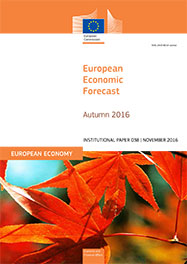
In its latest Autumn report, the EU’s executive arm kept unchanged Albania’s growth forecast for 2016 at 3.2 percent and expects the country’s growth to accelerate to 3.5 percent in the next couple of years. The projections are considerably lower compared to the Albania government’s much more optimistic targets of 3.4 percent for 2016, 3.9 percent in 2017 and 4.2 percent in 2018.
“Economic activity is accelerating mainly because of rising household spending and private investment. Private consumption and investment are projected to go on increasing on the back of solid gains in employment and strong growth in FDI-inflows. Public debt as a share of GDP is projected to fall, but the upcoming election period might test the authorities’ commitment to the path of fiscal consolidation,” says the report.
The Albanian government has announced it will revise relations with the International Monetary Fund to an advisory role in early 2017 when a three-year deal supported by a Euro 331 million soft loan supporting fiscal consolidation concludes.
“In the run-up to next year’s election there is a risk that the government relaxes its fiscal consolidation plans, which will lose an important anchor following the end of the country’s IMF-supported programme in February 2017,” says the Commission.
The run-up to general elections has always been accompanied by threats to public finances in Albania in the past 25 years of transition with incumbent governments sharply increasing public investments and putting at risk budget deficit and public debt targets, apparently to gain an electoral advantage.
The Commission also warns ailing credit recovery and weather-induced risks related to hydro-dependent domestic electricity generation could also pose risk to the Albanian economy which has grown between 1 to 3 percent in the past seven crisis years compared to a pre-crisis decade of 6 percent annually.
“Increased political uncertainty related to next year’s parliamentary election might dampen consumption and investment. Credit recovery might take longer than expected in the context of persistently high NPLs. Electricity production remains subject to weather-induced volatility. On the other hand, implementing structural reforms, such as the recently started comprehensive overhaul of the justice system, could improve the business environment and the economy’s growth potential,” it adds.
The Commission also expects Albania’s public debt to only slightly drop to 72.2 percent in 2016 before falling to 68.1 percent of the GDP in 2018 compared to the Albanian government’s 64 percent target by 2018.
The Commission projects Albania’s top trading partners Italy and Greece to considerably recover over the next couple of years after their recession periods.
Italy, the country’s top trading partner accounting for 50 percent of total exports and 30 percent of imports, is expected to grow between 0.9 percent to 1 percent over 2017-2018 following a 0.7 growth rate in the past couple of years and a three-year recession ending in 2013.
Neighboring Greece, the country’s traditional second largest trading partner and top foreign investor, is expected to return to moderate growth rates of 2.7 percent to 3.1 percent over the next couple of years following a six-year recession ending in 2013 that shrank the neighboring country’s economy by about a quarter.
Albania’s growth in the European Commission’s report is in line with other EU aspirant Western Balkans countries who are expected to grow 3 to 3.3 percent over the next couple of years.
In its latest 2016 progress report on Albania when the European Commission recommended the opening of accession talks with the Balkan country which has been an official candidate country since mid-2014, the Commission says Albania is moderately prepared in developing a functioning market economy despite progress in improving the budget balance fighting informality and reforming the electricity sector.