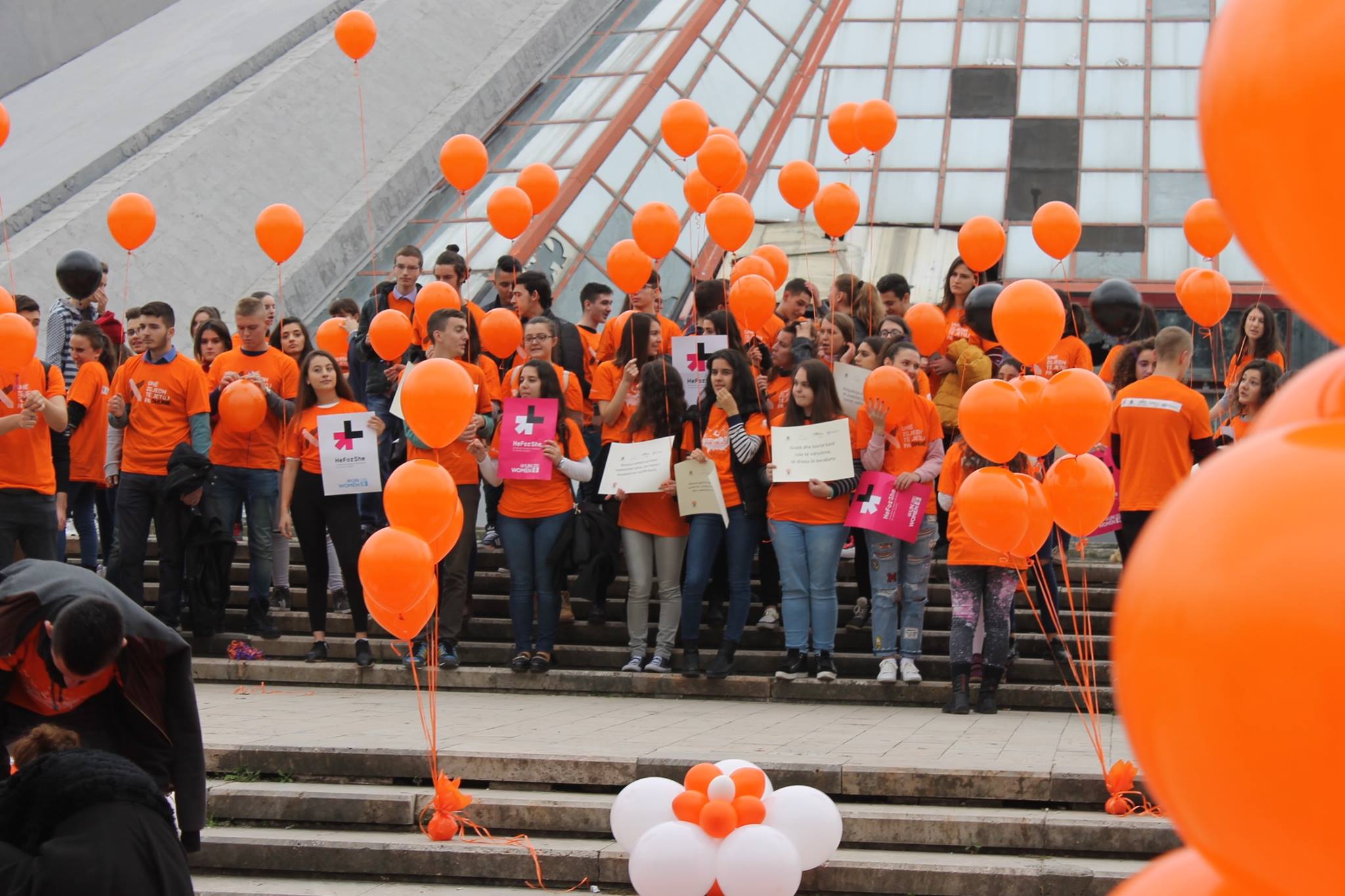
TIRANA, Dec. 1 – Women victims of violence, civil society activists and journalists have joined a nationwide “I choose to live without violence” campaign aimed at raising awareness on putting an end to violence against women and girls in Albania, where more than half of women are estimated to have experienced at least one form of domestic violence in their lifetime.
“We are all responsible to act against this horrible violation of human rights, not tomorrow, not next year, not someday, but now! Holding institutions accountable but more importantly challenging patriarchy and all of those myths that keep it alive, raising our boys to be respectful and peaceful, empowering our girls to reach for the sky,” said UNDP Country Director Limya Eltayeb addressing participants in Tirana who had joined to condemn domestic violence.
Sweden’s ambassador to Albania Johan Ndisi, whose government is financing the 16-day campaign emphasized the key role of youth in speaking up against gender-based violence.
“It’s a common misconception that gender-based violence is a women’s issue. But in fact, it us – men and boys – who are the most important actors to take a stance against violence against women and to make a change,” he said.
Albania’s Social Welfare and Youth Minister Blendi Klosi said women were more and more speaking up against domestic violence as evidenced by the cases they have reported with the authorities.
“This event is directly addressed to the public opinion so that more women find the strength to report violence cases, address social workers and psychologists for advice,” said Klosi.
“The number of cases reported with the authorities has increased but this does not mean violence has increased, violence is still there, but there’s more courage to report it and more trust in institutions,” he added.
U.S. ambassador to Albania Donald Lu said stopping domestic violence is a responsibility shared by both men and women.
“Without the active education and involvement of men and boys, women and girls, we will never make progress on this issue. One of the ways young people can fight against domestic violence is to learn about respecting each other,” he said.
The 16-day nationwide campaign launched on Nov. 25, the International Day for the Elimination of Violence, includes over 100 ‘orange’ events starting from parades to street theaters, school debates, artistic performances and lectures with university students.
Domestic violence claimed between 20 to 30 lives a year in the past five years and affected thousands, but a network of women empowerment lobbying to provide rehabilitation services to violence perpetrators claims only up to 15 percent of women in Albania report cases to the authorities.
“Domestic violence has been treated more as an individual problem belonging only to family members and not the society. It is a government and individual responsibility to undertake efficient steps in protecting women and children as well as preventing violence. Statistics show that still only 5 to 15 percent of violated women report violence. Studies also show domestic violence, especially against women and girls, has increased during the transition period,” says the Albanian Women Empowerment Network, AWEN.
Domestic violence claimed 20 lives in 2015, down from 22 in 2014 and 28 to 30 a year from 2011 to 2013.
Police identified some 2,448 cases of domestic violence in 2015 while courts issued some 2,148 protection orders on violated women, although in sporadic cases there are also men claiming violence by their wives.
According to the latest data, around 59 percent of women and girls in Albania suffer at least one form of gender based violence.