By Ervin Lisaku
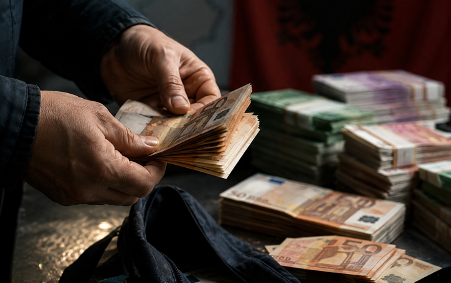
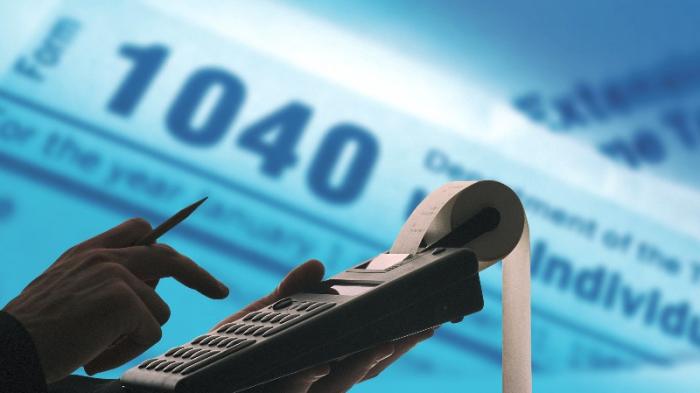
TIRANA, Feb 22 – As the country prepares for next June’s general elections and the opposition Democrats have launched an indefinite protest over free and fair elections, the ruling Socialist Party-led government has reconfirmed a tax amnesty that pardons some 91 billion (€666 million) in accumulated taxes for both businesses and households and approved a 3 percent hike for more than 600,000 pensioners.
The partial amnesty, already approved by the government this week and pending the final okay in Parliament, fully pardons only pre-2011 tax and customs debts which Finance Minister Arben Ahmetaj described as uncollectable due to having exceeded the five-year legal deadline to initiate forceful collection. Fines and late-payment for the 2011-2014 are also pardoned on condition that full taxes, tariffs and social security contributions are paid within six months after the law has become effective.
Potential debts that are pardoned include an unconditional write-off of pre-2011 debts of 29.5 billion lek (€216 mln) in principal, fines and late payment penalties and a conditional write-off of 61.45 billion lek (€500 mln) in fines and late payment penalties provided about 35 billion lek is paid in principal for the 2011-2014 debts, says the finance ministry.
Thousands of car owners who have paid no taxes until December 2011 will benefit from automatic deregistration and be stripped of obligations. Vehicle owners are also offered to have their car fines and late payment penalties pardoned for the 2011-2014 period provided they pay taxes, but the concession is expected to benefit only a few as owners who still possess the cars would have to pay six years in taxes including penalties for the past couple of years. Some 140,000 cars whose taxes during the past five years have not been are expected to be automatically deregistered. A majority of these cars are believed to have been sold for spare parts and scrap.
“This law is a promise kept, but above all very clear and a considerable incentive in the country’s fiscal and economic environment,” said Finance Minister Arben Ahmetaj.
Companies that have been sentenced under a final court decision for tax evasion and smuggling are not eligible to benefit from the partial amnesty.
The concessions come after two rather aggressive nationwide campaigns to collect accumulated unpaid electricity bills and fight widespread informality that the ruling Socialists initiated in the past couple of years, collecting hundreds of millions of euros.
The tax amnesty initiative, an apparent move to gain an electoral advantage often used by ruling majorities in pre-election times during the past two decades, comes as the incumbent Socialist Party-led government that is seeking a second consecutive term eased some doing business procedures for 2017 but left unchanged the key taxes, one of the key concerns for business representatives.
Since 2014, the corporate income tax and the withholding tax on dividends, rents and capital gains have increased by 5 percent to 15 percent, making the tax burden in Albania one of the region’s highest and the key concern for the business community in the country.
The bill envisages a pardon of fines and penalties from 2011 to 2014 on condition businesses pay the initial obligation, but no amnesty for the 2015-2016 obligations except for penalties mistakenly imposed by the tax administration’s IT system. Heavy fines of €70,000 imposed under a law turned down by the country’s constitutional court in early 2016 for violating the principle of proportionality following the launch of a nationwide campaign against informality in late 2015 will also be pardoned.
In addition to a modest inflation-adjusted hike for pensioners, the ruling Socialists will also apply wage hikes of 7 to 36 percent for some 164,000 public sector employees starting next March as part of $100 million spending plan on wages and pension increases for 2017.
The move comes as another amnesty offering households and businesses to reassess their property at modest tax rates of 2 percent, compared to a mandatory 15 percent, initially set to expire in late February after remaining effective for six months, has been postponed until the end of May.
The tax amnesty also comes at a time when the government has just concluded its binding three-year deal with the International Monetary Fund supported by a €331 million loan. The IMF and several business representatives have been skeptical of the amnesties, especially during pre-election periods because of creating a culture of impunity among businesses that avoid paying taxes and damaging fair businesses.
The American Chamber of Commerce, representing some of the country’s top foreign investors, says the amnesty, is viewed with concern by regular and fair taxpayers.
“This is a draft law that worries AmCham members and I think there is a problem with it. Repeated tax amnesties favour only taxpayers who don’t pay their obligations at a time when the bill says that only taxpayers who give up their court proceedings will benefit from this amnesty,” Alketa Uruà§i, an AmCham board member, said at a meeting with top tax administration officials this week.
The Albanian economy has been growing by 1 to 3 percent in the past eight years compared to a pre-crisis decade of 6 percent annually, a growth rate that is considered to bring welfare to the country’s economy suffering one of Europe’s lowest levels of GDP per capita.
Non-performing loans at 20 percent and public debt hovering at 70 percent of the GDP are considered key barriers for the Albanian economy which is set to grow by 3.8 percent in 2017 boosted by some major energy-related investments such as the Trans Adriatic Pipeline bringing Caspian gas to Europe and a big hydropower plant by Norway’s Statkraft.