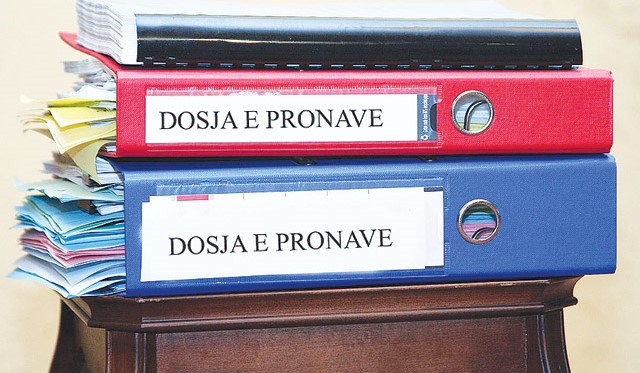
TIRANA, March 23 – A new law on the compensation of the former property owners expropriated under communism is expected to considerably reduce the bill the Albanian government has been paying in the past decade, mainly resulting from decisions by the European Court of Human Rights.
Last year, the Albanian government footed a record high bill of about €18 million in four cases appealed at the Strasbourg-based court, but the situation is expected to mark a turning point this year after the country’s constitutional partially upheld a government law that set a new formula for the compensation of former property owners, significantly below its market value. The new law, strongly opposed by former property owners, envisages a total of about €360 million, only about a tenth to what ex-owners claim, to complete the property compensation process in the next ten years.
General State Advocate Alma Hicka had warned the previous law envisaging 100 percent compensation for property owners at market prices risked putting the country’s small budget in severe difficulty with only 84 cases on trial in Strasbourg claiming compensation of €630 million, compared to about €46 million under the newly adopted formula.
The World Bank had also earlier warned Albania was the only former ex-communist country which granted unlimited compensation at market value and under its previous formula, it would take the country €30 billion, three times higher than the current annual GDP, and 30 years to end the compensation process for the former legal owners.
However, land owners say they will continue appealing cases to the European Court of Human Rights whose decisions on alleged violations of civil and political rights set out in the European Convention of Human Rights are binding to the countries concerned.
Thousands of families in Albania were expropriated by the communists when they took power following the end of World War II and efforts of many post-communist governments to definitively resolve the property restitution and compensation issue have so far failed. The unresolved property issue has had serious financial consequences as well as social effects in Albania. Not only it holds back foreign investments due to ownership disputes, but it has also resulted in an extra financial bill because of several rulings of the European Court of Human Rights in Strasbourg in favour of families who have been expropriated.
The property situation was further complicated in 1991 just as the country’s communist regime and its planned economy collapsed under the 7,501 law, portioning agriculture land on a per capita basis and not taking into account compensation of owners expropriated under the 1946 agrarian reform soon after the communists came to power.