TIRANA, May 10 – A pickup in oil prices gave a boost to Albania’s poorly diversified exports in the first quarter of this year when exports grew by 15 percent after stagnating in the past couple of years due to a slump in commodity prices.
Data published by the country’s state statistical institute, INSTAT, shows Albania’s exports rose by an annual 15.7 percent to 61.7 billion lek (€453 million) in the first quarter of this year, mainly thanks to a double-digit hike in exports of “minerals, fuel and electricity,” the country’s second most important exports after the traditional garment and footwear products.
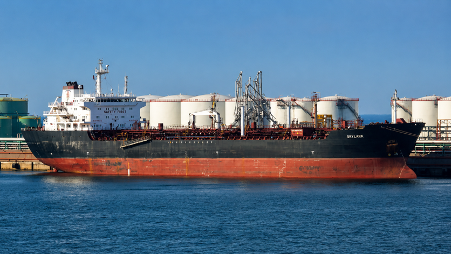
Exports of this group, dominated by fuel sales rose by 38 percent to 11 billion lek (€81 million) in the first quarter of this year as domestic oil production revived thanks to a pickup in commodity prices.
Crude oil Brent prices currently stand at about $50 a barrel, up from a 12-year low of $30 a barrel in early 2016, but yet almost half of the peak level of more than $110 in mid-2014 just before the slump. Mid-term prospects are not very optimistic as Brent oil prices are expected to fluctuate between $60 to $70 a barrel until 2021.
Meanwhile, Albania’s garment and footwear sector, the country’s traditional top exporter employing about 100,000 people, registered moderate growth of 7.5 percent in the first quarter of this year when they grew to 28 billion lek (€207 million).
The reactivation of the Turkish-run Kurum steel plant in Elbasan, central Albania, following its bankruptcy in early 2016, also gave a boost to exports of “construction materials and metals” which were up by 50 percent to about 9.7 billion lek (€71 million) year-on-year in the first quarter of 2017.
Meanwhile, import also grew by 7.5 percent in the first quarter of the year, hinting a pickup in domestic consumption.
Imports of “machinery, equipment and spare parts,” an indicator of domestic investment, grew by an annual 5.8 percent to about 29 billion lek (€212 million), mainly thanks to ongoing pipe imports for the major Trans Adriatic Pipeline project bringing Caspian gas to Europe, already in its peak construction stage in its Albania section.
Trade exchanges with top trading partners Italy, the destination of about half of Albania’s exports and 30 percent of imports, continued growing in the first quarter of this year.
Exports also grew with traditional second trading partner, Greece, as the neighbouring country escapes its worst ever recession that saw its economy contract by about a quarter since the onset of the global financial crisis in 2008.
Trade exchanges with economic superpower China, which made some key acquisitions in Albania’s oil and air transport industries last year and emerged as the country’s second largest trading partner, remained almost unchanged at about 13 billion lek (€95 mln) in the first quarter of this year, on par with Greece.
Albania’s exports registered modest growth of 0.1 percent in 2016 following a 5 percent decline in 2015 when they returned to negative growth rates after first contracting in 2009 soon after the onset of the global financial crisis.
The 2017 export prospects appear more optimistic as international oil prices are expected to slightly pick up with a positive impact on new drilling plans by oil companies.
Albania’s exports heavily rely on garment and footwear manufacturing as well as oil and base metals whose share in the country’s exports is estimated at two-thirds, making them vulnerable to international headwinds.
Albania is net importer with exports covering only about 45 percent of imports.