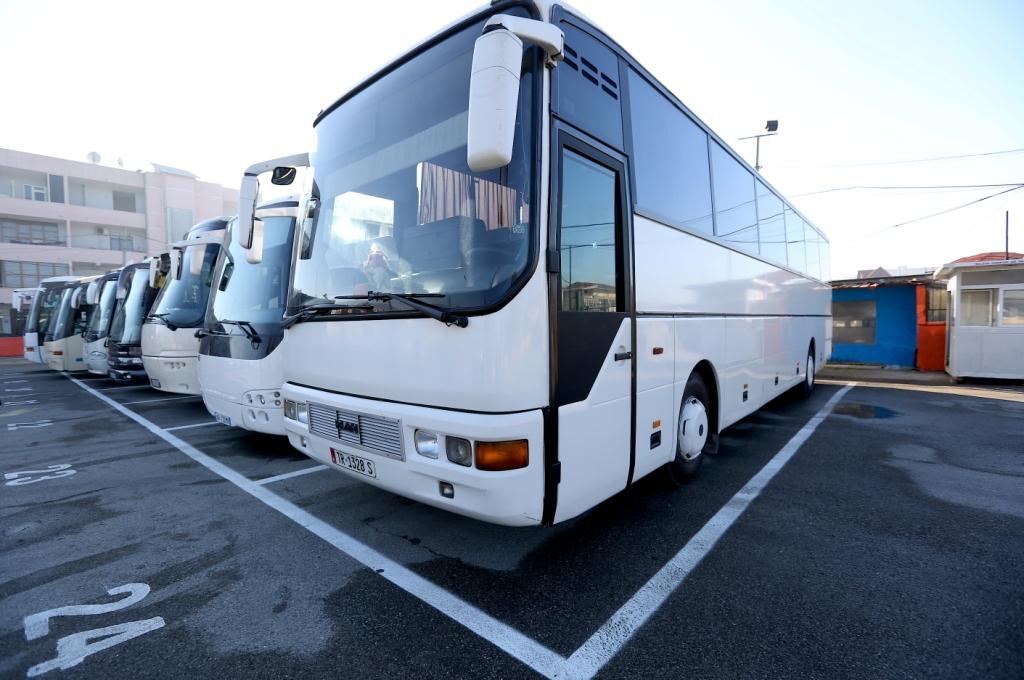
TIRANA, May 22 – An Albanian-led consortium will build and manage a bus terminal linking Tirana to northern and southern destinations under a public private partnership deal with the municipality of Tirana, the country’s biggest local government unit with about 600,000 residents, but whose capital city status, making it the country’s most important political, economic, and cultural center takes its population to about 1 million.
Following an international tender last April, the municipality of Tirana has announced a consortium led by Salillari, one of the country’s biggest construction companies, also composed of Greek-owned Hellas Servis, foreign-owned Analysis Computer & Servis SA and Albania-owned supervisor Klodioda, will build, own and operate the country’s biggest bus terminal for the next three decades.
The consortium has offered a 33-year PPP, a concession fee of 2 percent of annual turnover, a 50 percent discount on terminal tariffs and a dividend of 5 percent to the municipality. If contract negotiations complete successfully in 3 months, the winning consortium plans to build the new terminal in about one and a half years.
Two other companies, including a consortium led by a Netherlands-based company were disqualified because of incomplete documentation.
In its feasibility study, the municipality of Tirana also considered making available the country’s first tram, linking the bus terminal to the city centre in 7.2 km tramway, but picked a low-cost solution with no tram station and no commercial and accommodation facilities.
“The terminal is part of a broader urban transport strategy that will give a solution to emergency needs to improve traffic and reduce environment pollution in Tirana, by securing parking for all passenger vehicles from all over the country and creating optimal conditions for their transport to downtown Tirana,” says the municipality.
The country’s biggest municipality will provide the winning bidder an 85,000 m2 construction site in the place known as the Kthesa e Kamzes (Kamza Turn), at the entry of Tirana, in return for investment of €15.5 million while the concessionaire will handle all parking fees.
The new terminal will accommodate buses linking Tirana to Durres and southern Albanian destinations such as Fier and Vlora, currently operating at a terminal at the Shqiponja (Eagle roundabout) at the Tirana entry as well as interurban buses linking the capital to northern destinations such as Kruja, Lezha and Shkoder, currently operating at a separate terminal near the Zogu i Zi roundabout.
The current Tirana municipality-run southern terminal at the former Tirana customs office facilities close to the “Shqiponja” roundabout, handles about 500 buses and minibuses each day linking Tirana to 29 destinations, serving more than 10,000 passengers.
Interurban buses linking Tirana to Elbasan and southeastern Albanian destinations such as Korà§a and Pogradec are scheduled to be accommodated at Sauk, just outside Tirana, under another 20-year concession contract with another Albanian company.
The new terminals make reaching the Tirana city center much more difficult and costlier for daily commuters considering that the degraded and rarely used railway transport to the capital city has also been nonexistent for the past couple of years due to works to extend the boulevard at the former train station close at the Zog I boulevard.
Tirana city public transport users have been facing a 33 percent hike in bus fares, currently at 40 lek (€0.29), since February 2016 following pressure by local companies which had threatened to go on strike unless the municipality reviewed ticket prices.
The municipality of Tirana, the country’s biggest local government unit (LGU), has a resident population of some 557,000 following the 2015 administrative reform that cut the number of LGUs to 61 from a previous 373 municipalities and communes.
Tirana is currently one of the few capitals where the train station is located about 10 km from the city cente, in Kashar village following the demolition of the downtown train station a couple of years ago.
More than a decade after cancelling a contract with U.S. giant General Electric, Albania is planning to revitalize its dilapidated rail transport by reconstructing the key Tirana-Durres segment and linking it to the country’s sole international airport.
While the central government has awarded dozens of concession contracts in the past decade, posing a threat to public finances because of their hidden costs in which the government will either pay the cost of the investment in installments or guarantee the revenue of concessionaires, local government units which still depend on central government grants for their daily operations, have only signed a handful of PPS, mainly waste management and parking ones.